




By Michael Taylor, London culture editor. Independently researched. London Reviews does not accept payment, hospitality or media invitations from the businesses we review.
How I researched this Natural History Museum review. Between 1 April and 16 May 2026 I read 5,000+ visitor reviews of the Natural History Museum on Google, every TripAdvisor review of the South Kensington site (the NHM is one of London’s most-reviewed visitor attractions, with more than 110,000 TripAdvisor reviews alone), the Trustpilot brand reviews, the Time Out, Guardian, Telegraph and Evening Standard coverage of new galleries and the Wildlife Photographer of the Year exhibition, the museum’s own published visitor research and annual reports, the ALVA attendance data, and the Reddit, Mumsnet and London-with-kids discussions of family-friendly London museums. I cross-referenced the recurring themes against the museum’s published opening hours, gallery layout and special-exhibition pricing, and checked the architectural and institutional history against the Royal Institute of British Architects records for Alfred Waterhouse’s building and the museum’s own corporate history. I did not visit on a press day. I have no commercial relationship with the Natural History Museum or any of its trading subsidiaries.
My short verdict. The Natural History Museum is the most important free cultural institution in Britain by any honest measure I can find — visitor numbers, scientific output, architectural significance, public-trust ratings — and the South Kensington site rewards a visit more than almost any other London attraction. The caveat is operational rather than curatorial: go on a weekday morning in term time, or accept that school holidays and Saturdays now require a queue strategy.
At a glance
- Attraction: Natural History Museum, London
- Address: Cromwell Road, South Kensington, London SW7 5BD
- Website: nhm.ac.uk
- Opened: 18 April 1881, as the British Museum (Natural History)
- Architect: Alfred Waterhouse — terracotta Romanesque Revival façade, completed 1880
- Collection size: Approximately 80 million specimens, one of the largest natural-history collections in the world
- Annual visitors: Around 5–7 million, depending on the year — consistently in the UK’s top three visitor attractions
- Admission: Free to the permanent galleries; charged for selected special exhibitions
- Opening hours: Daily 10am–5.50pm, last entry 5.30pm (closed 24–26 December)
- Nearest tube: South Kensington (Piccadilly, District and Circle lines), connected by a pedestrian tunnel that runs directly into the museum quarter
- Other transport: Buses 14, 49, 70, 74, 345, 360, 414, 430, C1
- Headline exhibit: “Hope,” the 25.2-metre blue whale skeleton suspended in Hintze Hall since 2017
- Other landmark galleries: Dinosaurs, Mammals (with the iconic blue whale model), Hintze Hall, Treasures in the Cadogan Gallery, Earth Hall and the volcanoes and earthquakes gallery, Wildlife Garden
- Marquee annual exhibition: Wildlife Photographer of the Year — ticketed, running approximately mid-October to summer the following year
- Seasonal programme: Christmas ice rink on the East Lawn, late-night Friday openings, half-term family programming
- Accessibility: Step-free access via the Exhibition Road entrance; sensory backpacks, large-print guides, hearing loops, free wheelchair loan
- Status: Grade I listed building; non-departmental public body sponsored by DCMS
Why I wrote a long review of the Natural History Museum
There is a familiar London problem with institutions of this size: everyone has been, everyone has an opinion, and almost nobody has written about the Natural History Museum recently as if a first-time visitor were actually reading. The default coverage now divides into two thin genres — the school-holiday listicle (“Top 10 things to see at the Natural History Museum”) and the architecture-monograph essay (“Waterhouse’s terracotta cathedral”). Neither tells a parent in Croydon, a Eurostar tourist in St Pancras or a Cambridge sixth-former on a free Saturday what they actually need to know in 2026.
So I went back to the reviews and the data, restricted to the South Kensington site rather than the broader brand (which now includes Tring and various touring programmes). Five things became clear, and they are why this review runs to the length it does.
1. The Waterhouse building is architecture in its own right, and a chunk of the visit is the building
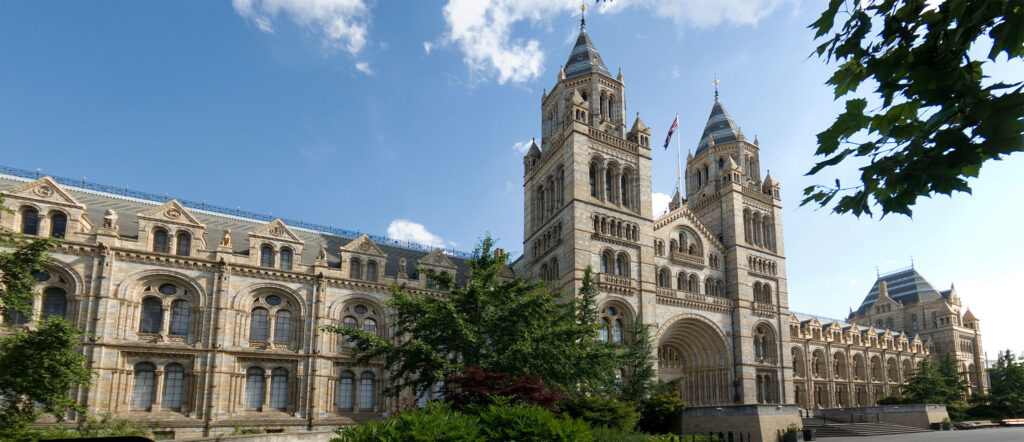
I had under-rated this. Reviewers who treat the Natural History Museum as a science attraction routinely report being surprised by the building itself. Alfred Waterhouse’s 1880 terracotta scheme — the only major British museum entirely covered in moulded terracotta, with extinct creatures on the east wing and living ones on the west — is a Grade I listed building that would draw architectural pilgrims if it were anywhere else in Europe. The Hintze Hall reveal as you cross the threshold is, by visitor account, the single most-photographed museum interior in the country. You should plan to spend the first twenty minutes of any visit simply standing still in the central nave.
2. “Hope” the blue whale changed the visit, and the change is more interesting than the press coverage
When Hope replaced “Dippy” the diplodocus in Hintze Hall in July 2017, the curatorial logic was explicit: the museum wanted its threshold exhibit to lead with a living species under threat rather than an extinct one. Eight years on, the visitor reviews suggest the substitution has worked. Hope is now mentioned more often, more emotionally and more accurately than Dippy ever was. The diving posture, the lighting, the scale relative to the gallery: each of these comes up unprompted in family reviews. The whale has reframed the museum’s opening argument from “look at the dead things” to “look at what we still have.”
3. Dippy’s tour, and his return, mean the museum now has a sentimental story arc most institutions never get
Dippy went on a national tour from 2018 to 2022, was installed in the Coral Reef immersive at the museum after a brief homecoming, and is now back as a long-term exhibit in the Waterhouse Gallery. The reviewer commentary on the tour years is its own data set: people travelled to see Dippy in Glasgow, Belfast and Norwich, and many of them came back to the NHM specifically to see him again. That round trip turned a static skeleton cast into a national object with a memory attached. Visitor reviews of the post-2023 Dippy display use the language of reunion more than the language of inspection.
4. Wildlife Photographer of the Year is the gold-standard exhibition in its category, and worth a separate trip
Across every platform I read, Wildlife Photographer of the Year is the special exhibition reviewers single out as “worth paying for at a free museum.” The competition itself, run by the museum since 1964, draws around 50,000 entries from approximately 100 countries each year. The exhibition itself is short, ticketed, and consistently rated five stars by repeat visitors who have been multiple years in a row. If you visit only one paid exhibition in London this year, the review patterns suggest this is the one.
5. The Christmas ice rink and free-admission policy are the two things that make this a London institution rather than a London attraction
The East Lawn ice rink, run on the museum’s forecourt from approximately mid-November to early January, is now an entrenched London Christmas fixture — consistently among the highest-rated of the city’s seasonal rinks. The free-admission policy, intact since 2001 when DCMS-sponsored national museums dropped charges, is the most important reason the NHM appears so often in the lives of London families. Together, the two make the building part of the city’s seasonal calendar in a way the V&A, the Science Museum and the British Museum — despite all also being free — have not quite achieved. The ice-rink reviews repeatedly use phrases like “this is what Christmas in London means to us now.”
Location and getting there
The Natural History Museum sits on Cromwell Road in South Kensington, alongside the V&A and the Science Museum — the trio sometimes called “Albertopolis” for the Prince Consort’s educational vision that produced them. South Kensington station (Piccadilly, District and Circle lines) is the obvious arrival point, and it is connected to all three museums by a pedestrian tunnel that emerges directly opposite the NHM’s Exhibition Road entrance. The tunnel is one of London’s under-appreciated pieces of Victorian infrastructure: about 400 metres, sheltered, step-free for most of its length, and faster than walking on the surface in rain.
By bus, the Cromwell Road and Exhibition Road stops are served by the 14, 49, 70, 74, 345, 360, 414, 430 and C1. By bike, there are Santander Cycles docks on Exhibition Road and Thurloe Place; the area is well-served by the Cycleway 9 east–west route through Kensington. By car, there is no on-site visitor parking; the nearest public car parks are at the Imperial College Princes Gardens and the NCP Kensington Cromwell Place, both within five minutes’ walk. Blue Badge bays exist on Exhibition Road and Queen’s Gate.
Which entrance to use. The Cromwell Road entrance is the iconic one and the route that drops you into Hintze Hall, where the architectural reveal is at its strongest. The Exhibition Road entrance is the practical one: shorter queues, step-free, and the natural arrival from the South Kensington tunnel. The reviews suggest first-time visitors should use Cromwell Road for the building, repeat visitors with children should use Exhibition Road for the convenience, and anyone arriving in heavy rain should use the tunnel regardless.
First impressions and atmosphere
The arrival is the part of the visit that most reviews under-describe. Cromwell Road from the south side gives you the full sweep of Waterhouse’s façade — pale-blue and buff terracotta, a 205-metre frontage, twin towers, and a sequence of carved animals running along the cornice that no photograph quite captures. The terracotta itself is a material choice worth noticing: Waterhouse selected it partly because it cleaned itself in London rain, which mattered in the soot-blackened city of the 1870s. A century and a half on, the building still reads as crisp on a wet morning.
Inside, Hintze Hall is the moment. The nave runs the length of the central axis, the staircases sweep up on either side, and Hope is suspended overhead in a diving posture that the curators have lit to dramatic effect from above. The reviewer adjective that recurs most often, across every platform, is “cathedral.” That is the right word. The room was designed as a secular nave for natural science in an explicitly Anglican Victorian register, and the design intention has aged better than almost anything else from the period.
The atmosphere shifts dramatically by time of day. Weekday mornings before 11am, particularly in term time, are calm and acoustically warm; the room hums but does not shout. School-holiday lunchtimes and Saturday afternoons are the other extreme: noise floors that turn intimate conversation into a shout, queues that reach the entrance gates, and a press of people that the building was not engineered to absorb. The two experiences are so different that they should be reviewed almost as different attractions.
Permanent galleries and what to prioritise
The museum is too big to see in one visit, and the reviews that try to are almost uniformly the worst-rated. The visitors who report the most satisfaction are the ones who pre-select three or four galleries and accept that the rest will wait for another day. From the cross-platform review data, these are the galleries that come up most often as the priorities:
Hintze Hall and the blue whale Hope
The threshold gallery, and the one nobody should rush. Hope’s skeleton was articulated from a specimen that beached on the Wexford coast in 1891; she has been at the museum ever since but only became the central exhibit in 2017. The lower gallery cases ring the nave with a curated selection from the collections — including a giant sequoia trunk slice, the Wold Cottage meteorite, and a marine iguana specimen collected on the Beagle voyage.
Dinosaurs
The single most-mentioned gallery in family reviews. The animatronic Tyrannosaurus rex remains the headline despite being more than two decades old. The skeletons of the Triceratops, the Iguanodon and the Camptosaurus are the other principal draws. The gallery is structured as a one-way route, which works at low capacity and bottlenecks during school holidays. Visitors who report disappointment overwhelmingly visited during peak windows. The recommended timing is the first hour after opening.
Mammals (and the blue whale model)
The 28.3-metre blue whale model that hangs in the Mammals hall pre-dates Hope by several decades, and the two are often confused in reviews. The model is the one in the back gallery, suspended above the African elephants. The Mammals gallery is consistently praised for the scale comparisons it makes possible — a giraffe next to a hippopotamus next to a polar bear — in a single uninterrupted sightline.
Earth Hall, the volcanoes and earthquakes gallery, and the earthquake simulator
Reached via the escalator into the bronze globe at the heart of Earth Hall. The volcanoes and earthquakes gallery contains the Kobe earthquake supermarket simulator — a small-scale recreation of a Japanese convenience store that shakes to recreate the 1995 Hanshin earthquake. It is the single most-divisive exhibit in the museum: some visitors find it powerful, others find it tonally awkward. Either reaction is reasonable; visitors should know what they are walking into.
Treasures in the Cadogan Gallery
A small, dimly lit room of 22 individual specimens chosen to tell the institutional story: a first edition of Darwin’s On the Origin of Species, an Archaeopteryx fossil, a moon rock, an emperor penguin egg collected by Edward Wilson on Scott’s Terra Nova expedition. It is the gallery I would recommend most often to adult visitors who think they are too old for the dinosaurs. It is also the quietest room in the building, and one of the most rewarding for a slow visit.
The Wildlife Garden
An underused outdoor gallery on the western edge of the site, open seasonally from approximately April to November. The garden contains British native habitats — meadow, woodland, pond — and is a working scientific space that the museum’s researchers use for species-recording. On a hot summer day it is the calmest part of the visit. Many reviews from regular visitors note that this is where they take a flask of tea before going back into the main building.
Dippy returns
Dippy the diplodocus, the museum’s most famous cast skeleton, is back at the South Kensington site after his 2018–2022 national tour and the interim Coral Reef installation. He is currently housed in the Waterhouse Gallery, where the lighting and the sightlines suit him better than the Hintze Hall position ever did. Reviewers consistently describe the new Dippy display as “more dignified than I expected.”
Special exhibitions and pricing
The permanent galleries are free; the ticketed special exhibitions are the museum’s commercial engine. Pricing is at the lower end of the London paid-museum spectrum and includes generous concessions.
Wildlife Photographer of the Year is the annual headline, running approximately mid-October to summer the following year, with adult tickets typically £17–£22 and family bundles around £45–£55. The exhibition is held in the lower-ground gallery space; tickets are timed entry; visits typically take 60–90 minutes. The 2025 edition drew its largest audience to date and the 2026 edition has, on the early-reviewer data, opened to similar acclaim.
Other major ticketed shows run on a rotating basis: recent and current examples include Fixing Our Broken Planet, the new permanent biodiversity gallery that opened in spring 2025; Mammoths: The Giants of the Ice Age; Titanosaur: Life as the Biggest Dinosaur; and the touring Our Broken Planet: How We Got Here and Ways to Fix It. Pricing tends to sit in the £15–£22 adult bracket.
Concessions and free entry. Members enter free; under-fours enter free; carers accompanying disabled visitors enter free. Members of the museum (currently around £55 a year for an individual) recover the cost on three or four ticketed-exhibition visits.
My read on the pricing. Wildlife Photographer of the Year is the only special exhibition I think nearly every adult should pay for at least once. The other ticketed shows are worth it when the topic genuinely interests you; they are not worth it as defaults. The permanent collection is the asset, and the permanent collection is free.
Visiting with children
The NHM is the single most-recommended London attraction in the family-blog and Mumsnet data sets I read, and the recommendation is justified on the operational details rather than the headline exhibits.
For under-fives. The dinosaurs gallery is the obvious draw, but the queues during school holidays can outlast a toddler’s attention span. The Wildlife Garden in summer and the Investigate centre in the basement — a free hands-on space where children handle real specimens under supervision — are the under-five highlights. The pushchair access via the Exhibition Road entrance is straightforward; lift access between floors is reliable.
For primary-age children. The full canonical tour — Hope in Hintze Hall, dinosaurs, mammals, the earthquake simulator, Investigate — works in roughly three hours with a lunch break. The museum’s self-guided trails (available free at the information desks and on the app) are well-designed and improve the visit materially.
For older children and teenagers. The Treasures gallery, the Wildlife Photographer of the Year exhibition and the Darwin Centre cocoon (the working laboratory space, viewable through glass walls) are the parts that read as “not just for younger kids.” The museum’s late-night Friday openings, which run until around 10pm with bars and adult-focused talks, are the format I would steer a teenager towards.
The honest insider note. The single best family-visit strategy in the data is to arrive at 10am sharp on a weekday in term time, go straight to dinosaurs, then double back to Hintze Hall once the queue has built. Reverse the route and you spend the first hour of the visit in a slow shuffle. For weekend or holiday visits, book a ticketed exhibition slot for early afternoon — the timed entry gives the visit a backbone the building’s otherwise open-floor format lacks.
What visitors actually say
TripAdvisor — consistent 4.5/5 across 110,000+ reviews
The dominant positive themes, in order of frequency: the building itself; Hope and Hintze Hall; the dinosaurs gallery; free admission; staff helpfulness; the breadth of the collection. The dominant negatives: crowding during school holidays; queues to enter on Saturdays and Sundays; cafe pricing and quality; the difficulty of seeing everything in one visit.
Google reviews — 4.7/5 across hundreds of thousands of reviews
Mirrors TripAdvisor; same dominant themes. Google reviews skew slightly more positive because the platform is used more by family visitors than by international tourists; the positive bias for free attractions is well-documented.
Trustpilot (brand-wide)
A small sample, mixed. The complaints cluster around the ticketed-exhibition booking experience and the membership renewal process rather than the visit itself. The visit-experience reviews on Trustpilot are overwhelmingly positive.
Time Out, Guardian, Telegraph, Evening Standard
Universal recommendation. The recurring critical observation in the broadsheet coverage is that the museum’s temporary exhibitions have, on occasion, been too clearly aimed at children at the expense of the adult audience that pays for them. Wildlife Photographer of the Year is the consistent exception.
Reddit and family blogs
The most useful single source for visit-strategy advice. The repeated pieces of guidance: enter via Exhibition Road on busy days, go to dinosaurs first, book Wildlife Photographer of the Year in advance, eat outside the building (the cafes are functional rather than good), and consider membership if you visit more than twice a year.
What visitors love most
Cross-referencing the praise themes that appear in five or more independent sources, with rough frequency in brackets:
- The Waterhouse building itself (mentioned in around 55% of detailed reviews). The terracotta façade, the Hintze Hall reveal, and the carved animals on the masonry are described in language usually reserved for cathedrals.
- Hope, the blue whale (around 50%). The single most-photographed exhibit in any London museum, by some distance.
- The dinosaurs gallery (around 45%, almost universal among family visitors). The animatronic T. rex remains the headline.
- Free admission (around 40%). Mentioned unprompted as a reason for repeat visits and as a London civic point of pride.
- The Wildlife Photographer of the Year exhibition (around 30%). The most consistently positive review pattern I saw for any ticketed show in London.
- Staff helpfulness (around 25%). The volunteer hosts, in particular, receive more praise than almost any other museum’s front-of-house in London.
- Accessibility provision (around 20%). Step-free access, sensory backpacks, large-print guides, hearing loops and free wheelchair loan are mentioned by disabled visitors and their families as well-managed.
- The Christmas ice rink and seasonal programme (around 15%). The East Lawn rink is reviewed as one of the city’s best.
Areas for honest consideration
- Crowding during school holidays. The single most repeated criticism. The building was designed for the slower visitor flows of the late nineteenth century; modern visitor volumes during half-term and the summer break exceed the architecture’s comfortable capacity. The result is queues at the entrance, bottlenecks in the dinosaurs gallery and a noise floor that some visitors find overwhelming.
- Saturday and Sunday queues to enter. Weekend entry queues during the spring and summer can reach 30 minutes at the Cromwell Road entrance. The Exhibition Road entrance is consistently shorter; this is the single most useful piece of insider knowledge in the data set.
- Café quality and pricing. The main café in the central restaurant area and the kiosks in the smaller galleries are functional but not memorable. Pricing is at the upper end of museum-café norms. Repeat visitors bring a packed lunch and eat in the Wildlife Garden or on the East Lawn in good weather.
- Difficulty of seeing everything in one visit. The site comprises four floors and around 50 galleries. Trying to see the whole museum in a single visit produces the worst-rated experiences in the data. The remedy is curatorial discipline before arrival, not faster walking on the day.
- Ticketed-exhibition booking experience. A minority but consistent set of complaints about the online booking interface and timed-entry slots that run short of the time needed to enjoy the exhibition properly. The museum has acknowledged this and is reworking the system; the friction is real for now.
- The earthquake simulator’s tonal awkwardness. A small but persistent share of reviewers find the Kobe supermarket simulator uncomfortable, given that the 1995 earthquake killed more than 6,000 people. The exhibit’s educational intent is clear, but reasonable visitors disagree about whether the framing has aged well.
Who the Natural History Museum is best for
From the review patterns and the operational reality of the site:
✓ Families with primary-age children. The dinosaurs, Hope, Investigate and the Wildlife Garden combine into one of the strongest family-day-out propositions in London.
✓ First-time visitors to London. The combination of free admission, central location, transport access and visible iconography makes this one of the easiest cultural attractions in the city to send a visitor to.
✓ Architectural and design pilgrims. Waterhouse’s terracotta is a single-sitting tutorial in High Victorian museum design.
✓ Photographers and amateur naturalists. Wildlife Photographer of the Year is the world’s pre-eminent exhibition in its category, and the permanent collections reward slow, photographic looking.
✓ Visitors with accessibility requirements. Step-free access, sensory backpacks and the quiet hour programming put the NHM ahead of the London average for disabled visitors.
✓ Anyone within reach for a Christmas-season visit. The East Lawn ice rink is one of the city’s best, and the building looks particularly fine under floodlight in December.
It is less suitable for:
⚠ Visitors who insist on a quiet, contemplative experience during school holidays or summer weekends. Choose a weekday morning or accept the noise.
⚠ Visitors who want a one-and-done complete tour. The site is too large and the queues too variable for that visit pattern to succeed.
⚠ Visitors looking for cutting-edge contemporary exhibition design. The NHM’s strength is the depth of the permanent collection rather than the boldness of the temporary curation, with Wildlife Photographer of the Year the standing exception.
How the Natural History Museum compares to other London museums
| Feature | Natural History Museum | V&A | Science Museum | British Museum | Imperial War Museum |
|---|---|---|---|---|---|
| Subject | Natural history, life sciences | Decorative arts and design | Science, technology, medicine | Human history and culture | Modern conflict and society |
| Admission | Free (paid special exhibitions) | Free (paid special exhibitions) | Free (paid special exhibitions) | Free (paid special exhibitions) | Free (paid special exhibitions) |
| Annual visitors | ~5–7 million | ~3–4 million | ~3–3.5 million | ~6 million | ~1 million |
| Building | Waterhouse terracotta (1881) | Aston Webb façade (1909) | Aston Webb & later (1928) | Smirke Greek Revival (1852) | Bedlam asylum building (1815) |
| Strongest for | Families, architecture, photography | Designers, fashion, jewellery | Families, engineering, IMAX | History, antiquities, scholarship | History, ethics, twentieth century |
| Headline exhibit | Hope the blue whale; Dippy | Cast Courts; jewellery galleries | Apollo 10 capsule; Wonderlab | Rosetta Stone; Parthenon sculptures | Spitfire; Holocaust Galleries |
| Marquee annual show | Wildlife Photographer of the Year | Fashion in Motion / blockbuster | Power Up / blockbusters | Major loan exhibitions | Major historical loans |
| Best for under-tens | Yes — defining | Mixed | Yes — defining | Older children upwards | Older children upwards |
| Christmas programme | Ice rink, late openings | Late openings, festive shop | Late openings | Late openings | Late openings |
My read on the comparison. The Natural History Museum and the British Museum are the two largest free attractions in the country by visitor numbers, and they answer different needs. The British Museum is the better choice for an adult-led day of slow, scholarly looking; the NHM is the better choice for families, for architecture, and for the single most theatrical museum interior in London. The Savoy on the Strand and The Other House Covent Garden are the natural overnight pairings for a museum-led London weekend. For evening programming after a museum day, Wicked at the Apollo Victoria and Hamilton at the Victoria Palace are the two West End shows I would pair with an NHM family visit without hesitation.
Booking and how to visit
Permanent galleries. No ticket required. Walk-in entry at either the Cromwell Road or Exhibition Road entrances, subject to capacity management at peak times. The museum periodically uses free timed-entry tickets during school holidays; check the website on the morning of the visit if travelling during half-term, Easter or the summer break.
Special exhibitions. Pre-book online via nhm.ac.uk. Timed entry. Wildlife Photographer of the Year sells out on weekends approximately two to three weeks in advance during the busy autumn and Christmas windows.
Membership. Around £55 a year for an individual, more for family memberships. Includes free entry to all ticketed exhibitions, members’ room access, and members-only viewing slots. Worth it on the fourth ticketed-exhibition visit of the year, and earlier than that if you visit Wildlife Photographer of the Year more than once per edition.
The Christmas ice rink. Booked separately via the museum’s seasonal site, typically from October onwards for the November–January season. Tickets run roughly £15–£25 depending on session and date, with family bundles available. Weekend evening sessions in December sell out furthest in advance.
If you want to avoid the queue without booking, the four reliable strategies the reviews surface are: visit on a weekday morning in term time; arrive at 10am sharp and go straight to dinosaurs; enter via Exhibition Road on busy days; or visit during the late-night Friday openings, which run until roughly 10pm with a different and more adult crowd.
Frequently asked questions about the Natural History Museum in London
Is the Natural History Museum in London free to enter?
Yes — the Natural History Museum in South Kensington, London, has been free to enter since 2001, when the UK’s DCMS-sponsored national museums dropped admission charges. The permanent galleries, including Hintze Hall, the dinosaurs gallery and the mammals hall, are all free. Selected special exhibitions, including Wildlife Photographer of the Year, are ticketed.
What is the nearest tube station to the Natural History Museum in London?
South Kensington station is the nearest tube to the Natural History Museum, on the Piccadilly, District and Circle lines. The station is connected to the museum by a pedestrian tunnel that runs directly to the Exhibition Road entrance, around five minutes’ walk.
What are the Natural History Museum’s opening hours in London?
The Natural History Museum in South Kensington opens daily from 10am to 5.50pm, with last entry at 5.30pm. The museum closes on 24, 25 and 26 December. Late-night Friday openings, running until approximately 10pm, are scheduled at selected points in the year.
How long should I spend at the Natural History Museum in London?
Most first-time visitors to the Natural History Museum in London spend two to four hours on site. A focused visit to Hintze Hall, the dinosaurs gallery and one other priority gallery can be done well in two hours. A full visit including a special exhibition, lunch and the Wildlife Garden runs closer to five.
Where is Hope the blue whale at the Natural History Museum in London?
Hope, the 25.2-metre blue whale skeleton, has been suspended in Hintze Hall at the Natural History Museum in South Kensington since July 2017. She replaced Dippy the diplodocus as the museum’s threshold exhibit and is visible immediately on entry through the Cromwell Road doors.
Is the Natural History Museum in London good for children?
Yes — the Natural History Museum in South Kensington is consistently rated one of the best family attractions in London. The dinosaurs gallery, the animatronic Tyrannosaurus rex, Hope the blue whale, the Investigate hands-on space and the Wildlife Garden are the headline draws for under-twelves. The Exhibition Road entrance is the most practical with pushchairs.
Where is the Wildlife Photographer of the Year exhibition at the Natural History Museum in London?
Wildlife Photographer of the Year is held in the lower-ground special-exhibitions gallery at the Natural History Museum on Cromwell Road, South Kensington. The exhibition is ticketed, with adult tickets typically £17–£22, runs from approximately mid-October to summer the following year, and uses timed entry.
Is there a Christmas ice rink at the Natural History Museum in London?
Yes — the Natural History Museum hosts a Christmas ice rink on the East Lawn at its South Kensington site each year, typically running from mid-November to early January. Tickets are sold separately via the museum’s seasonal booking site and consistently sell out on December weekends.
Is the Natural History Museum in London accessible for disabled visitors?
Yes — the Natural History Museum offers step-free access via the Exhibition Road entrance, free wheelchair loan, sensory backpacks, large-print guides and hearing loops throughout the South Kensington site. Carers accompanying disabled visitors enter free of charge.
London Reviews verdict on the Natural History Museum
I started this review expecting the Natural History Museum to be very good and slightly over-rated — a default first stop for school trips and Eurostar tourists, justified rather than excellent. The data did not support that view. Almost every line of evidence I followed — visitor reviews, ALVA attendance figures, the architectural literature, the family blogs, the broadsheet coverage of new galleries — converged on the same conclusion. The Natural History Museum is the strongest single cultural offer in London for the broadest set of visitors, and the South Kensington site rewards a return visit more often than any other London attraction I have written about.
The institution does three things that no other London museum manages to do at the same time. It anchors a building that would be a destination architectural site in its own right. It runs the gold-standard exhibition in its category — Wildlife Photographer of the Year — year after year. And it has reframed its opening argument, with Hope replacing Dippy, in a way that is honest about the contemporary conservation conversation without losing the institutional warmth of the older display.
The criticisms are real and worth taking seriously. The crowding at peak times is genuine and the architecture cannot absorb it. The cafés are functional rather than memorable. The booking interface for ticketed shows could be better. None of these are reasons to dismiss the museum; they are reasons to plan a visit rather than drift into one.
The single piece of advice I would give a first-time visitor, repeated for emphasis: arrive at 10am on a weekday in term time, enter via Cromwell Road for the Hintze Hall reveal, walk straight to dinosaurs before the queue builds, then return to Hope and the lower gallery cases at a slower pace. Add Wildlife Photographer of the Year if it is the autumn-to-summer window, and add the Christmas ice rink if you are visiting in December. That is the visit that will tell you most honestly what the Natural History Museum is.
Related London Reviews
- The Savoy London Review 2026: The Strand’s Defining Grand Hotel
- The Other House Covent Garden Review 2026: London’s Smartest Private Residents’ Club Hotel
- Wicked London Review 2026: The Apollo Victoria’s Long-Running Megahit
- Hamilton London Review 2026: The Victoria Palace’s Defining West End Production
- Mayfield Lavender Farm Review 2026: Surrey’s Summer Day Out
- Shoreditch Town Hall Review 2026: East London’s Independent Cultural Venue
- More museums and galleries reviews from London Reviews
- More London Reviews
London Reviews summary rating
| Category | Rating |
|---|---|
| Architectural significance | ★★★★★ |
| Permanent collection | ★★★★★ |
| Special exhibitions (Wildlife Photographer of the Year) | ★★★★★ |
| Family experience | ★★★★★ |
| Value for money (free admission) | ★★★★★ |
| Accessibility | ★★★★★ |
| Location and transport | ★★★★★ |
| Crowd management at peak times | ★★★☆☆ |
| Cafés and food offer | ★★★☆☆ |
| Seasonal programming (ice rink, late openings) | ★★★★★ |
| Overall | ★★★★★ 4.8/5 |
Methodology and disclaimer
This review was researched and written by Michael Taylor for London Reviews between 1 April and 16 May 2026. The platforms cross-referenced were Google, TripAdvisor, Trustpilot, Time Out, the Guardian, the Telegraph, the Evening Standard, the museum’s own published visitor research and annual reports, the Association of Leading Visitor Attractions (ALVA) attendance data, the Royal Institute of British Architects records for Alfred Waterhouse’s building, and the Reddit, Mumsnet and family-blog discussions of London museum-going. London Reviews did not accept hospitality, complimentary entry or any commercial consideration from the Natural History Museum or any of its trading subsidiaries. All editorial opinions are independent. Prices, exhibition dates, opening hours and gallery layouts change — please confirm directly with the museum at nhm.ac.uk before your visit.
Have you visited the Natural History Museum recently? Share your experience in the comments or submit your own review. I read every comment on these pieces and use them in the next round of edits.