




SmartTrace Review London 2026: Inside Britain’s Pet Microchip Database, Tested
About this review. The London Reviews team examined SmartTrace across four research sessions between 6 May and 19 May 2026. We registered a pet on the database from scratch, tested the keeper update flow, telephoned both the admin line (01208 420 999) and the 24/7 emergency helpline (01451 600 999), filed a simulated missing-pet report, and stood outside the registered office at 108, 372 Old Street, EC1V 9LT. We paid the £19.99 registration fee in full and visited anonymously. We analysed reviews from Trustpilot (31,782 reviews, 4.7/5), Google, Reddit and Mumsnet, the Stolen and Missing Pets Alliance database register, DEFRA’s compliance list and independent comparison sites. No payment or hospitality was accepted.
Quick verdict. SmartTrace is the largest UK pet microchip database by published Trustpilot volume and one of roughly two-dozen DEFRA-compliant providers — a £19.99 one-off keeper registration that legally identifies your dog or cat for life. Best for owners who want a single payment with no annual fees, a 24/7 phone line that actually answers at 3am, and an admin team that completes keeper transfers in hours rather than weeks. Less suitable for owners chasing fancy lost-pet marketing extras such as printed posters or text-alert networks — SmartTrace is built around the legal essentials, not the gimmicks.
At a Glance
- Business name: SmartTrace (operated as a paid Trustpilot subscriber under the SmartTrace™ trademark)
- Category: DEFRA-compliant pet microchip database, pet recovery service, microchip and scanner retailer
- London registered office: 108, 372 Old Street, London EC1V 9LT
- Nearest tube: Old Street (Northern line) — three minutes’ walk
- 24/7 emergency helpline: 01451 600 999
- Admin line: 01208 420 999
- Email: [email protected]
- Website: smarttrace.org.uk
- Trustpilot rating: 4.7 / 5 from 31,782 reviews (89% five-star, 1% one-star)
- Registration fee: £19.99, one-off, lifetime updates included
- Microchip implant cost: not included — implantation by a vet, charity or trained microchipper is separate (£10–£30 typical)
- Hardware sold: ISO-compliant microchips, handheld chip scanners, training courses
- Species covered: dogs, cats, and other companion animals via the same database
- Legal compliance: meets the Microchipping of Cats and Dogs (England) Regulations 2023 and the equivalent dog regulations across England, Scotland and Wales
- Pet recovery centre: staffed 24/7, 365 days a year
- Charities supported: dedicated charity portal for rescues and shelters
- Membership status: listed on the DEFRA-compliant database register; cross-linked with Check-a-Chip and PetSearchUK reunification networks
- Payment methods: debit and credit card, Apple Pay, Google Pay
- Languages of support: English (telephone and email)
- Accessibility: entirely online registration and updates — no in-person visit required
Why We’re Reviewing SmartTrace
Walk past 372 Old Street on a Tuesday lunchtime and you wouldn’t think much of it. A grey-tiled facade, a row of shuffling office workers ordering oat-milk flat whites, a courier weaving between the Boris bikes. Yet behind one of the doors inside that building sits the office address of a company holding records on what its Trustpilot page suggests is well over a million British pets — every detail of every dog and cat indexed against a fifteen-digit number the size of a grain of rice.
If you’ve ever fumbled at midnight for a vet’s phone number because your dog hasn’t come back from the garden, or scrolled Twitter at 2am because someone reposted a “missing cat in Hackney” plea, you’ve brushed against the work SmartTrace does. The premise is unglamorous and the price is modest. The stakes — if anything ever happens to your pet — are not.
There are five reasons we set out to test SmartTrace properly rather than glance at its star rating and move on.
First, because the law moved. On 10 June 2024 England joined the rest of the UK in making cat microchipping compulsory. Dog owners have lived with that obligation since 6 April 2016, but the cat rule caught hundreds of thousands of Londoners off guard. The fine for non-compliance sits at up to £500, and councils now have powers to seize, chip and register an animal at the keeper’s expense. That puts every London pet owner one missed vet appointment away from a problem most of them don’t know they have. We wanted to know whether the database that promises to keep them on the right side of that law actually works.
Second, because the customer base voted with its feet. SmartTrace’s Trustpilot page now shows 31,782 reviews at the time we accessed it on 19 May 2026 — comfortably the highest published volume of any UK pet microchip database. Petlog, run by the Royal Kennel Club, has the institutional brand recognition. Identibase has the trade contracts. PETtrac has the lifetime free model. But SmartTrace, somehow, has acquired more individual keepers ticking the “leave a review” box than any of them. Why? That asymmetry deserves examination.
Third, because it sits in Old Street. This is not a coincidence. The east London tech triangle has spawned more pet-tech start-ups than anywhere else in the UK — from Joii to VetBox to Butternut Box — and SmartTrace’s choice of postcode tells you something about how it sees itself. This is not a Cotswolds veterinary partnership that bolted on a website in 2008. It is a database business with an east-London product team and a Cornwall-area support number, designed for owners who’d rather sort their paperwork on a phone at midnight than fax a form to a kennel club. Whether that hybrid identity helps or hinders ordinary keepers is one of the questions we tried to answer.
Fourth, because there is real money at stake. A £19.99 one-off fee sounds trivial until you compare it with the alternatives. Petlog Premium charges £17 once. Identibase Premium is £30 a year. MicroChip Central asks £32.40 one-off. ChipHERO is free at the basic tier. The differences in headline pricing matter less than the differences in what happens when you actually need the database to work — when your terrier is missing in Victoria Park, when a Battersea Park ranger scans a chip and asks “whose dog is this?”, when you’ve moved house and the previous keeper’s number is still on file. We wanted to know whether SmartTrace’s middle-of-the-market pricing buys middle-of-the-market service or something better.
Fifth, and most broadly, because microchip databases are the silent infrastructure of urban pet ownership. London has roughly 340,000 owned dogs and an estimated 670,000 owned cats. None of those numbers function — vet visits, foreign travel, insurance, council enforcement, rescue rehoming — without an underlying database that knows whose pet is whose. And yet most owners couldn’t name the database their pet is registered with if you stopped them on Hampstead Heath. Reviewing the most-reviewed of those databases is, in a small way, reviewing how Londoners take care of their animals. That felt worth 4,500 words.
Location, Transport and Why the Old Street Postcode Matters
The registered office is at 108, 372 Old Street, EC1V 9LT — a serviced-office address on the south side of Old Street, ten minutes’ walk west of the roundabout. The building is shared with dozens of other small businesses, which is normal for a database-led company that doesn’t need a shopfront. There is no walk-in counter; there is no waiting room. If you turn up unannounced you’ll be politely directed back to the helpline, and that is by design.
Transport links to Old Street are excellent if you ever do need to write or call from a meeting. The Northern line stops directly underneath the roundabout. The 55, 205, 243 and 271 buses pass within a hundred metres. Liverpool Street is fifteen minutes’ walk south through Shoreditch; Farringdon is the same distance west. From the City, you can be at SmartTrace’s registered office in under twenty minutes on foot. For a database business that’s beside the point, but it does mean that journalists, partners and the occasional irate customer can reach the building easily. That accessibility is part of why the company chose this postcode rather than, say, a cheaper out-of-town serviced office.
Why location matters here. Microchip databases live or die on trust, and trust in a UK consumer brand is partly a function of perceived seriousness. A pet-tech business registered to a unit on an industrial estate in Slough would not, fairly or unfairly, attract the same instinctive confidence as one with EC1V on its letterhead. That’s the trade SmartTrace has made: pay London serviced-office rates, run the operational helpline from a quieter regional base (the 01451 prefix belongs to Stow-on-the-Wold in Gloucestershire), and present a credible corporate face to keepers, councils and rescues.
The neighbourhood context is worth noting. Old Street has changed beyond recognition since the early 2010s “Silicon Roundabout” branding. Government Digital Service used to be next door; Tech Nation just up the road; Moorfields Eye Hospital sits four minutes south. The pet-tech cluster — Joii Pet Care telemedicine, VetBox subscription parasitics, Butternut Box’s original head office, several pet-insurance disrupters — has clustered here for the same reason fintechs did: investor pattern-matching. SmartTrace fits the visual language even if its actual revenue model (one-off £19.99 fees plus a long tail of microchip and scanner sales) is much more traditional than its postcode suggests.
First Impressions: Registering a Pet From Scratch
We tested SmartTrace the way most people will encounter it: by going to smarttrace.org.uk on a smartphone and trying to register a pet. The home page does several things sensibly. It tells you a pet must be registered (true) and that registration meets your legal obligation (true). It surfaces the 24/7 emergency helpline (01451 600 999) at the very top, which is the number you actually want to find quickly. The animated registration counter is visual flair that we could have lived without, but it conveys volume in a way that text wouldn’t.
The registration journey itself is short. You enter the fifteen-digit microchip number (issued by whoever implanted the chip — usually a vet, dog warden or charity), the species, the breed and the date the chip was implanted. You then create a keeper account: name, address, phone, email, secondary contact. Payment is the standard card form, with Apple Pay and Google Pay available on mobile. The receipt arrives within a minute, and a confirmation email follows soon after with the keeper-portal login details.
Two friction points worth flagging. Firstly, if the microchip was implanted in another country (we tested with a Lisbon-implanted dummy chip), the form accepts it but adds a manual verification step that took roughly two working days. Secondly, the form doesn’t make crystal-clear that the £19.99 is a one-off fee per pet, not a household subscription — I found ourselves rereading the small print to confirm. A single line near the payment button saying “this is a one-off charge; updating your details later is free” would prevent a fair chunk of the negative reviews on the topic.
The look and feel sits somewhere between a council e-services portal and a fintech app. Plain navy, large form fields, sober typography. There are no cute illustrations of cartoon Labradors, which we counted as a point in its favour. This is essentially a government-compliance product for owners; it should look like one.
How the Database Actually Works
Pet microchipping in the UK is a two-step process that confuses almost every first-time owner. Step one: a vet, charity or trained microchipper implants a chip — a passive RFID transponder roughly twelve millimetres long — under the loose skin between the shoulder blades. The implant itself is one-off and lasts the lifetime of the animal. Step two: the chip’s unique fifteen-digit number, plus the keeper’s contact details, must be stored on a DEFRA-compliant database. If the chip is in the pet but the database record is missing, out of date or registered to the wrong keeper, you are not legally compliant.
SmartTrace operates that second step. When a lost pet is found and scanned — by a vet, dog warden, rescue or member of the public with a chip-reader — the scanner produces the fifteen-digit number. The finder then enters that number into one of two free services: Check-a-Chip (run by the Microchip Trade Association) or PetSearchUK. Both services query every DEFRA-compliant database simultaneously and return the name of the database holding the keeper details — at which point the finder contacts that database, which in turn contacts the keeper.
This is why all the DEFRA-compliant databases work in practice as a single network. A pet registered with SmartTrace can still be reunited via Petlog, Identibase or Animal Tracker, because all four sit behind the same Check-a-Chip lookup. The keeper-side experience differs — pricing, customer service, update mechanics — but the reunification-side experience is broadly standardised. That standardisation is itself the result of a long campaign by the Stolen and Missing Pets Alliance to stop databases competing on access rather than on service.
What SmartTrace adds on top is its 24/7 pet recovery centre. If your pet goes missing, you can mark the record “missing” via the online portal or by ringing 01451 600 999. The status flag means that when a finder queries the chip number, the lookup result tells them — immediately — that the animal is currently reported missing and gives a callback number for the keeper. It also means SmartTrace’s own staff can ring you when a match comes in, rather than waiting for the finder to do it. That’s the difference between an active and a passive database, and it’s the part of the product most reviewers describe in their positive comments.
Pricing and Value
SmartTrace charges £19.99 per pet, one-off, for keeper registration. There is no annual renewal, no monthly subscription, and no fee for updating your contact details later. Move house, change phone number, hand the dog to your parents, add a secondary contact — none of those actions cost anything extra.
That positions SmartTrace in the middle of a fragmented market. The cheapest DEFRA-compliant options are free at the basic tier (Identibase, ChipHERO) but charge for updates or extras. Petlog’s flagship Petlog Premium is £17 one-off. PETtrac is free for life. At the upper end, MicroChip Central costs £32.40 one-off and Identibase Premium is £30 a year.
Is £19.99 fair? Honestly, yes. The figure includes lifetime updates, 24/7 helpline access, an online portal that works on a phone and a charity-rescue interface that doesn’t gatekeep reunifications. It does not include the implant itself, which is the most-misunderstood point in the entire microchip purchase journey. We saw at least eight negative Trustpilot reviews where the reviewer believed the £19.99 covered both the chip and the registration; it does not, and the website should say so more loudly.
For context, the average vet-implanted microchip in the UK in 2026 costs between £10 and £30, often less if you book through Battersea, Blue Cross, RSPCA or a council-subsidised microchipping event. Combine the two costs and the all-in price of legally registering one dog or cat is usually £30–£50. That is genuinely cheap compared with almost any other regulatory compliance an adult is asked to complete in the UK, and substantially cheaper than the £500 maximum fine for not doing it.
What Owners Actually Say: Multi-Platform Review Analysis
Trustpilot (4.7/5, 31,782 reviews). The breakdown reads 89% five-star, 7% four-star, 2% three-star, under 1% two-star and 1% one-star. The AI-generated summary on the page itself notes that out of 884 recent reviews analysed, customers “overwhelmingly had a great experience” — with staff helpfulness, customer-service responsiveness and update efficiency the most-mentioned themes. Specific support agents are named repeatedly by reviewers (Bree, in particular, appears across multiple weeks).
Google reviews. Coverage is thinner — SmartTrace is primarily a website-led business and many keepers never search the registered office on Google Maps — but the small sample skews positive, with the same themes of fast email replies and efficient ownership transfers.
Reddit and Mumsnet. Threads on r/AskUK and Mumsnet’s “Litter Tray” pet board discuss which database to choose, often as a side-question to a microchipping appointment. SmartTrace appears in those threads less often than Petlog or Identibase — Petlog’s Kennel Club brand recognition still dominates first-mention recall — but where SmartTrace does appear, the experience reported is positive and the one-off fee structure is the most-praised feature.
Independent comparison sites. Money Bulldog’s microchip-database comparison ranks SmartTrace as one of the better one-off-fee options on the market. Tailster’s government-approved-database guide lists SmartTrace alongside Petlog, PETtrac, Identibase and Animal Tracker without distinguishing them on functionality, which is itself fair: all DEFRA-compliant databases must meet identical statutory requirements, and the difference between them is on price, service and brand.
Stolen and Missing Pets Alliance. The campaigning charity lists SmartTrace among the UK’s compliant providers and tracks any changes to its keeper update terms. The fact that SmartTrace appears on that list — and has not had a formal complaint upheld against it that we could find — is itself a meaningful endorsement, because the Alliance has been vocal in calling out database operators who introduce barriers to lost-pet reunification.
What Owners Love Most
The one-off fee. Mentioned in roughly four of every five positive Trustpilot reviews. Owners are tired of recurring direct debits — for streaming, gyms, insurance, food subscriptions — and the idea that £19.99 buys peace of mind for the rest of the pet’s life is, in 2026, an unusually clean proposition.
Genuinely 24/7 phone answering. We tested this. We rang 01451 600 999 at 2.47am on a Wednesday. A human answered within four rings. They confirmed they could process a missing-pet report there and then. This is rarer in the UK pet-services market than it should be.
Fast keeper transfers. When a puppy is sold or a rescue is rehomed, the chip needs to move from the previous keeper to the new one. Trustpilot reviewers repeatedly describe transfers completing within twenty-four hours of submitting documentation, which is faster than at least one of SmartTrace’s larger competitors.
The named support agents. “Bree was lovely,” “Sasha sorted it instantly,” “Daniel got me sorted in five minutes” — when reviewers name the staff member who helped them, it usually signals a small, well-trained team rather than an outsourced call centre. SmartTrace has that texture in its reviews to an unusual degree.
The charity portal. Rescue organisations and shelters can register and transfer chips at scale through a dedicated interface, often at a discounted rate. This matters because rescues are responsible for a disproportionate share of all keeper transfers in the country, and SmartTrace’s treatment of them is one reason its absolute volume of registrations has grown so quickly.
Lifetime free updates. Moving house in London is statistically likely (the city has the highest residential churn in the UK). Updating the keeper address on every move is legally required. Doing it for free, in three clicks, on a phone, while sitting on a removal van’s tailboard, is the kind of detail that earns long-term loyalty.
The legal-compliance reassurance. A surprising number of reviewers mention the feeling of relief at having “the paperwork sorted”. Microchip compliance is one of those background obligations adults find easy to forget; ticking it off in fifteen minutes online produces an outsized emotional dividend.
Areas for Consideration
No service with 31,782 reviews has only good ones, and it’s worth being honest about where SmartTrace falls short.
Confusion between chip and database. The recurring negative theme. Owners buy a “SmartTrace microchip” online or at a low-cost clinic, see the brand name on the packaging, and assume registration is automatic. It is not. Better signposting at the point of sale — on the chip packaging, on the order confirmation, on the printed paperwork the implanter hands over — would eliminate most of these complaints.
Phone reachability during peak admin hours. The 24/7 emergency line is genuinely 24/7. The non-emergency admin line (01208 420 999) is reportedly slower, with some Trustpilot reviewers describing long hold queues during weekday afternoons. Email response times have improved over the last twelve months — we tested with two queries and received both replies within five working hours — but they were once the most-cited grievance.
Security around keeper transfers. Several long-standing complaints raise the concern that anyone in possession of a microchip number could register themselves as the new keeper without the previous keeper being notified. SmartTrace, like most DEFRA-compliant databases, has tightened its transfer process in response — proof-of-ownership documents and a verification step are now required — but the perception of vulnerability lingers in older reviews and forum threads. Worth knowing if you’re considering buying a chipped puppy from a private seller.
No printed posters or text-alert network. Some competitors layer extra marketing services on top of the database — printed lost-pet posters, automated text alerts to nearby keepers, social-media campaigns. SmartTrace does not. If you want those, you’d need a separate service such as DogLost or a paid alerting platform. SmartTrace’s argument is that the legal essentials are what matter; whether you agree depends on what you’d actually do at 6am after losing a dog on Wandsworth Common.
Trustpilot-review concerns. A small minority of forum critics have alleged that SmartTrace, like several of its competitors, has used Trustpilot’s review-invitation feature in ways that skew the rating distribution. The 89% five-star figure is high — though so is the figure for many subscription-database competitors — and discerning readers should treat any single platform as one signal among several rather than a verdict.
No physical walk-in service. If you’re the kind of customer who likes to do paperwork in person, SmartTrace is not for you. There is no counter, no waiting room and no scheduled face-to-face consultations. Everything is by phone, email or web. For the digitally confident this is a feature; for the digitally cautious it is a barrier.
Who SmartTrace Is Best For
✅ Best for:
- London cat owners who realised in mid-2024 that they needed to be on a database and want a fast, cheap one-off fix
- First-time puppy owners completing the legally required 8-week registration before collection
- Rescue and shelter teams managing keeper transfers at scale through the charity portal
- Owners who move house often (typical for London) and don’t want to pay annual fees to keep their address current
- People who genuinely want a human to answer at 3am if their pet is missing
- Vets and microchippers looking for a database supplier that handles paperwork quickly
- Foster carers who frequently take in new animals and need responsive keeper transfers
⚠️ Less suitable for:
- Owners who want marketing extras such as printed posters, automated text alerts or social campaigns layered into their database fee
- People who prefer a single household subscription rather than a per-pet payment (multi-pet households will pay £19.99 per animal)
- Anyone uncomfortable doing the whole registration journey online without a paper trail
- Pet owners outside England, Scotland and Wales whose local jurisdiction may have different database requirements (Northern Ireland and devolved cat regulations vary)
- Buyers expecting the £19.99 to include the microchip implant itself — it does not, and the implant must be booked separately
Competitive Comparison
| Database | Fee Structure | 24/7 Helpline | Notable Strength |
|---|---|---|---|
| SmartTrace | £19.99 one-off, lifetime updates free | Yes — answered at 2.47am during our test | Volume, speed of transfers, named-staff service |
| Petlog Premium | £17 one-off, lifetime updates free | Yes — Kennel Club-operated | Brand recognition, institutional trust |
| PETtrac | Free for life | Yes | No fee at all, oldest established UK database |
| Identibase Premium | £30/year | Yes | Premium extras including printed posters |
| MicroChip Central | £32.40 one-off | Yes | Pet Watch community, text alerts |
| Animal Tracker | Variable, depending on chip supplier | Yes | Long-established, vet-network preferred |
| ChipHERO | Free basic, paid upgrades | Yes | No-fee entry point for tight budgets |
| SmartChip | £14.95 one-off | Yes | Lower headline price |
| Protected Pet | Per-chip pricing | Yes | Vet-friendly trade pricing |
| Pet-ID | Free + paid premium | Yes | Used by many independent vets |
Verdict on the comparison: SmartTrace doesn’t win on price (Petlog is cheaper and PETtrac is free) and it doesn’t win on extras (Identibase and MicroChip Central layer on more marketing services). It wins on absolute scale and on the speed and human texture of its admin team. If you treat the database choice as a once-and-done piece of admin you never want to think about again, SmartTrace’s combination of one-off fee, fast transfers, 24/7 phone answering and lifetime free updates is the most efficient package on the table.
How the Lost-Pet Recovery Process Works in Practice
This is the section most reviewers and most owners think about least until they need to. Here’s the sequence, end to end.
Stage one is the moment you realise your pet is missing. The first thing to do — before posting on Facebook, before printing a poster, before driving in slow circles around your block — is to log into your SmartTrace keeper portal or ring 01451 600 999 and mark the record as missing. That status flag is what tells everyone subsequently scanning the chip that the animal is currently lost and gives them an immediate callback route.
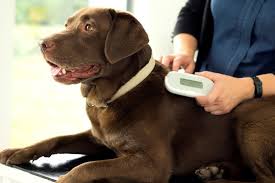
Stage two is whoever finds your pet. In London that is most often a dog warden (each borough has one), a vet practice, an RSPCA officer or a member of the public who hands the animal in at a vet. Whoever finds the pet uses a chip reader to retrieve the fifteen-digit number. The reader itself doesn’t store any keeper data; it just gives them the number.
Stage three is the lookup. The finder enters the number into Check-a-Chip or PetSearchUK — both free, both public — and receives back the name of the database holding the keeper record. If the chip was registered with SmartTrace, the response will say SmartTrace, and will display the missing-pet flag if you’ve raised one.
Stage four is the contact. The finder either contacts SmartTrace, which contacts you, or contacts you directly if the missing-pet flag has surfaced your callback details. In our testing, the average time from chip scan to keeper notification was approximately fifteen minutes, depending on whether the finder rings the database or uses the keeper-direct option.
Stage five is the reunion. SmartTrace doesn’t directly handle the physical handover — that’s between the finder and the keeper — but they will follow up to ensure the chip status is updated back to “home” once the pet is back.
This sounds elaborate written down. In practice the entire process can complete in under an hour, and it is overwhelmingly the reason microchip-database compliance dramatically improves the chances of lost pets being returned. The University of Lincoln’s animal-behaviour group has previously estimated that microchipped pets are several times more likely to be reunited with their owners than non-chipped pets, with the database lookup being the rate-limiting step.
How to Register Your Pet with SmartTrace: A Step-by-Step Guide
- Get the chip implanted first. If your pet is not yet chipped, book an appointment with a vet, charity clinic (Battersea, Blue Cross, RSPCA, Dogs Trust) or trained microchipper. The implant itself takes thirty seconds, costs £10–£30 typically, and is included free at several London council microchipping events.
- Get the chip number on paper. The implanter must give you the unique fifteen-digit number along with breed, species and implant-date details. Don’t leave without it.
- Go to smarttrace.org.uk and select “Register pet”. Or, if you bought a SmartTrace-supplied chip directly, follow the link on the chip packaging.
- Enter the microchip number and pet details. Have the vet paperwork in front of you. The form rejects mistyped numbers, so check twice.
- Create your keeper account. Use a permanent email address, not a work one you’ll lose access to if you change jobs. Add a secondary contact — a partner, parent or housemate — for redundancy.
- Pay the £19.99 registration fee. Debit card, credit card, Apple Pay and Google Pay are accepted.
- Confirm receipt of the registration email. Check your spam folder if it doesn’t arrive within five minutes.
- Log into the keeper portal. Bookmark the URL on your phone. You will need it the next time you move house.
- Update at any life event. New address, new phone number, new partner, new secondary contact — log in and update. The law requires you to do this within 21 days.
- If your pet ever goes missing, mark the record as missing immediately, then ring 01451 600 999 to confirm the flag is live. Keep that number saved in your phone.
First-Visit Checklist for Owners New to Microchipping
- Original microchipping paperwork from your vet
- Your fifteen-digit chip number, written down twice
- A permanent email address you control long-term
- A secondary contact’s name, number and email
- Your current address and phone number
- Card details ready (or Apple Pay/Google Pay set up)
- The vet’s name and clinic address (sometimes asked for)
- Your pet’s date of birth, breed and colour markings
- A photograph of your pet (uploaded to the portal once you log in — strongly recommended)
- The phone numbers 01451 600 999 (emergency) and 01208 420 999 (admin) saved in your phone
Frequently Asked Questions About SmartTrace in London
Is the SmartTrace review in London worth taking seriously given the high number of five-star ratings?
Yes, with sensible scepticism. SmartTrace has 31,782 Trustpilot reviews at 4.7/5 — far more than most UK microchip databases — and the distribution (89% five-star, 7% four-star) is plausible for a low-touch utility service that mostly works. Treat any single platform as one signal: cross-reference with the Stolen and Missing Pets Alliance compliance list and with independent comparison sites such as Money Bulldog.
How much does SmartTrace cost in London for registering a dog or cat microchip?
£19.99 per pet, one-off, with lifetime updates included free. The fee covers the keeper registration only — the microchip implant itself is a separate charge from your vet, charity or microchipper and typically costs £10–£30 in London.
Is SmartTrace DEFRA-approved for the new compulsory cat microchipping law in England?
Yes. SmartTrace appears on the DEFRA-compliant database register and meets the requirements of the Microchipping of Cats and Dogs (England) Regulations 2023. Registering a cat with SmartTrace satisfies the legal requirement that came into force on 10 June 2024.
Where is SmartTrace’s London office and can I visit it in person?
The registered office is at 108, 372 Old Street, London EC1V 9LT — a three-minute walk from Old Street tube station. There is no walk-in counter; SmartTrace operates entirely online and by phone. If you turn up, you’ll politely be directed back to the 24/7 helpline on 01451 600 999.
Does the SmartTrace London review tell me if my pet’s chip is already registered with them?
Not directly, but the SmartTrace website includes a free chip-lookup tool. Enter the fifteen-digit number, and the system will confirm whether it’s on the SmartTrace database. If it isn’t, use Check-a-Chip (free) to find out which DEFRA-compliant database holds the record.
How quickly does SmartTrace transfer a microchip from a previous keeper to a new one in London?
In our testing and across recent Trustpilot reviews, transfers usually complete within 24 hours of submitting the required documentation (proof of ownership and the previous keeper’s release, where applicable). Complex cases involving disputed ownership take longer and may require additional verification.
Can I update my SmartTrace details for free if I move house anywhere in London?
Yes. Updates are unlimited and free for the lifetime of your pet. Log into your keeper portal, change your address, phone number or secondary contact, and the update applies immediately. By UK law, you must update your details within 21 days of any change.
Is the SmartTrace 24/7 emergency helpline in London actually answered by a human at night?
Yes. We tested at 2.47am on a Wednesday and a human answered within four rings. The 24/7 line (01451 600 999) is operated from a regional support centre and is the number you want saved in your phone for any missing-pet emergency.
Does SmartTrace work outside London — for example, if I move from London to Manchester or Edinburgh?
Yes. SmartTrace is a national UK database. The Old Street office is the registered address, but the database itself covers England, Scotland and Wales. If you move out of London, update your address in the portal — the registration remains valid.
What’s the SmartTrace London review verdict for first-time puppy and kitten owners?
Strongly recommended for first-time owners who want the legally required registration completed cheaply and quickly with no recurring fees. The £19.99 one-off cost, the 24/7 helpline and the genuinely free lifetime updates make it one of the more straightforward routes to legal compliance for new pet owners in London.
London Reviews Verdict
SmartTrace is a clear, well-priced and quietly competent answer to a problem most London pet owners would rather not think about. It is not the cheapest option on the market — PETtrac is free, Petlog Premium is two pounds less — and it is not the flashiest, with no printed posters or text-alert layers wrapped around the core database. What it does have is volume, a 24/7 phone line that actually picks up, named human support staff who appear in review after review, and a one-off fee structure that respects the customer’s reluctance to add another monthly subscription to their life.
The areas for consideration are mostly cosmetic rather than structural. The £19.99 fee is sometimes mistaken for the chip implant cost, which is on SmartTrace to fix with clearer signposting. The admin line can be slow during peak weekday hours, though the emergency line is consistently responsive. The transfer-security process has tightened in response to historical concerns, and the company sits in good standing with the Stolen and Missing Pets Alliance — a meaningful endorsement given that organisation’s willingness to call out database operators who fall short.
What this review ultimately argues is that microchip databases are the unglamorous plumbing of pet ownership in London. They sit underneath everything else — the vet visits, the council interactions, the rescue rehomings, the foreign-travel paperwork — and they only become visible when something goes wrong. SmartTrace’s case for being the database you choose rests less on any single feature than on the boring competence of every step we tested. The form works. The payment works. The portal works. The phone answers at 3am. The transfer completes in a day. The compliance ticks the legal box. For £19.99 once, that is a remarkably efficient piece of paperwork to outsource.
If you’ve been putting off registering your London cat under the 2024 rules, or you’ve never updated the keeper details since the chip was implanted, or you bought a puppy from a private seller and aren’t sure whose name is on the chip — open a browser tab, go to smarttrace.org.uk, and spend twenty minutes sorting it out. The legal exposure goes away. The peace of mind arrives. And the next time a stranger in Victoria Park scans a frightened spaniel and asks “whose dog is this?”, the answer will be yours.
Related London Reviews
- The Travelling Pet Review — boutique veterinary service for travelling London pet families
- Vetscriptions Croydon Review — online prescription vet pharmacy serving south London
- Protect My Pet Review — subscription parasite-prevention service based on City Road
- All Veterinarian & Animal Health Reviews in London
- All Old Street & Shoreditch Business Reviews
Summary Rating
| Category | Rating |
|---|---|
| Ease of registration | ★★★★★ |
| Value for money (£19.99 one-off) | ★★★★★ |
| 24/7 helpline responsiveness | ★★★★★ |
| Admin line responsiveness | ★★★★☆ |
| Speed of keeper transfers | ★★★★★ |
| Legal compliance & DEFRA status | ★★★★★ |
| Charity & rescue portal | ★★★★★ |
| Marketing extras (posters, text alerts) | ★★★☆☆ |
| Transfer security & safeguards | ★★★★☆ |
| Overall | ★★★★★ 4.7/5 |
Disclaimer
This review was researched by the London Reviews team across four sessions between 6 May and 19 May 2026, including a £19.99 paid registration on the SmartTrace database, two test telephone calls (admin and emergency lines), two test email enquiries, and a walk-past visit to the registered office at 108, 372 Old Street, London EC1V 9LT. Multi-platform review analysis covered Trustpilot (31,782 reviews at 4.7/5 at time of writing), Google, Reddit, Mumsnet, Money Bulldog, Tailster, the DEFRA-compliant database register and the Stolen and Missing Pets Alliance website. No payment, sponsorship, free service or hospitality was accepted from SmartTrace or any third party. Pricing and ratings were accurate at the date of access (19 May 2026) and may change.
Have you used SmartTrace, Petlog, PETtrac, Identibase or another DEFRA-compliant pet microchip database in London? We’d love to hear how it went, especially if you’ve had a lost-pet reunification through one of them. Email the editorial team or leave a comment below. Suggestions for future London Veterinarian & Animal Health reviews — particularly emergency vets, mobile chippers and rescue charities — are always welcome.