






By Amelia Wilson · Updated November 2026. This guide draws on public company announcements, funding coverage in the business press, and ecosystem reporting. Figures change fast in this sector; treat totals as indicative and verify before citing.
London’s claim to be Europe’s AI capital stopped being contested some years ago: the city hosts the continent’s densest cluster of AI companies, labs and capital, anchored by the fact that Google DeepMind, arguably the most consequential AI lab outside the United States, grew up in King’s Cross and never left. For anyone trying to read the scene, visitors, job-hunters, founders, or Londoners wondering why their neighbourhood café is suddenly full of GPU talk, here’s the honest map.
Why London, specifically
Three structural advantages compound. The universities: UCL, Imperial and the broader golden triangle produce machine-learning talent at a rate only a handful of global cities match, and DeepMind itself was a UCL-adjacent founding story. The capital: London remains Europe’s deepest venture market, and AI has taken the lion’s share of UK tech funding in recent years, with the UK ecosystem consistently ranked third globally behind the US and China. The anchor tenants: DeepMind’s King’s Cross campus seeded a generation of researchers who now found and staff the city’s startups, the classic Silicon Valley flywheel, running on the Victoria line.
The companies that define the scene
A snapshot of the names that recur in any serious survey of London AI, chosen for significance rather than completeness:
Google DeepMind, the gravitational centre: not a startup for years now, but its King’s Cross headquarters remains the ecosystem’s talent engine, and its spinouts matter in their own right, notably Isomorphic Labs, the Demis Hassabis-led drug-discovery company that raised one of Europe’s largest private biotech-AI rounds. Synthesia, the AI-video platform that became one of Britain’s defining unicorns, its avatar-generation tools now standard in corporate training worldwide. Wayve, the King’s Cross autonomous-driving lab whose SoftBank-led mega-round was among the largest in European AI history, betting on end-to-end learned driving against the sensor-heavy American approach. ElevenLabs, the voice-AI company with deep London roots, whose synthetic speech quietly powers half the audio tools you’ve met this year. Stability AI, the image-generation pioneer headquartered in London through the generative boom’s most turbulent chapter. Alongside them sits a strong applied tier, Quantexa in data intelligence, PolyAI in voice agents, Faculty in government and enterprise AI, Beamery in talent tech, and a fintech-AI contingent (London’s older speciality absorbing its newer one) too numerous to list honestly.
The geography
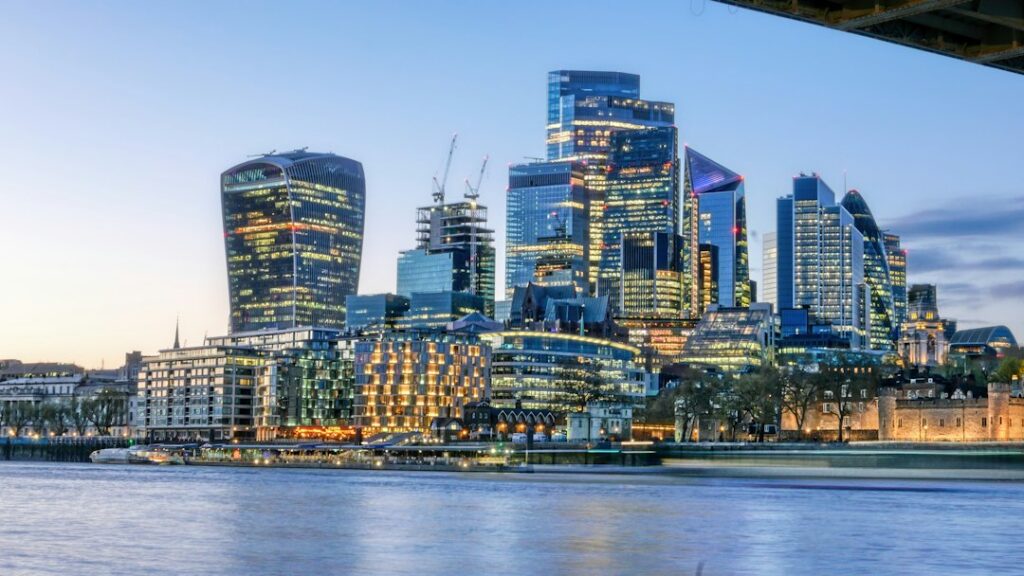
AI London has three postcodes worth knowing. King’s Cross is the institutional heart: DeepMind, Isomorphic, Wayve and the Knowledge Quarter’s research institutions (the Crick, the Turing Institute’s orbit, UCL’s expansion) make N1C the densest AI neighbourhood in Europe. Shoreditch and Old Street remain the startup floor, the generative wave largely rents where fintech rented before it, around the Silicon Roundabout the city never quite stopped mocking. And the City and Mayfair house the capital: the venture funds, the corporate AI labs of the banks, and the enterprise sales offices of everyone above. White City’s research cluster around Imperial earns an honourable mention.
The honest caveats
A balanced guide owes the counter-case. London’s AI boom rides on foreign capital and American scale-ups’ European offices as much as homegrown champions, and the exit record, companies staying independent to global scale, remains thinner than the founding record, DeepMind itself being the canonical “sold early to Big Tech” example. Compute costs and US salary competition pull senior talent west, visa policy keeps founders complaining, and every funding statistic in this sector dates faster than milk. The ecosystem’s genuine strengths, talent density, capital access, the DeepMind alumni network, are real; the triumphalism that sometimes decorates them deserves a discount.
Essentials for navigating the scene
- The anchor: Google DeepMind, King’s Cross, the reason the rest clusters where it does
- The flagship startups: Synthesia (video), Wayve (driving), ElevenLabs (voice), Isomorphic Labs (drug discovery), Stability AI (image), Quantexa, PolyAI, Faculty
- The districts: King’s Cross for labs, Shoreditch for startups, the City for capital
- The feeder institutions: UCL, Imperial, the Alan Turing Institute
- Events: London Tech Week each June is the scene’s annual census; AI-specific conferences now run year-round
- Caveat: company fortunes and funding figures in this sector move monthly, verify anything you plan to quote
Frequently asked questions
Is London really Europe’s AI capital?
By company count, capital raised and research output, yes, consistently ranked Europe’s first and the world’s third ecosystem behind the US and China, with Paris its only serious continental rival and the gap debated mainly by the French.
What’s London’s biggest AI success story?
DeepMind by impact, Synthesia and Wayve by startup valuation, ElevenLabs by consumer reach. The honest asterisk: the biggest of them sold to Google in 2014, and producing an independent giant remains the ecosystem’s unfinished business.
Where do AI companies actually hire from?
UCL and Imperial’s ML programmes, the DeepMind diaspora, and a steady import of European researchers for whom London remains the continent’s most liveable English-speaking tech hub, visa grumbles notwithstanding.
How can a visitor see the scene?
Walk King’s Cross’s Knowledge Quarter (the DeepMind building is unmarked but the neighbourhood tells the story), browse the Old Street startup floor, and time a visit to London Tech Week in June, the one week the whole ecosystem performs in public.
The bottom line
London’s AI scene is the real thing: Europe’s deepest pool of talent, capital and ambition, anchored by a world-class lab and a startup tier with genuine global names. It is also younger, more foreign-funded and less exit-proven than its press releases suggest, which is less a criticism than a description of where the story is: the interesting chapters are still being written, mostly within a mile of King’s Cross station.