


Close Menu
London ReviewsLondon Reviews
  • Home
  • What’s On News
  • Going Out
  • Reviews
  • Spotlight
  • AI News
  • Tech & Gadgets
  • Travel
  • Horoscopes
  • Web Stories
  • Forgotten eBooks

Subscribe to Updates

Get the latest creative news from FooBar about art, design and business.

What's Hot
Centuries-old ‘supercomputer’ manufactured in Lahore up for auction at Rs 94 crore

Centuries-old ‘supercomputer’ manufactured in Lahore up for auction at Rs 94 crore

April 27, 2026
Which European country has the largest number of AI data centers?

Which European country has the largest number of AI data centers?

April 26, 2026
Sabastian Sawe: How the marathon world record holder became a miracle runner by chance

Sabastian Sawe: How the marathon world record holder became a miracle runner by chance

April 26, 2026
Facebook X (Twitter) Instagram
  • Privacy
  • Terms
  • Advertise
  • Contact
Facebook X (Twitter) Instagram
London ReviewsLondon Reviews
Subscribe
  • Home
  • What’s On News
  • Going Out
  • Reviews
  • Spotlight
  • AI News
  • Tech & Gadgets
  • Travel
  • Horoscopes
  • Web Stories
  • Forgotten eBooks
London ReviewsLondon Reviews
Home » Centuries-old ‘supercomputer’ manufactured in Lahore up for auction at Rs 94 crore
What's On News

Centuries-old ‘supercomputer’ manufactured in Lahore up for auction at Rs 94 crore

April 27, 20265 Mins Read
Facebook Twitter Pinterest LinkedIn Tumblr Email Telegram WhatsApp
Centuries-old ‘supercomputer’ manufactured in Lahore up for auction at Rs 94 crore
Share
Facebook Twitter LinkedIn Pinterest Email

image sourceCourtesy Sotheby’s

image captionMade in the 17th century, the instrument is being offered for auction at Sotheby’s in London
Description of the article

A magnificent 17th-century brass astrolabe, or simply called an astronomical computer, was for years part of the private collection of the royal family of Jaipur, India. Now this ‘supercomputer’ is being offered for auction at Sotheby’s in London.

Benedict Carter, head of Islamic and Indian art at Sotheby’s, told the BBC it was ‘probably the largest of its kind’ astrolabe ever to be exhibited.

This instrument was part of the royal collection of Maharaja Sawai Mansingh II of Jaipur. After his death it went to his wife Maharani Gayatri Devi who was one of the most respected and famous women of her time. Later, during his lifetime, the instrument passed into a private collection.

Astrolabes are flat instruments made of metal consisting of several layers. Its layers are interconnected. In the past, these instruments were used to tell time, map the stars, find the direction of the Kaaba and check the rotation of the sky.

Dr Federica Gigante from the Oxford Center for the History of Science, Medicine and Technology says that these devices offer a 3D picture of the world in real time.

According to him, you could use these devices to ‘calculate the time of sunset and sunrise, the height of a building, the depth of a well, distance and even predict the future with their help.’

Dr. Gigante says that horoscopes were also prepared with their help in the past.

Close up image of the inscriptions and the ecliptic ring of the astrolabe showcase the fine craftsmanship.

image sourceCourtesy Sotheby’s

image captionIn the past, these instruments were used to tell time, map the stars, find the direction of the Kaaba and check the rotation of the sky.

Such instruments were first developed in ancient Greece in the second century BC, and by the eighth century they had spread to the Islamic world. In the following centuries, they were produced on a large scale in Iraq, Iran, North Africa and Andalusia (present-day Spain).

This particular astrolabe was manufactured in Lahore in the early 17th century. At that time, Lahore had become a prominent center for the production of these instruments in the Mughal world. This instrument was developed by two brothers Qaim Muhammad and Muhammad Muqim for a Mughal Amir.

Both these brothers belonged to the so-called ‘Lahore School’ which was one of the most famous centers of astrology in those days. This skill was passed down within the same family.

The brothers produced only two astrolabes jointly. The other device is preserved in a museum in Iraq. This astrolabe was prepared for Aqa Afzal, who was in charge of the administrative affairs of Lahore during that period.

Aqa Afzal belonged to the city of Isfahan in Iran and served in many high positions during the Mughal emperors Jahangir and Shah Jahan. The unusual size and splendor of this instrument reflects the high status of its patron.

Painting of Afzal Khan 'Allami, the patron saint of the astrolabe, attributed to Balchand. Circa 1638

image sourceAFP via Getty Images

image captionThis astrolabe was prepared for Aqa Afzal, who was in charge of the administrative affairs of Lahore during that period

According to Benedict Carter, ‘the instrument weighs 8.2 kg and has a diameter of about 30 cm and a height of about 46 cm, which is about four times larger than a typical astrolabe produced in India in the 17th century.’

According to Sotheby’s, the instrument features the names of 94 cities with their latitude and longitude, while the prongs representing 38 stars are inlaid with intricate floral carvings.

According to Carter, this level of subtlety is a reflection of the extraordinary skill of the Lahore School, which was ‘at its peak’ at the time. The instrument combines technical precision, practical utility and aesthetic beauty in a way that sets it apart from some of the earlier examples of the same style made in the Middle East.

The instrument also reflects a broader scientific trend in the Mughal court, where rulers and nobles were keenly interested in developments in astronomy and astrology.

A black and white photo of Sawai Man Singh II (1912 - 1970), the Mahraja of Jaipur, and his wife, Maharani Gayatri Devi (1919 - 2009). The Maharani is holding a bottle of champagne and their son Prince Jagat Singh (1949 - 1997) stands in between, holding a trophy at a polo event in 1957.

image sourceGetty Images

image captionMaharaja Sawai Man Singh II (right) gave this instrument to his wife Maharani Gayatri Devi (left).

“Not only is it big, beautiful and heavy, but it is also extraordinarily accurate, able to tell the exact angle of elevation of a celestial body,” says Dr Gigante.

According to him, probably the only comparable instrument is the astrolabe made for Shah Abbas II of Persia.

Sotheby’s says the instrument’s excellent condition and royal background make it of interest to museums and similar collectors.

It is expected to cost between 15 to 25 million pounds (about 20 to 34 million dollars). This amount is between 56 crore to 94 crore in Pakistani currency.

The current record for the most expensive such instrument sold is held by an Ottoman astrolabe, made for Sultan Bayezid II and much smaller. In 2014, that astrolabe sold for just under £1 million.

The astrolabe will be on display at Sotheby’s London galleries from April 24 to 29.

Share. Facebook Twitter Pinterest LinkedIn Tumblr Email

Related Posts

Which European country has the largest number of AI data centers?

Which European country has the largest number of AI data centers?

April 26, 2026
Sabastian Sawe: How the marathon world record holder became a miracle runner by chance

Sabastian Sawe: How the marathon world record holder became a miracle runner by chance

April 26, 2026
Millions of jobs lost due to internet ban in Iran, who is responsible for this situation?

Millions of jobs lost due to internet ban in Iran, who is responsible for this situation?

April 26, 2026
Spring allergies: The season of allergic rhinitis is expanding. How do you tolerate its symptoms?

Spring allergies: The season of allergic rhinitis is expanding. How do you tolerate its symptoms?

April 26, 2026
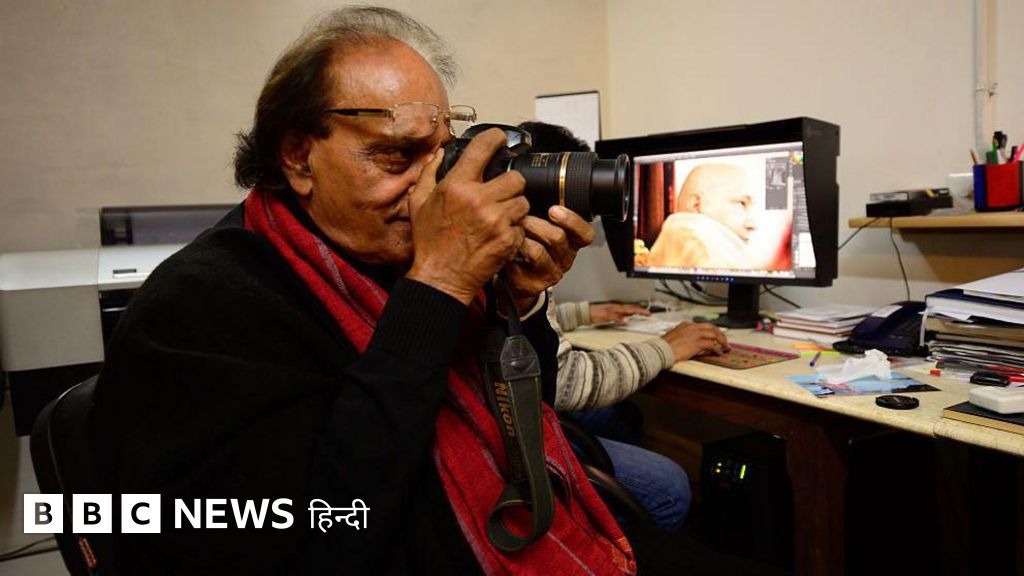
When Raghu Rai told that ‘If he had not been a photographer, he would have been a gardener’

When Raghu Rai told that ‘If he had not been a photographer, he would have been a gardener’

April 26, 2026
China’s ‘obese prison’ where snacks are banned, hours of exercise and twice-daily weigh-ins

China’s ‘obese prison’ where snacks are banned, hours of exercise and twice-daily weigh-ins

April 26, 2026
Editors Picks
Which European country has the largest number of AI data centers?

Which European country has the largest number of AI data centers?

April 26, 2026
Sabastian Sawe: How the marathon world record holder became a miracle runner by chance

Sabastian Sawe: How the marathon world record holder became a miracle runner by chance

April 26, 2026
Millions of jobs lost due to internet ban in Iran, who is responsible for this situation?

Millions of jobs lost due to internet ban in Iran, who is responsible for this situation?

April 26, 2026
Spring allergies: The season of allergic rhinitis is expanding. How do you tolerate its symptoms?

Spring allergies: The season of allergic rhinitis is expanding. How do you tolerate its symptoms?

April 26, 2026
Latest News
When Raghu Rai told that ‘If he had not been a photographer, he would have been a gardener’

When Raghu Rai told that ‘If he had not been a photographer, he would have been a gardener’

By News Room
China’s ‘obese prison’ where snacks are banned, hours of exercise and twice-daily weigh-ins

China’s ‘obese prison’ where snacks are banned, hours of exercise and twice-daily weigh-ins

By News Room
How Iran changed the definition of war by targeting American tech companies in Gulf countries?

How Iran changed the definition of war by targeting American tech companies in Gulf countries?

By News Room
London Reviews
Facebook X (Twitter) Instagram Pinterest Vimeo YouTube
  • Privacy Policy
  • Terms of use
  • Advertise
  • Contact
  • Disclosure
© 2026 London Reviews. All Rights Reserved.

Type above and press Enter to search. Press Esc to cancel.