






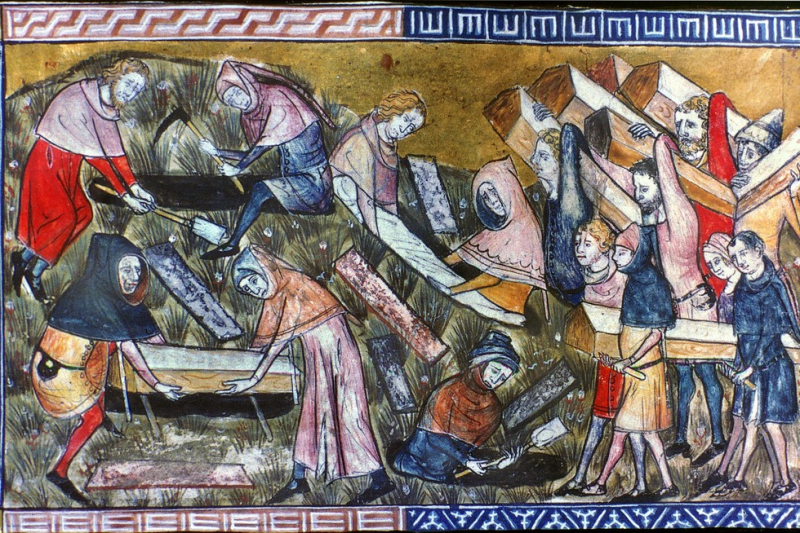

They turned to theological interpretations due to a lack of understanding of black deaths and the presence of intense religious passion in medieval Europe. In the Bible, Pest was usually considered a kind of divine punishment by God, with the ten plagues delivered against the Egyptians when Pharaoh refused to free God’s people as the most well -known example. As a result, many considered that the outbreak was a divine punishment from God for social crime such as desire, greed, blasphemy, pride, envy and heresy. People have even tried to cure the disease by engaging in extreme self -flavoring as a kind of conversion.
In the 1300s, a preacher on the Pope claimed that a “strange picture in the sky was the foreplay to the plague. Many people who hit the disease claimed to have had visions of the devil and spirits. Such beliefs and theories were widespread, and for some they proved to be harmful. Heretics, levänska, foreigners and masses were directed.
This shows a broad lack of knowledge about infectious diseases. Not just because it supports a setting based on the assumption that the reception of the disease is predetermined, but also because the black plague was sent by God would have helped its spread. This way of thinking also promoted social gatherings, which helped disease transfer. Self -flagellation, for example, took place in groups in city squares.