





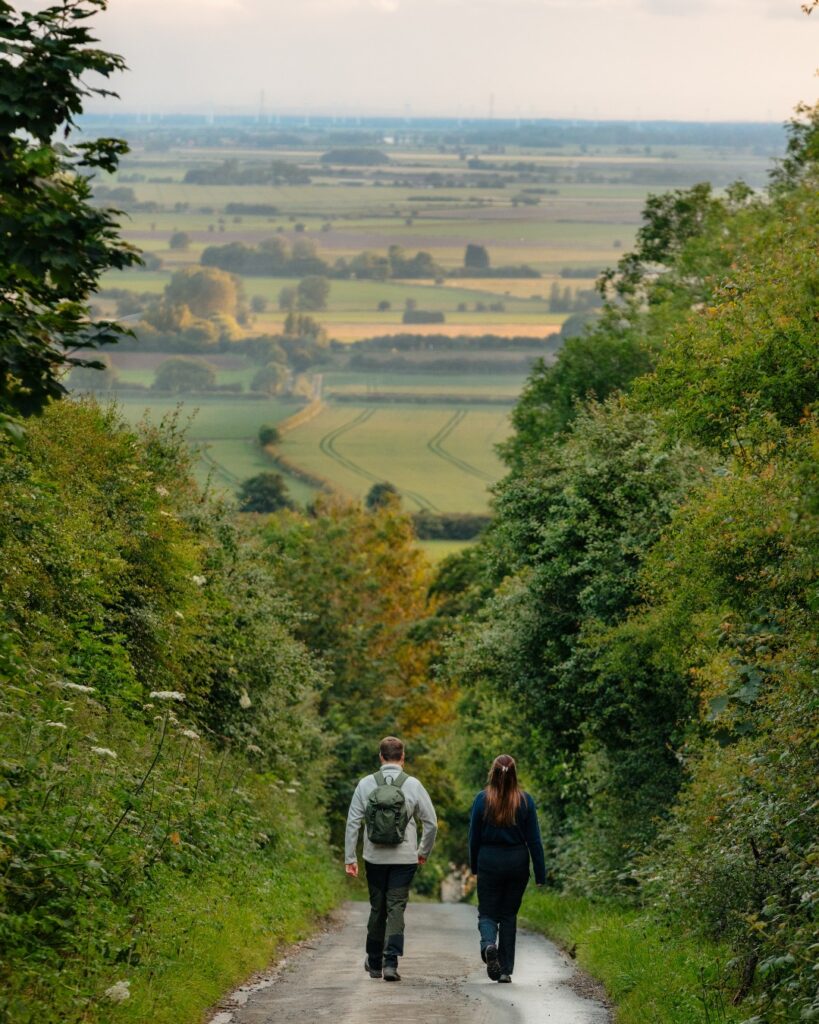
This Yorkshire Wolds Way review by London Reviews is the most thorough independent assessment available of England’s shortest — and arguably most underrated — National Trail. We’ve cross-referenced TripAdvisor, AllTrails, walking holiday providers, the National Trails website, and dozens of walker testimonials to bring you a comprehensive, honest guide to this 79-mile chalk landscape walk from Hessle to Filey.
Last updated: 4 May 2026 — Independently researched and written by the London Reviews editorial team. We do not accept payment from the businesses, trails or attractions we review.
Looking for an honest Yorkshire Wolds Way review? This is the most thorough independent assessment of the Yorkshire Wolds Way — a 79-mile National Trail running through the chalk landscape of the Yorkshire Wolds from Hessle Haven (near the Humber Bridge) to Filey Brigg on the North Yorkshire coast. Below we cover the route in detail, what to expect, how much it costs, what walkers love (and don’t), and whether this quiet trail deserves a place on your walking bucket list.
At a Glance
| Trail Name | Yorkshire Wolds Way |
| Trail Status | National Trail (designated 1982) |
| Distance | 79 miles (127 km) |
| Start Point | Hessle Haven, near the Humber Bridge, East Riding of Yorkshire |
| End Point | Filey Brigg, North Yorkshire coast |
| Direction | Usually south to north (Hessle to Filey) |
| Total Elevation Gain | Approx. 1,900 m (6,234 ft) |
| Highest Point | Approx. 200 m (656 ft) on the northern escarpment |
| Difficulty | Easy to moderate |
| Recommended Duration | 5–8 days (6–7 days most common) |
| Fastest Known Time | 11 hours, 34 minutes, 31 seconds (Steve Bateson, November 2023) |
| Best Months | May and September (June–July for poppy fields) |
| Terrain | Chalk hills, dry valleys, farmland, woodland, coastal cliffs |
| Waymarking | Excellent — white acorn National Trail symbols throughout |
| Connects With | Cleveland Way at Filey Brigg; Trans Pennine Trail at Hessle |
| Key Highlights | Humber Bridge, Londesborough Park, Millington Dale, Thixendale, Wharram Percy, Filey Brigg |
| TripAdvisor Rating | 4.9 / 5 (48 reviews) — Travellers’ Choice Award |
| AllTrails Rating | Rated “Hard” — 83.9 miles, 12,444 ft elevation gain (36 reviews) |
| Self-Guided Walking Holiday | From approx. £865 pp (6 days walking, 7 nights B&B, luggage transfers) |
| DIY Cost (Budget) | Free to walk; budget £50–£80/night for B&B accommodation |
| Dogs | Yes, on leads (livestock present in many areas) |
| Mobile Signal | Generally reasonable with occasional dead spots |
| BBC Documentary | “Yorkshire Wolds Way” (2017), presented by Paul Rose |
| Notable Connection | David Hockney painted extensively in the Yorkshire Wolds from 1997 onwards |
| Accessibility | Some accessible sections available (see National Trails Circular Walks page); majority involves stiles, gates, and uneven terrain |
| Maps Required | OS Explorer 293, 294, 300, 301 (or Cicerone guidebook) |
Introduction — Why We’re Reviewing the Yorkshire Wolds Way
There are 20 National Trails across the United Kingdom. The Pennine Way gets the glory. The South West Coast Path gets the photographs. The Coast to Coast gets the television programmes. And the Yorkshire Wolds Way? It gets overlooked. BBC presenter Paul Rose described it in a 2017 documentary as “arguably Britain’s least well-known national walking trail.” He wasn’t wrong — and that, paradoxically, might be its greatest asset.
Opened on 2 October 1982 as England’s tenth National Trail, the Yorkshire Wolds Way runs 79 miles from the banks of the Humber estuary at Hessle Haven to the dramatic headland of Filey Brigg on the North Sea coast. It is the shortest of all the National Trails, passing through a chalk landscape of rolling hills, dry valleys, quiet farmland and villages so small they barely register on the map. And it is glorious.
What prompted this review is the trail’s sheer consistency: a 4.9 out of 5 rating on TripAdvisor with a Travellers’ Choice Award, near-unanimous praise from walkers, and a reputation for exceeding expectations precisely because expectations are modest. This is not a trail that shouts. It’s one that quietly rewards those who lace up their boots and give it a go. We wanted to find out whether it deserves a spot alongside the more famous trails — or whether its anonymity is justified. If you’re a Londoner looking for a week away from the noise, this review is for you. And if you’ve already read our Mayfield Lavender Farm review and fancied something more adventurous, read on.
Getting There — Transport and Access
From London
The starting point at Hessle is reachable from London Kings Cross via Hull Trains — a direct service taking approximately 2 hours 40 minutes to Hull, from where a frequent local train covers the nine minutes to Hessle station. From Hessle station, it’s a short walk to Hessle Haven and the trail’s official start. The end point at Filey is served by Northern Rail, with trains to Scarborough (15 minutes), from where TransPennine Express services connect to York and onwards to London Kings Cross.
By Car
Parking is available at various points along the route, though the National Trails team urges walkers not to block gateways or park on village greens. If you plan to leave your car for several days, informing the local police is advisable. Many accommodation providers along the trail offer pick-up and drop-off services for walkers, which is particularly useful given the trail’s remoteness from large settlements.
By Ferry
An unusual option for international walkers: P&O North Sea Ferries operates services into Hull from Rotterdam and Zeebrugge, with a courtesy bus taking foot passengers to Hull Rail Station. From there, Hessle is one stop away by train. It’s a quirky but perfectly workable way to begin a walk.
Transport Along the Route
This is where things get tricky. Public transport along the Wolds Way is, to put it charitably, thin on the ground. There is no single bus service running parallel to the trail, so getting between two points both on the route typically means catching two buses via an intermediate town. Many walking holiday providers factor in taxi transfers to compensate for this, and several B&B owners willingly collect walkers from the trail and return them the following morning. Plan ahead — spontaneity is not the Wolds Way’s forte when it comes to transport.
The Route — What to Expect on the Trail
The Yorkshire Wolds Way divides naturally into six or seven stages, depending on your pace and how you’ve arranged accommodation. The trail begins at the Humber foreshore, passes beneath the Humber Bridge (which was, when opened in 1981, the world’s longest single-span suspension bridge), and follows the estuary westward before turning north into the chalk hills.
Of the 79 miles, roughly 40 are on footpaths, 16 on bridleways, and the remainder on minor roads, public paths or byways. The route climbs gently through wooded slopes, plunges into serene dry valleys, and opens onto wide-sky field tops where the views stretch for miles in every direction. The terrain is chalk throughout — white pebbles underfoot, pale cliffs at the edges of valleys, and that distinctive springy turf beloved by downland walkers.
The final section descends from the northern escarpment of the Wolds, crosses lower farmland through Muston, and ends at the coastal headland of Filey Brigg, where a stone sculpture carved with the National Trail acorn marks the finish. It’s also the point where the Cleveland Way begins — or ends, depending on your ambition — and many walkers combine the two trails into a single 200-mile expedition.
Route Highlights — The Best Bits
The Humber Bridge
Walking directly beneath one of the world’s great suspension bridges on the first morning is a genuinely dramatic start. The foreshore path here offers views of the vast estuary and passing shipping, with flocks of wading birds for company. A word of caution: the low-tide route at North Ferriby can be muddy and silted following high tides, and the National Trails team currently recommends using the alternative high-tide route via Church Road instead.
Londesborough Park
This handsome parkland, originally laid out in the late 17th century for the 1st Lord Burlington, is one of the route’s real treats. The estate was once home to the Duke and Duchess of Devonshire, and traces of the original hall remain visible. Over Londesborough Wold, to the east, lies the course of the Kiplingcotes Derby — the oldest horse race in England, first recorded over 450 years ago. Red kites circle near their roosts here with satisfying frequency.
Millington Dale
Widely considered the most beautiful section of the entire trail. The dry chalk valleys near Millington are spectacular — lush green sweeping hillsides with barely a soul in sight. The village itself has the Gait Inn, a pub with a large garden that serves as a vital refreshment point and earned repeated affection from walkers.
Thixendale
A tiny village tucked into a fold of the Wolds where six dry valleys converge. Thixendale appears to have been placed there by a set designer — it’s almost absurdly picturesque. The village has a small shop and is close to several of David Hockney’s painting locations, including the “Three Trees near Thixendale” series in which he studied the same trees across the seasons.
Wharram Percy
The trail passes through the remains of England’s most famous deserted medieval village, managed by English Heritage. Wharram Percy was continuously occupied for about 600 years before being abandoned around 1500, and is the most intensively studied of Britain’s 3,000 known deserted medieval villages. The ruined church of St Martin, the grassed-over foundations of some 30 houses, and a recreated millpond occupy a hauntingly beautiful valley. It’s free to visit, atmospheric, and — depending on the time of day — often entirely deserted, which feels oddly appropriate.
Filey Brigg
The finish. A dramatic rocky promontory jutting into the North Sea, rich in marine life and backed by the charming seaside town of Filey. Multiple walkers describe the moment of reaching the coast after days of inland chalk countryside as genuinely emotional. It’s the perfect place to remove your boots and paddle.
Difficulty, Terrain and Fitness
The Yorkshire Wolds Way sits in a comfortable middle ground. It isn’t flat — don’t be fooled by descriptions of “gentle” terrain — but nor does it involve anything that a reasonably fit person couldn’t manage. The National Trails website describes it as “suitable for almost all abilities” with “few short exceptions” to the absence of serious hills. AllTrails classifies it as “hard,” but that rating reflects cumulative distance and elevation gain rather than any single demanding section.
The reality is a trail of constant undulation. You’re going up and down chalk hills all day — individually modest, cumulatively tiring. Multiple walkers report being surprised by two or three genuinely steep ascents, particularly on the northern escarpment, and most describe averaging around 2.3 miles per hour rather than the 3 mph they’d expected on “easy” terrain. Total elevation gain across the full route is approximately 1,900 metres, with daily climbs of 50–150 metres being typical. No scrambling, no technical terrain, no exposed ridges. Good boots, waterproofs, warm layers, and plasters are all you need.
Navigation is straightforward throughout. The acorn waymarking is excellent — one reviewer noted you’d have to try quite hard to get lost — though some signs have deteriorated due to rotting posts, a complaint that surfaces periodically in reviews.
Accommodation and Refreshments
Accommodation is the Yorkshire Wolds Way’s biggest practical challenge. The trail passes through or near only a handful of villages, and options for bed and breakfast directly on the route are limited. Advance booking is strongly recommended, particularly during May and September (the busiest months). Several B&B owners offer pick-up and drop-off services from the trail, which is sometimes the only practical option.
Refreshment stops are similarly sparse. There are long stretches with no shop, pub, or café, and walkers should carry water, snacks, and packed lunches as standard. Some accommodation providers will prepare packed lunches for the following day on request. The isolation is part of the charm for most walkers, but it requires more planning than trails through well-serviced areas like the Cotswold Way or the South Downs Way.
Wild camping is unofficial but practised by some walkers. Water supply is the main concern in this chalkland area — the valleys are called “dry valleys” for good reason — with the official map showing only one wayside tap. There are also a couple of bunkhouses near the trail, though no Youth Hostel within practical distance.
Walking Holiday Packages and Pricing
Several established companies offer self-guided walking holidays along the Yorkshire Wolds Way, typically including B&B accommodation, daily luggage transfers, maps, and taxi transfers where needed. Prices vary by provider and season, but as a guide:
- Walk With Williams: From £865 per person (based on 2 sharing), including 7 nights B&B, 6 days walking, luggage transfer, maps, and taxis. Solo travellers pay approximately £1,255 due to single occupancy charges.
- Contours Walking Holidays: 5–8 day options with map, guidebook, accommodation and daily luggage transfers. Highly rated by customers, with praise for detailed walking instructions and flexible arrangements.
- Mickledore Travel: 5 or 8 day itineraries, graded “easy” with daily distances of up to 12 miles. Note that the 8-day option may require taxi transfers to and from accommodation on several nights.
- Discovery Travel: Self-guided packages with solo walker supplements and single supplements available. Praised for excellent communications with both walkers and accommodation providers.
- Let’s Go Walking: 7–9 night itineraries with hand-picked guest houses, inns and small hotels with en-suite bathrooms. Can cater for special diets and tailor distances.
For those arranging independently, budget approximately £50–£80 per night for B&B accommodation, plus food and incidental transport costs. The walk itself is free — it’s a public right of way.
Wildlife, Nature and the Hockney Connection
The Yorkshire Wolds Way is exceptionally rich in wildlife for a trail that doesn’t pass through a National Park. Hares are almost a certainty — walkers report seeing them by the dozen, including boxing pairs in spring. Red kites circle near their roosts at Londesborough. Deer are common. One walker reported being trapped by bullocks at Wharram Percy (a reminder that this is working agricultural land). Birdlife is abundant in the hedgerows, and butterflies and wild flowers populate the chalk grassland in summer. On the Humber foreshore, wading birds and passing shipping share the view, and porpoises have been spotted from the estuary end of the trail.
The WANDER art project — “Art along the Yorkshire Wolds Way” — has installed a series of sculptures and poetry-etched benches along the route, including the earthwork sculpture “Time and Flow” carved into the chalk landscape near Thixendale. These provide moments of contemplation and creative surprise along what is already a contemplative walk.
And then there’s Hockney. Bradford-born David Hockney painted the Yorkshire Wolds extensively from the late 1990s onwards, producing celebrated works including “The Road Across the Wolds” (1997), the enormous “Bigger Trees Near Warter” (2007, exhibited at the Royal Academy), and the “Arrival of Spring in Woldgate” iPad drawings. The Wolds near Thixendale, Kilham and Warter are now informally known as “Hockney Country,” and it’s possible to follow a self-guided trail visiting many of the locations he painted. The landscape that inspired one of Britain’s most significant living artists is, to use a wholly non-banned word, remarkable.
What Walkers Actually Say: Review Analysis
TripAdvisor
The Yorkshire Wolds Way holds a 4.9 out of 5 rating on TripAdvisor from 48 reviews, earning a Travellers’ Choice Award (placing it in the top 10% of attractions on the platform). It is ranked #736 of 3,167 things to do in Yorkshire — a middling ranking that reflects low review volume rather than poor quality. The overwhelming majority of reviews are 5-star, with walkers consistently praising the peace, the scenery, the wildlife and the sense of solitude. Negative comments are rare and tend to focus on practical matters: deteriorating signage, limited public transport, and sparse refreshment options.
AllTrails
AllTrails lists the Yorkshire Wolds Way at 83.9 miles with 12,444 feet of elevation gain, rating it as “hard” and estimating 37 hours of walking time. It has 36 reviews, with walkers generally positive but noting mud on the early stages, some road walking, and the challenge of the North Ferriby foreshore section. The app breaks the trail into 7 segments for practical planning.
Walking Holiday Providers
Testimonials from Contours, Mickledore and other providers are overwhelmingly positive. Phrases that recur include “pleasantly surprised,” “had no knowledge of this area,” and “wonderfully opened up our home county.” Several customers describe the walk as better than expected, which appears to be a consistent theme: the Wolds Way exceeds modest expectations with quiet distinction.
What Walkers Love Most
1. The Solitude. Walkers repeatedly describe encountering only 2–4 other people on entire days of walking. On a bank holiday. This is, by any measure, extraordinary for a National Trail. One reviewer called it “heaven” and they weren’t exaggerating by much.
2. The Gentle Beauty. This isn’t dramatic, headline-grabbing scenery. It’s understated, rolling, and deeply peaceful — chalk valleys of vivid green, wide-sky horizons, and the kind of quiet that takes a day or two to properly notice. Multiple walkers describe it as a genuine discovery.
3. The Wildlife. Hares everywhere. Red kites overhead. Deer in the woodlands. Hedgerow birds by the score. Several walkers report the wildlife encounters as a genuine highlight, enhanced by the absence of crowds.
4. The Waymarking. Clear, consistent, and easy to follow. The acorn symbols are well-maintained on the majority of the route, and walkers consistently praise the signposting as among the best of any National Trail.
5. The Wharram Percy Experience. Walking into a deserted medieval village that’s been uninhabited for 500 years, in the middle of a beautiful Wolds valley, is the kind of experience that stays with you. Multiple walkers single it out as the highlight of the entire trail.
6. The Sense of Achievement. Completing a National Trail end-to-end in under a week, without needing mountaineering fitness or extreme weather gear, is wonderfully satisfying. This is a trail that offers proper achievement without unreasonable demands.
7. The Finish at Filey. Reaching the coast after days of inland walking, kicking off your boots, and going for a paddle in the North Sea — walkers describe this as a genuinely moving conclusion to the walk.
Areas for Consideration
1. Accommodation Scarcity. This is the single most common practical complaint. There simply aren’t enough places to stay directly on the route, and some stages require taxi transfers to and from accommodation that may be several miles off the trail. Advance booking is essential and choice is limited in some areas.
2. Lack of Refreshments. Long stretches with no pub, shop, or café mean walkers must carry food and water. This is manageable with planning but catches out those expecting the regular refreshment stops of more populated trails.
3. Limited Public Transport. Getting between points on the trail without a car is difficult. No single bus route serves the trail, and connections often require multiple changes via towns that aren’t on the route. Walking holiday providers mitigate this with taxi transfers, but independent walkers need careful planning.
4. Deteriorating Signage in Places. Several walkers note rotting posts and missing signs, particularly on less-maintained sections. The waymarking is generally excellent, but it isn’t flawless, and a map (paper or digital) is a sensible backup.
5. The North Ferriby Foreshore. The low-tide route along the Humber at North Ferriby is muddy, silted, and unpleasant after high tides. The high-tide alternative via Church Road is strongly recommended but adds road walking. It’s the weakest section of the trail by some margin.
6. Litter on Some Sections. A handful of walkers mention discarded litter — bottles, tissues, sweet wrappers — on parts of the trail, which jars with the otherwise pristine countryside. It’s not widespread, but it’s noted.
Who Is the Yorkshire Wolds Way Best For?
✅ First-time long-distance walkers — manageable distance, good waymarking, no technical terrain ✅ Walkers seeking solitude — you may go hours without seeing another person ✅ Nature lovers and birdwatchers — hares, red kites, deer, hedgerow birds ✅ History enthusiasts — Wharram Percy, Londesborough, Bronze Age remains ✅ David Hockney admirers — walk through the landscape he painted for decades ✅ Couples and friends doing a week’s walking holiday — comfortable pace, cosy pubs in the evenings ✅ Walkers wanting to combine with the Cleveland Way — the two connect at Filey Brigg for a 200-mile double ✅ Londoners wanting a proper escape — about 3 hours by train from Kings Cross to the start
⚠️ Those wanting dramatic mountain scenery — this is chalk downland, not the Lake District ⚠️ Walkers who prefer plentiful facilities — refreshment stops are scarce ⚠️ People reliant on public transport between stages — services are extremely limited ⚠️ Wheelchair users and those with significant mobility limitations — most of the trail involves stiles, gates, and uneven terrain (though some accessible sections exist) ⚠️ Those wanting a social walking experience — you’ll be largely on your own out here
How the Yorkshire Wolds Way Compares
| Feature | Yorkshire Wolds Way | Cleveland Way | Coast to Coast | South Downs Way |
|---|---|---|---|---|
| Distance | 79 miles | 110 miles | 190 miles | 100 miles |
| Duration | 5–8 days | 7–9 days | 12–16 days | 7–9 days |
| Difficulty | Easy–Moderate | Moderate | Moderate–Hard | Easy–Moderate |
| Terrain | Chalk downland | Moorland + coast | Lakes, Dales, Moors | Chalk downland |
| Highest Point | ~200 m | 454 m | ~780 m | ~260 m |
| National Trail | ✅ Yes | ✅ Yes | ✅ Yes (2022) | ✅ Yes |
| Crowds | Very quiet | Moderate | Busy | Moderate–Busy |
| Accommodation | Limited | Moderate | Good | Good |
| Guided Holiday Cost | From ~£865 pp | From ~£950 pp | From ~£1,200 pp | From ~£900 pp |
| Coastal Finish | ✅ Filey | ✅ Filey | ✅ Robin Hood’s Bay | ✅ Eastbourne |
| Best For | Solitude seekers | Moorland + coast lovers | Ambitious walkers | London day-trippers |
Verdict: The Yorkshire Wolds Way is the most affordable, least crowded, and shortest of these four trails. It doesn’t offer the dramatic scenery of the Coast to Coast or the coastal drama of the Cleveland Way, but for a first long-distance walk, or for anyone who values quiet above all else, it’s hard to beat. Its natural companion is the Cleveland Way — the two connect at Filey Brigg and together offer a varied fortnight’s walking.
Practical Tips and Insider Advice
- Walk south to north (Hessle to Filey). The scenery improves as you go, and you finish at the coast. If combining with the Cleveland Way, walk the Wolds Way first and reverse the Cleveland Way from Filey to Helmsley.
- Book accommodation well ahead, especially for May and September. Starting on a Tuesday or Wednesday avoids the weekend crush for beds.
- Carry water and food daily. There are long stretches with nothing. A 2-litre capacity and packed lunch is the minimum.
- Don’t underestimate the cumulative ascent. Individual climbs are short, but there are many of them. By day four, those “gentle” slopes feel significantly steeper.
- Avoid the low-tide route at North Ferriby. Take the high-tide alternative via Church Road regardless of tide state. The foreshore is frequently muddy and unpleasant.
- Visit Wharram Percy in the evening if possible. The light is beautiful, the atmosphere is extraordinary, and you’ll likely have it entirely to yourself.
- Pack Compeed blister plasters. Multiple walkers mention them as essential — the chalk terrain is surprisingly hard on feet over six days.
- Charge your phone fully before each day. There are mobile dead spots, and if walking solo, someone should know your itinerary.
- June and early July for poppies. The poppy fields on the chalk landscape are spectacular and worth timing your walk around.
FAQs
How long does it take to walk the Yorkshire Wolds Way National Trail from Hessle to Filey?
Most walkers complete the 79-mile Yorkshire Wolds Way in 6–7 days, though faster walkers can manage it in 5 and a more leisurely pace suits 7–8 days. The official recommendation is 5–7 days. The record is 11 hours and 34 minutes, set by Steve Bateson in the Hardwolds Ultrarun in November 2023, which we don’t recommend attempting on your first visit.
How difficult is the Yorkshire Wolds Way walk in Yorkshire?
The Yorkshire Wolds Way is classified as easy to moderate. There are no steep mountains or technical sections, but the cumulative elevation gain of approximately 1,900 metres means you shouldn’t expect a flat walk. Most walkers who are comfortable walking 10–15 miles a day with a backpack will manage it without difficulty. A few short steep sections will test you, particularly on the northern escarpment.
Is there accommodation along the Yorkshire Wolds Way trail in East Yorkshire?
Accommodation exists but is limited, particularly directly on the trail. B&Bs, guest houses and small inns are available in or near villages along the route, but many stages require taxi transfers to reach them. Advance booking is essential, particularly during the popular months of May and September. Walking holiday companies handle this logistically for you.
How much does a self-guided walking holiday on the Yorkshire Wolds Way cost?
Self-guided walking holiday packages start from approximately £865 per person (based on two sharing), including B&B accommodation, luggage transfers, maps and taxi transfers. Solo walkers typically pay around £1,200–£1,300 due to single occupancy charges. Arranging independently is cheaper, with B&B costing £50–£80 per night.
Can I walk the Yorkshire Wolds Way with a dog in Yorkshire?
Dogs are welcome on the Yorkshire Wolds Way but must be kept on leads. Farm livestock is present in many sections, and walkers with dogs should be aware that cattle and sheep will be encountered regularly. Not all accommodation along the route accepts dogs, so check when booking.
What is there to see at Wharram Percy on the Yorkshire Wolds Way?
Wharram Percy is England’s most famous deserted medieval village, managed by English Heritage. It was occupied for approximately 600 years before abandonment around 1500. Visitors can see the ruins of St Martin’s Church, the grassed-over foundations of over 30 houses, a recreated millpond, and interpretation panels explaining the village’s history. Entry is free. Parking is available near the site with a £2 charge (free for English Heritage members).
When is the best time of year to walk the Yorkshire Wolds Way in Yorkshire?
May and September are the most popular and widely recommended months, offering good walking weather without extreme heat or winter mud. June and early July are best if you want to see the poppy fields that carpet the chalk landscape. The trail can be walked year-round, though winter brings shorter daylight hours, colder conditions, and potentially muddy paths.
Can I combine the Yorkshire Wolds Way with the Cleveland Way National Trail?
Yes — the two trails meet at Filey Brigg, making it straightforward to walk both end-to-end. Together they cover over 200 miles and take approximately two to three weeks. Adding the Tabular Hills Walk (50 miles between Scarborough and Helmsley) creates a complete circuit of over 250 miles around the North York Moors.
London Reviews Verdict on Yorkshire Wolds Way Review
The Yorkshire Wolds Way isn’t the most famous National Trail. It isn’t the most dramatic. It isn’t the longest, the highest, or the hardest. And yet it might be the most rewarding — precisely because it asks so little and delivers so much.
What this 79-mile walk offers is something increasingly rare: genuine quiet. Days where you won’t see another walker. Chalk valleys so green and empty they feel almost hallucinatory. A deserted medieval village that’s been sitting in a Yorkshire valley for 500 years, undisturbed. Hares boxing in fields while red kites circle above. And a finish at the North Sea coast that walkers consistently describe as genuinely moving. That 4.9 out of 5 on TripAdvisor isn’t an accident — people who walk this trail almost universally love it.
The practical challenges are real. Accommodation is scarce and must be booked ahead. Refreshment stops are few. Public transport is poor. The North Ferriby foreshore is a dud. But these are the price of solitude, and for most walkers, it’s a price worth paying. If you’re a Londoner who can spare a week and a train fare to Hull, this is one of the most restorative things you can do with your time. It’s a walk that exceeds expectations precisely because expectations are modest. David Hockney painted it. The BBC documented it. And we’re telling you: it’s worth it.
England’s best-kept walking secret? Quite possibly. But don’t tell everyone.
Related London Reviews
- Bow Lane Dental Group Review — City of London Dentist
- The Neem Tree Dental Practice Review — Wandsworth Dentist
- Brooks and Brooks Salon Review — Covent Garden Hairdresser
- Third Space Clapham Junction Review — Luxury Gym
- Dishoom King’s Cross Review — Indian Restaurant
- Shoreditch Town Hall Review — Theatre & Arts Venue
- The Savoy London Review — Luxury Hotel
- Mayfield Lavender Farm Review — Day Trip from London
- More outdoor and attractions reviews
- All London Reviews
- Submit your own review
Summary: Our Yorkshire Wolds Way Review
| Category | Rating |
|---|---|
| Scenery & Landscape | ★★★★☆ |
| Waymarking & Navigation | ★★★★★ |
| Wildlife & Nature | ★★★★★ |
| Points of Interest | ★★★★☆ |
| Accommodation & Facilities | ★★★☆☆ |
| Transport Access | ★★★☆☆ |
| Value for Money | ★★★★★ |
| Solitude & Peace | ★★★★★ |
| Accessibility | ★★☆☆☆ |
| OVERALL | ★★★★☆ (4.2 / 5) |
Disclaimer: This review is based on independent research including information from the National Trails website, TripAdvisor, AllTrails, walking holiday provider websites, BBC documentaries, walker forums, and verified reviews. London Reviews does not accept payment from the trails, attractions or businesses we review. All ratings reflect the honest editorial assessment of our review team.
Have you walked the Yorkshire Wolds Way? Share your experience in the comments below or submit your own review to London Reviews.