




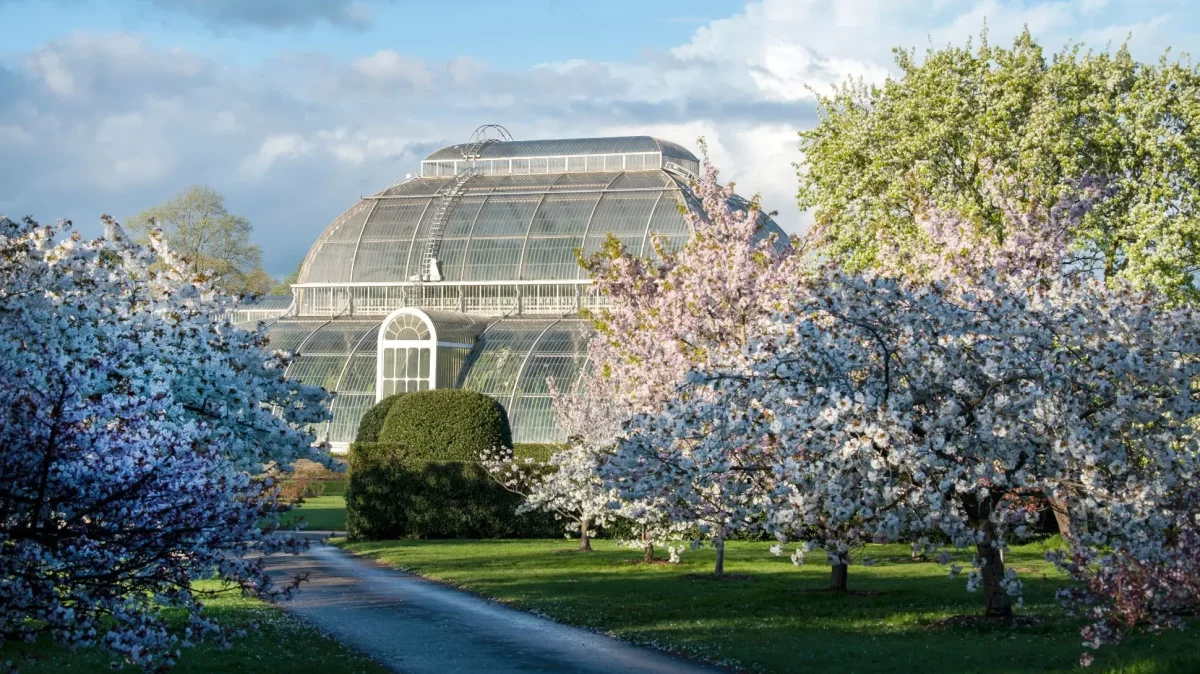
One of the most iconic parts of Kew Gardens’ is set to close for a five year, £60 million restoration.
Opened in 1848, this part of Kew Gardens’ houses a living, breathing rainforest under glass, with around 1,300 tropical and sub-tropical plants – some older than the building itself, others extinct in the wild.
Over the decades, the glasshouse’s historic structure and single-pane glass have been battered by heat, moisture, and time, and this ambitious restoration will see 16,000 panes replaced with advanced insulated glazing, while the entire iron framework is stripped down, repaired, and repainted.
Kew Gardens’ iconic Palm Housea masterpiece of Victorian engineering and one of London’s most beloved landmarks will be upgraded for the first time since the ’80s. The work is set to begin in 2027.
Central to the project is a push for sustainability – as part of Kew’s mission to lead by example in the environmental field, the Palm House and neighbouring Waterlily House will become the world’s first heritage glasshouses of their kind designed to achieve net-zero status.
The current gas-fired heating will be replaced with modern air- and water-source heat pump technology, dramatically reducing carbon emissions while keeping the temperature stable for its delicate residents. Upgrades will also include improved rainwater storage, new irrigation systems, and restoration of original ornamental garden features.
Moving a rainforest is no small feat: teams have already begun carefully relocating the collection including towering cycads and over a ton of living heritage to temporary glasshouses, some newly built and some permanent additions to Kew’s landscape. The process will take years, with meticulous planning required to ensure the survival of irreplaceable species.
Richard Deverell, Director of the Royal Botanic Gardens, Kewcalled the project “a pivotal moment” in the site’s history, combining the urgent need for environmental action with the preservation of cultural heritage.
While the Palm House and Waterlily House are closed from 2027 through the early 2030s, the rest of Kew Gardens will remain open to visitors and locals alike and there’s still time to experience the breathtaking glasshouse before the scaffolding goes up.
When the Palm House reopens, it will not only return as a London icon, but as a model for sustainable heritage and a safe haven for the world’s most threatened plants – a feat as ambitious in the 21st century as it was 175 years ago.