





Close Menu
London ReviewsLondon Reviews
  • Home
  • What’s On News
  • Going Out
  • Reviews
  • Spotlight
  • AI News
  • Tech & Gadgets
  • Travel
  • Horoscopes
  • Web Stories
  • Forgotten eBooks

Subscribe to Updates

Get the latest creative news from FooBar about art, design and business.

What's Hot
What do the world’s ‘special people’ think about the impact of the Iran war?

What do the world’s ‘special people’ think about the impact of the Iran war?

April 19, 2026
Football in London – A new Premier League season begins

Football in London – A new Premier League season begins

April 18, 2026
London’s Best Special Occasion Restaurants Are Perfect for Splurges

London’s Best Special Occasion Restaurants Are Perfect for Splurges

April 18, 2026
Facebook X (Twitter) Instagram
  • Privacy
  • Terms
  • Advertise
  • Contact
Facebook X (Twitter) Instagram
London ReviewsLondon Reviews
Subscribe
  • Home
  • What’s On News
  • Going Out
  • Reviews
  • Spotlight
  • AI News
  • Tech & Gadgets
  • Travel
  • Horoscopes
  • Web Stories
  • Forgotten eBooks
London ReviewsLondon Reviews
Home » April: Dieters feast their eyes on digital food content to curb cravings, study shows | News and features
Travel

April: Dieters feast their eyes on digital food content to curb cravings, study shows | News and features

April 15, 20263 Mins Read
Facebook Twitter Pinterest LinkedIn Tumblr Email Telegram WhatsApp
April: Dieters feast their eyes on digital food content to curb cravings, study shows | News and features
Share
Facebook Twitter LinkedIn Pinterest Email

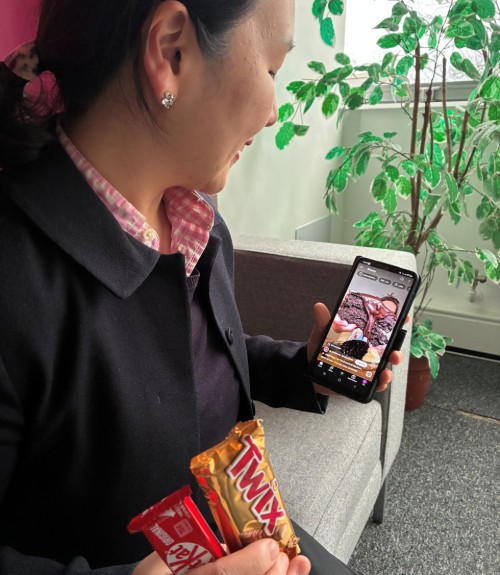
New research has revealed people trying to resist their food cravings use social media content featuring indulgent treats as a substitute for eating the real thing.

The study, led by the University of Bristol in the UK, challenges the belief that being shown visuals of tempting unhealthy foods encourages people to indulge in eating them.

Study lead author Dr Esther Kang, Lecturer in Marketing at the University of Bristol, said: “It may sound counterintuitive, but our findings show that people, particularly those trying to control their diet, can use visual food content as a self-regulation tool. Engaging with food imagery may help satisfy cravings without actual consumption.

“In today’s digital environment, where food content is highly accessible, this type of visual engagement may offer a simple and non-invasive way to support dietary goals.”

The research, in collaboration with the University at Buffalo School of Management, The State University of New York in the US, conducted three experiments involving a total of 840 participants aged between 19 to 77, combining two online surveys and a controlled laboratory study.

In one experiment, participants viewed short videos on social media depicting both high-calorie and low-calorie chocolate desserts. Dieters spent 30% longer viewing the indulgent option compared to non-dieters. However, when later given access to real chocolates presented in a bowl, dieters consumed significantly less chocolate than non-dieters, suggesting that prior visual exposure may have reduced their desire to indulge.

Dr Kang said: “The dieters clearly embraced this form of ‘digital foraging’, spending more time looking at the indulgent dessert. Furthermore, contrary to what might be expected, when given the chance to really have some chocolate they exercised much more self-control than the non-dieters.”

Another experiment exposed a group of dieters and non-dieters to short videos depicting junk food like pizza and hamburger and chips alongside images of video clips on social media platforms displaying healthy food options, such as salad, yoghurt and smoothies. Findings showed the dieters were much more likely to look at the unhealthy food imagery and ‘consumed’ the content for on average around 50% longer.

Study co-author Dr Arun Lakshmanan, Associate Professor of Marketing in the University at Buffalo School of Management, explained: “We refer to this process as ‘cross-modal satiation’. People can partially satisfy their desire to eat by consuming food visually rather than physically. This helps explain why engaging with food content on social media does not always translate into increased consumption.”

The study cites that around 60% of women and 40% of men in the US are on a diet, generating a weight loss industry worth an estimated US$257 billion.

Dr Kang added: “Weight loss is a huge business. Our study results suggest there may be a vast array of free online material which could assist people who are trying to resist their unhealthy cravings and steer clear of such treats. While we’re of course not claiming imagery could wholly replace the desire to eat chocolate or other indulgent foods, they could perhaps help people who are watching their calorie intake to reduce or avoid overindulgence.”

Paper

‘Feeding on screens, not on plates: The paradoxical impact of unhealthy food content in digital media’ by E. Kang and A. Lakshmanan in Computers in Human Behavior

Share. Facebook Twitter Pinterest LinkedIn Tumblr Email

Related Posts

Football in London – A new Premier League season begins

Football in London – A new Premier League season begins

April 18, 2026
Emmanuel Macron will come to Poland. We plan to talk about defense

Emmanuel Macron will come to Poland. We plan to talk about defense

April 18, 2026
Notting Hill Carnival 2019

Notting Hill Carnival 2019

April 18, 2026
Tickets for New Year’s fireworks in London go on sale (2019/20)

Tickets for New Year’s fireworks in London go on sale (2019/20)

April 17, 2026
Plays at Shakespeare’s Globe in London free on YouTube

Plays at Shakespeare’s Globe in London free on YouTube

April 17, 2026
Sign up for OnLondon news

Sign up for OnLondon news

April 17, 2026
Editors Picks
Football in London – A new Premier League season begins

Football in London – A new Premier League season begins

April 18, 2026
London’s Best Special Occasion Restaurants Are Perfect for Splurges

London’s Best Special Occasion Restaurants Are Perfect for Splurges

April 18, 2026
From Fayrouz and Wadih Al-Safi to Julia: The Story of the South in Lebanese Song

From Fayrouz and Wadih Al-Safi to Julia: The Story of the South in Lebanese Song

April 18, 2026
‘Cancer was diagnosed through a dream’: Can our brain really send messages while we sleep?

‘Cancer was diagnosed through a dream’: Can our brain really send messages while we sleep?

April 18, 2026
Latest News
Emmanuel Macron will come to Poland. We plan to talk about defense

Emmanuel Macron will come to Poland. We plan to talk about defense

By News Room
How effective is immunotherapy proving against cancer?

How effective is immunotherapy proving against cancer?

By News Room
Notting Hill Carnival 2019

Notting Hill Carnival 2019

By News Room
London Reviews
Facebook X (Twitter) Instagram Pinterest Vimeo YouTube
  • Privacy Policy
  • Terms of use
  • Advertise
  • Contact
  • Disclosure
© 2026 London Reviews. All Rights Reserved.

Type above and press Enter to search. Press Esc to cancel.