





What is Windscale Pile 1?
Windscale Pile 1 was one of two nuclear reactors built as part of Britain’s urgent post-war effort to develop its own nuclear weapons programme.
The Piles – an early term for nuclear reactors – were the earliest development of the UK’s nuclear programme, producing plutonium for the defence industry over a period of 6 years.
The Windscale Piles in 1951.
Pile 1 was constructed by 1946 and operational by 1950, shortly followed by Pile 2 in 1951. Both Piles remained in operation until they were shut down in 1957 following a fire in the core of Pile 1.
Afterwards, Pile 1 was de-fuelled as much as possible and transferred into a state of care and maintenance.
How did Windscale Pile 1 work
The structure of Pile 1 was designed for plutonium production. It consisted of 3 key structural components: the reactor, the blower houses, and the chimney.
Together, these 3 components formed a vertically integrated cooling and ventilation system.
Reactor
At the heart of the system was the reactor, a graphite-moderated, air-cooled unit where natural uranium fuel underwent nuclear fission to produce plutonium.
Each used enriched uranium fuel rods, are around 30 centimetres long and encased in an aluminium canister with heat-dissipating fins.
Fuel rods would be loaded into the reactor horizontally via the ‘charge face’, pushing used fuel rods out of the opposite side of the reactor into a water-filled channel.
The used fuel would then be stripped of its casing and chemically reprocessed to extract the plutonium.
Reactor decommissioning progress
1980 to 1999 the first phase of decommissioning began, which focused on isolating the reactor. This phase of decommissioning was completed in 1999. The reactor had been isolated, with the inlet and outlet air ducts being sealed off from the building’s ventilation system.
Due to the fire, some fuel remains trapped in fire-damaged channels, inaccessible using original discharge equipment. We are currently testing and developing methods to safely retrieve it.
Blower houses
On either side of the reactor were the blower houses, which housed powerful fans that forced air through the reactor core to remove the intense heat generated during fission.
Blower houses decommissioning progress
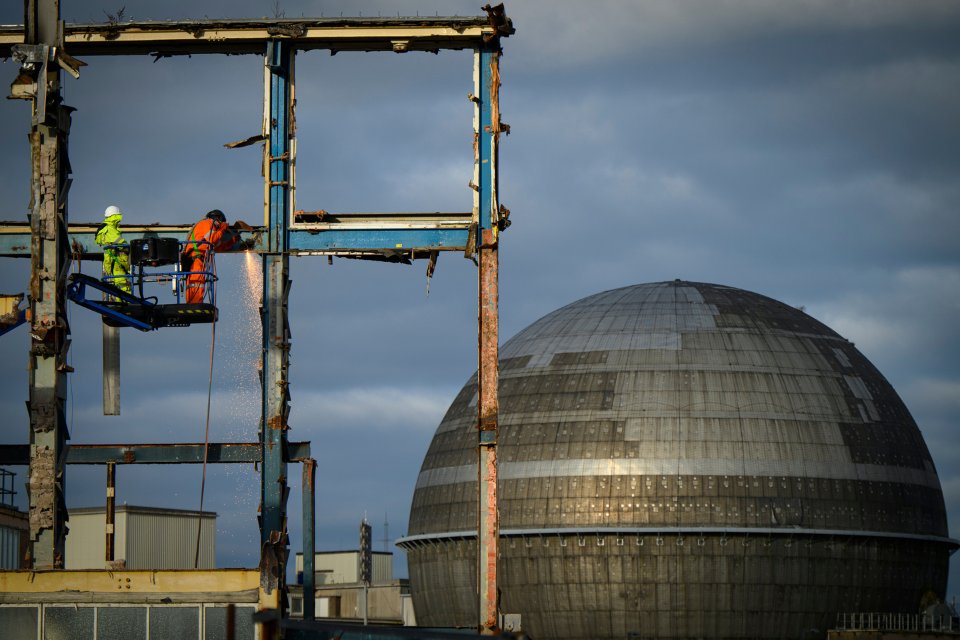
Demolition of Pile 1 blowerhouses on the Sellafield site.
By 2024 the blower house to the west of the reactor had been demolished. The east blower house is currently being readied for demolition to commence.
Chimney
This air, now heated and potentially carrying radioactive particles, was expelled through the towering chimney, which featured a filter gallery at its top to trap radioactive emissions before they entered the atmosphere.
The two 125-metre-tall ventilation chimneys were designed identically by Windscale Chief Engineer John Cockcroft, he insisted that the filters were added to the chimneys.
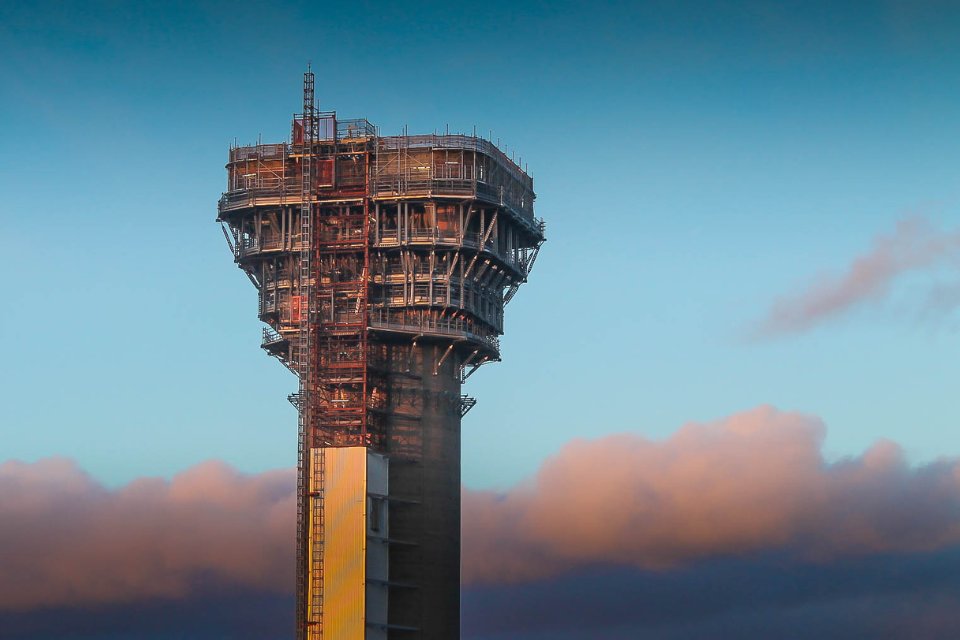
Diffuser of the chimney of Pile 1 before it was removed.
Chimney decommissioning progress
Demolition work started in December 2018. To support this, we erected the tallest ever structure to be built on the Sellafield site – 162 metre crane on the side of Pile 1 Chimney.
The first block was removed from the diffuser in January 2019.
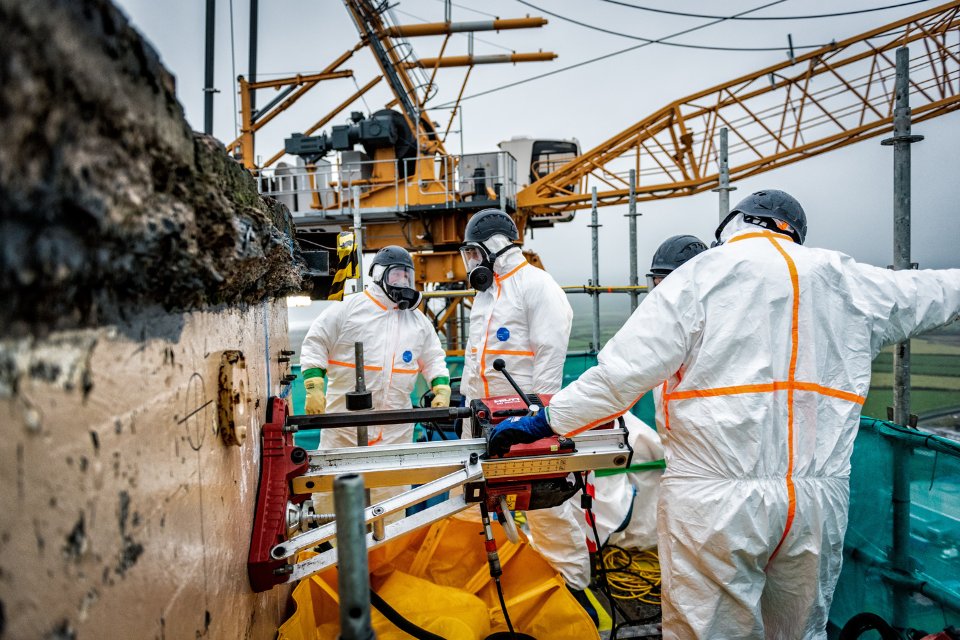
Diffuser removal of the chimney of Pile 1.
The Diffuser Demolition Project officially finished in March 2022.
The barrel of Pile 1 chimney remains, its access shaft has been removed.
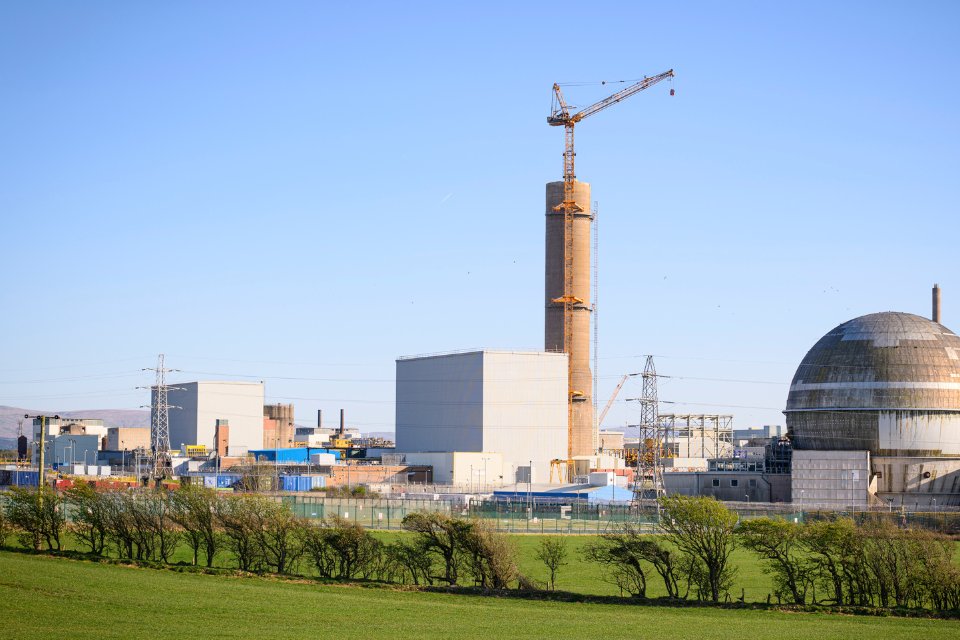
The Windscale Piles in 2025.
The SPIDA (Suspended Platform with Incremental Descent developed by ADAPT), a suspended hydraulic work deck that ‘walks’ down the chimney as large blocks are cut and lowered, will be used to reduce the barrel’s height. It is currently undergoing off site testing, prior to its deployment.
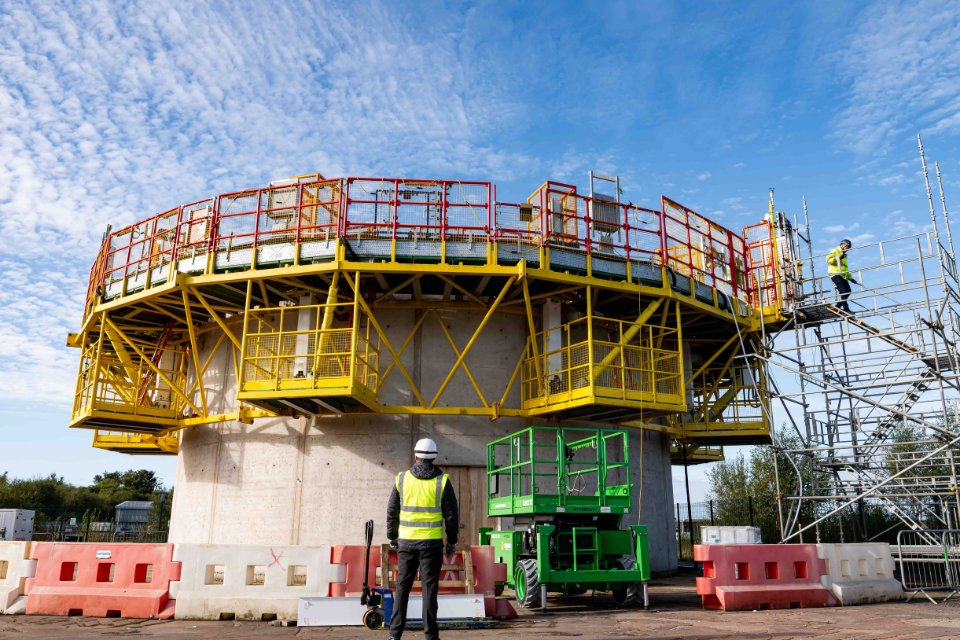
The SPIDA being built and tested off site will be used to reduce the height of the chimney of Pile 1.
Next steps
While equipment is being tested off-site, preparations are underway to ensure machinery is received safely onsite.
In 2024 a new Alimak, a type of elevator used on construction sites, was fitted ahead of SPIDA’s deployment.
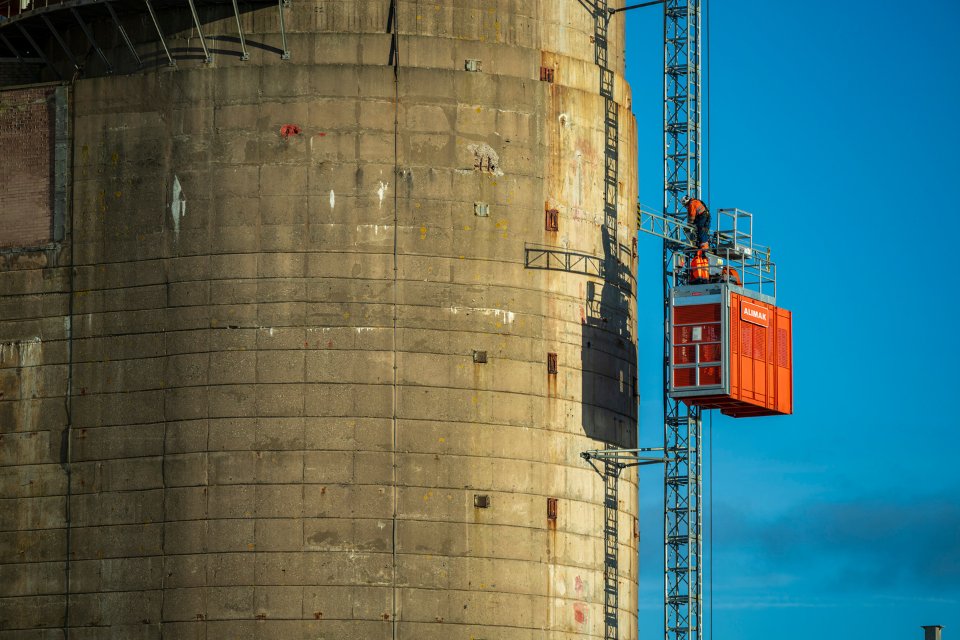
Alimak on the side of the Pile 1 chimney.
Pile 1 is unique, being the only reactor awaiting decommissioning that has fuel inventory remaining in it.
The plan is to retrieve all radioactive inventory, suitably package it and store it in the interim on the Sellafield site and continue to decommission the buildings to ground level.