



Close Menu
London ReviewsLondon Reviews
  • Home
  • What’s On News
  • Going Out
  • Reviews
  • Spotlight
  • AI News
  • Tech & Gadgets
  • Travel
  • Horoscopes
  • Web Stories
  • Forgotten eBooks

Subscribe to Updates

Get the latest creative news from FooBar about art, design and business.

What's Hot
DBS expands Faith in Safeguarding campaign nationally

DBS expands Faith in Safeguarding campaign nationally

April 4, 2026
Restricted access – Le Monde

Restricted access – Le Monde

April 4, 2026
Golden Mile development | London Forum

Golden Mile development | London Forum

April 4, 2026
Facebook X (Twitter) Instagram
  • Privacy
  • Terms
  • Advertise
  • Contact
Facebook X (Twitter) Instagram
London ReviewsLondon Reviews
Subscribe
  • Home
  • What’s On News
  • Going Out
  • Reviews
  • Spotlight
  • AI News
  • Tech & Gadgets
  • Travel
  • Horoscopes
  • Web Stories
  • Forgotten eBooks
London ReviewsLondon Reviews
Home » Why you end up following a stranger through a busy railway station
What's On News

Why you end up following a stranger through a busy railway station

February 25, 20263 Mins Read
Facebook Twitter Pinterest LinkedIn Tumblr Email Telegram WhatsApp
Why you end up following a stranger through a busy railway station
Share
Facebook Twitter LinkedIn Pinterest Email

If you’re trying to get through a busy railway station, you might think you’re planning your own route through the crowd, but you’re probably following a stranger — even when you don’t realise it, and even when it’s not the fastest route.

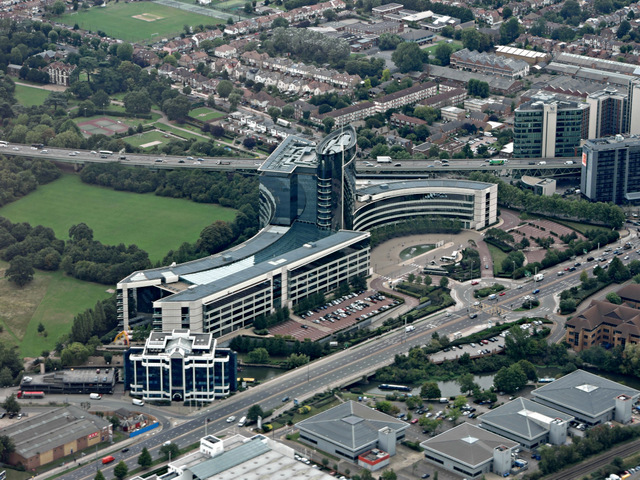
Liverpool Street station

The unseen “crowdsourced” pathing was uncovered from watching how train passengers navigate around a platform obstruction at Eindhoven Centraal station.

Researchers analysed three years of anonymous tracking data from passengers leaving trains on one platform. By observing how people chose between two routes around a kiosk, they found a clear pattern: many passengers copied the path taken by the person immediately ahead of them, rather than choosing independently.

This behaviour wasn’t limited to friends or family.

Using mathematical techniques to identify people travelling together, the researchers filtered out the friends and families, leaving behind individuals travelling alone. What remained showed a strong “stranger-following” effect, where individuals still treated the person in front as an informal leader.

Once someone chose a particular route, others were more likely to follow, creating small cascades of people making the same decision. These knock-on effects meant crowds did not always spread out evenly or take the most efficient paths through the railway station.

The findings suggest that crowd movement is shaped less by rational choice and more by imitation.

An overhead image showing tracks 3 and 4 in Eindhoven Centraal station. The researchers focused on passengers leaving the train via three door zones (L1, L2, and L3) and the path choice (Path A or Path B) they then make around the kiosk.
Heat map showing the paths selected by passengers upon exiting via door zone L3. Red – high density; Blue – low density. (platform exit to the left)

For transport planners, this has practical implications. Clear signage, better sightlines, and early guidance can matter more than simply providing multiple routes. If the first few people move the “wrong” way, many others may follow.

That suggests that people at the front of a crowd need strong directional signals about where to go, since those behind them will ignore any signs that do exist. That could mean larger, more visible arrows and signs at the front of the space where crowds might congregate, but also fewer of them further back in the station. So fewer signs, but larger and more focused in placement.

Understanding how easily crowds fall in behind a single, unknown individual could eventually help design stations that move people more efficiently – and more safely – especially at busy times.

The research Z. Wang, A. Gabbana, & F. Toschi, Avalanches of choice: How stranger-to-stranger interactions shape crowd dynamics, Proc. Natl. Acad. Sci. U.S.A. 123 (8) e2528167123, was published in the Proceedings of the National Academy of Sciences.


Share. Facebook Twitter Pinterest LinkedIn Tumblr Email

Related Posts

DBS expands Faith in Safeguarding campaign nationally

DBS expands Faith in Safeguarding campaign nationally

April 4, 2026
Men to get better health support through innovative partnership

Men to get better health support through innovative partnership

April 4, 2026
11 Years Later: Is This Still London’s Best Sunday Roast?

11 Years Later: Is This Still London’s Best Sunday Roast?

April 4, 2026
Cracking down on sex-based harassment in public

Cracking down on sex-based harassment in public

April 4, 2026
Ann Sotheran’s West End Champions

Ann Sotheran’s West End Champions

April 4, 2026
SFO hosts International Economic Crime Conference

SFO hosts International Economic Crime Conference

April 3, 2026
Editors Picks
Restricted access – Le Monde

Restricted access – Le Monde

April 4, 2026
Golden Mile development | London Forum

Golden Mile development | London Forum

April 4, 2026
Men to get better health support through innovative partnership

Men to get better health support through innovative partnership

April 4, 2026
UK airline cancels flights due to huge rise in fuel costs

UK airline cancels flights due to huge rise in fuel costs

April 4, 2026
Latest News
11 Years Later: Is This Still London’s Best Sunday Roast?

11 Years Later: Is This Still London’s Best Sunday Roast?

By News Room
Cracking down on sex-based harassment in public

Cracking down on sex-based harassment in public

By News Room
The Giant London Flea is coming

The Giant London Flea is coming

By News Room
London Reviews
Facebook X (Twitter) Instagram Pinterest Vimeo YouTube
  • Privacy Policy
  • Terms of use
  • Advertise
  • Contact
  • Disclosure
© 2026 London Reviews. All Rights Reserved.

Type above and press Enter to search. Press Esc to cancel.