





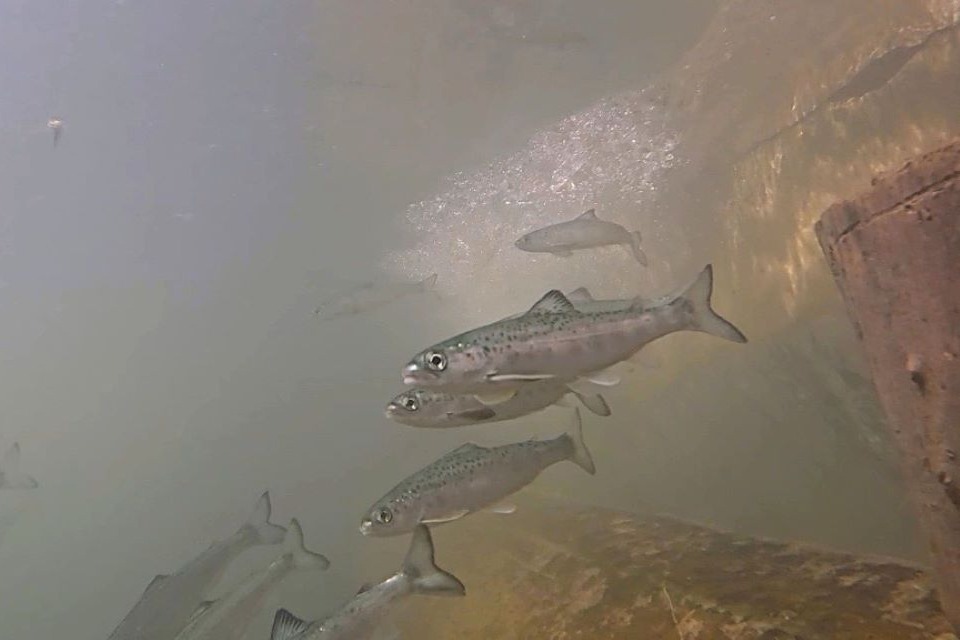
- In Southampton, juvenile salmon, known as smolts, are struggling to get past barriers in the river during their journey to the sea.
- Just upstream of the mouth of the river, the river has begun finding its own route away from the main channel.
- The Environment Agency is working with partners to explore options to improve fish passage, restore the river and improve its resilience to climate change impacts
The Environment Agency is looking at options to make the journey of juvenile salmon out to sea at Southampton easier.
Each spring, shoals of juvenile salmon, known as smolts, begin their journey to the sea. This journey begins on the River Itchen, through the estuary, and out to the sea where the salmon feed and grow before returning to the river as adults to spawn. But salmon are struggling to get past the first hurdle. The bottom section of the River Itchen where it transitions to the estuary has been changed many times historically. It was once used for transport and trade as a sea lock and onward travel to Winchester. Now, the current structures control water levels through Riverside Park.
Smolt are struggling to get past water control barriers on the River Itchen like Woodmill sluice
These structures present the biggest obstacles for smolts, especially in large groups. The sharp change in water velocity created by these structures causes smolt to become hesitant and bunch up, making them vulnerable to predation and poaching. Eventually the current carries them over or under the structures and back onto their journey to the sea. But the delay impedes their migration and worsens the odds of them completing their lifecycle and eventually returning as adults to spawn. Significant changes are needed to make this critical part of the system more smolt friendly.
Breach
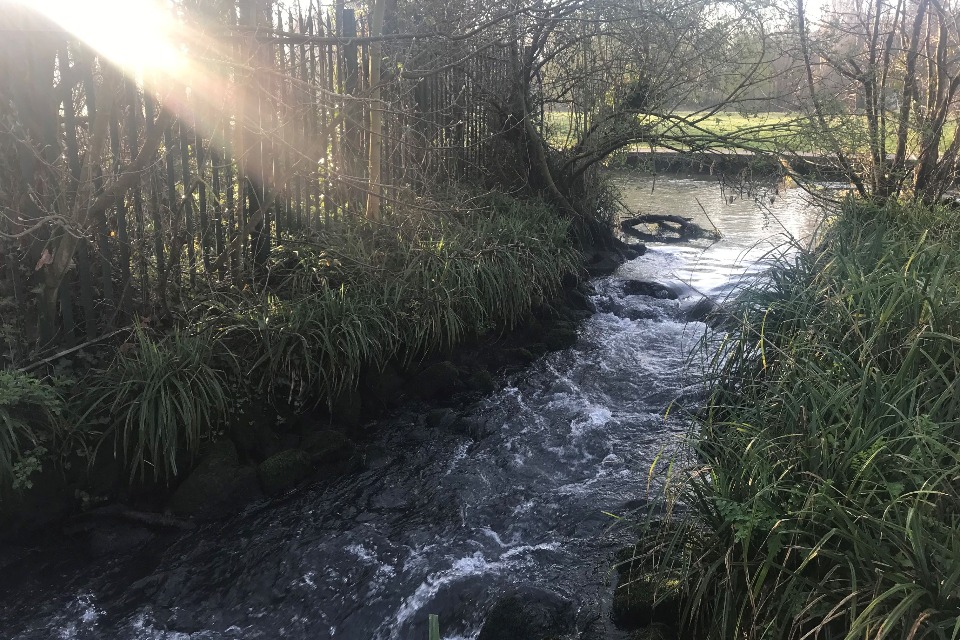
Part of the River Itchen has ‘breached’ with water branching off the main river.
The situation for smolts is further complicated by issues upstream in Riverside Park, where the manmade channel sits higher than the natural floodplain. Gravity has caused the river to ‘breach’ – meaning a significant amount of water is now branching off from the main river and finding its own natural course through the floodplain. For now, this does not affect the smolt who continue to follow the main course of the river, ignoring any offshoots. But over time this breach will take more water and impact the ecology of the river downstream.
In response to these intertwined issues, the Environment Agency has launched a study to find options to help smolts and improve the lower River Itchen chalk stream and wetland system.
Jackie Mellan, the Environment Agency’s project manager for this study, said:
The River Itchen has really changed in the past 10 years – the flow of the river is diverting, salmon are at significant risk of extinction, sea level has risen, and climate change makes floods and low flows more extreme and frequent.
The first step is finding out what can be done to improve the river system and increase its ecological resilience. For salmon that means improving migration to the sea and boosting their odds of returning to spawn.
Better fish passage and resilient river habitat is needed
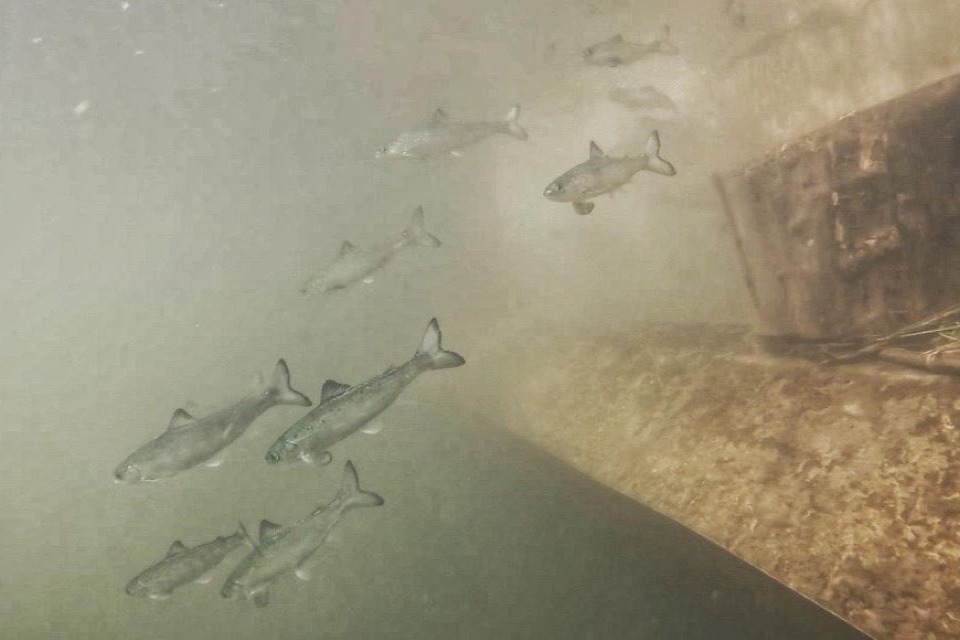
The change in water velocity by underwater structures causes smolt to hesitate and bunch up – making them vulnerable to predation.
The investigation into options for the lower part of the River Itchen, from Woodmill to Mansbridge, is focused on the main River Itchen, lower Monks Brook, the breached channel, Marlhill Copse stream and neighbouring wetland areas. The study will be completed by October and is expected to identify suitable options ranging from restoring river habitat, improving fish passage and encouraging community engagement and support in the form of citizen science and active management of the area.
The River Itchen is a loved environment and a big part of the local community. Local groups, such as The Itchen Estuary Conservation Champions, have been active in shaping areas of focus in the project scope. The youth group has been active in the community, conducting smolt surveys and collecting water samples. Through their citizen science work they have supported the protection of salmon and advocated for more areas to be rewilded alongside salmon protection at a recent engagement event.
Councillor John Savage, Cabinet Member for Green City and Net Zero at Southampton City Council, said:
We are delighted to work closely with community groups whose vital efforts help preserve, protect, and promote the River Itchen.
Our ongoing collaboration across various issues ensures the health of the river channels and the wellbeing of young salmon—now more important than ever.
Regular meetings with Southern Water and the Environment Agency reinforce our shared commitment to safeguarding this precious ecosystem for future generations.
The River Itchen and its unique salmon
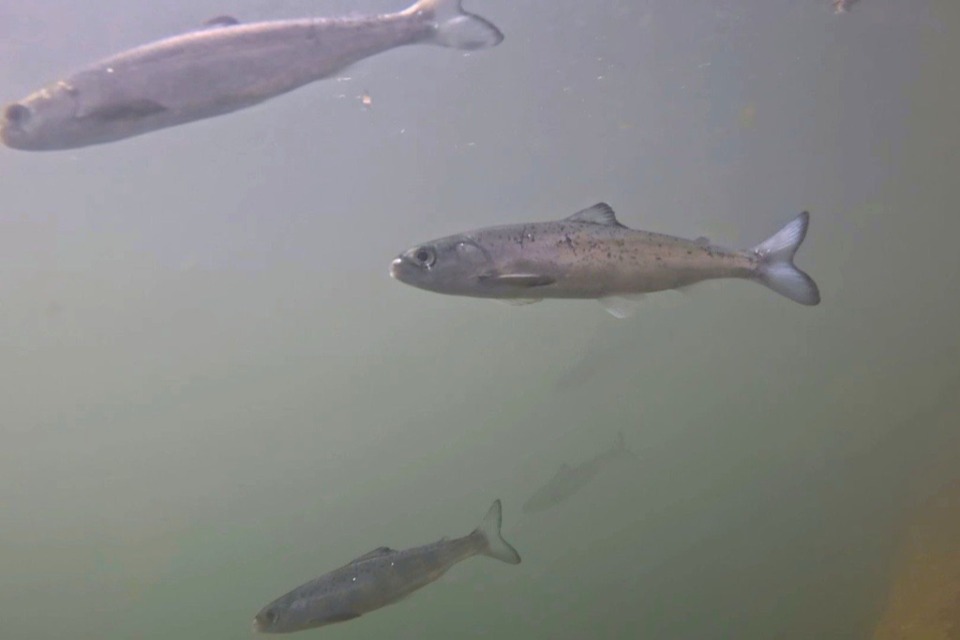
Each spring, shoals of juvenile salmon, known as smolts, begin their journey to the sea. Photo by Kieran Gillingham
The River Itchen is an internationally renowned chalk stream. It is a Site of Special Scientific Interest, a Special Area of Conservation and one of six chalk stream rivers in England to have Atlantic salmon, which have shaped the unique genetic makeup of this species. Despite this list of protections, the Atlantic salmon population remains at high risk of extinction.
In response to recent declines in Itchen salmon, the Itchen Salmon Delivery Plan was launched and brings together key conservation groups, fisheries organisations, and government agencies, including Wessex Rivers Trust, Angling Trust, Environment Agency, Hampshire & Isle of Wight Wildlife Trust, Natural England, Test & Itchen Association, WildFish, Wild Trout Trust, and Southern Water. By combining resources and expertise, the initiative aims to tackle the environmental challenges that threaten salmon populations at every stage of their lifecycle – from river to sea and back again.
Background
The Itchen Salmon Delivery Plan focuses on practical solutions, including:
- Restoring habitat: Improving spawning and rearing habitats to support salmon at all life stages.
- Enhancing fish passage: Removing barriers that prevent salmon from migrating.
- Enhancing water quality – Reducing pollution to create a cleaner, healthier river.
- Managing water resources – Addressing over-abstraction to maintain natural river flows.
- Strengthening fisheries enforcement: Reducing illegal fishing and poaching.
- Engaging communities: Encouraging local people to get involved in protecting their river and its wildlife.
The Lower Itchen project is just one action within the plan that the Environment Agency is delivering.