





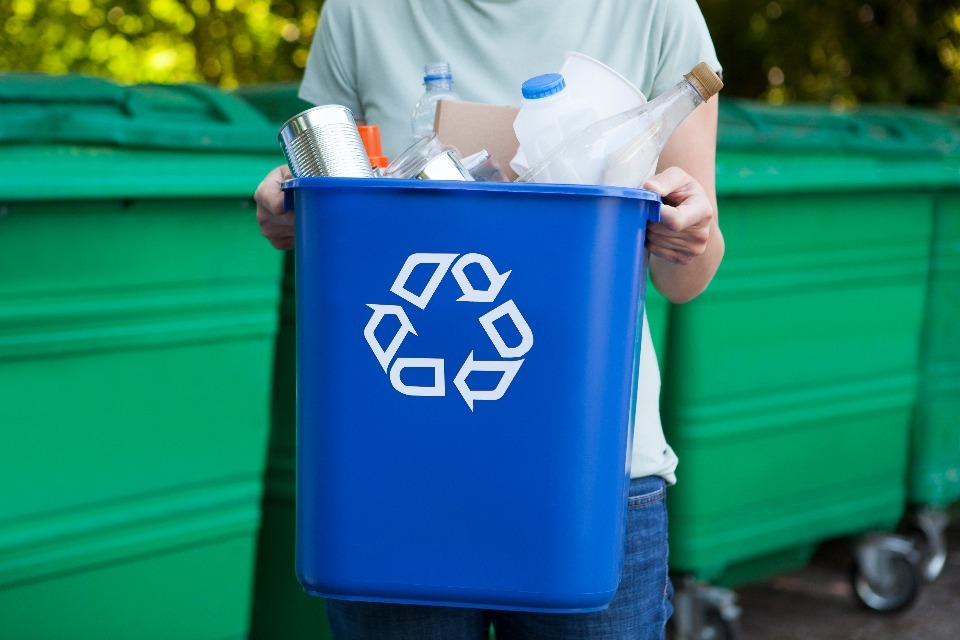
New rules on how workplaces in England sort their recycling and waste have now come into force, ending confusion over what goes where and enabling consistent, more streamlined collections.
The measures as part of the Government’s Simpler Recycling plans will boost flatlining recycling rates, reduce the amount of waste sent to landfill or for incineration, and deliver cost savings for some businesses, while replacing previous legislation which could have required them to have up to six bins.
From today (Monday 31 March), workplaces with 10 or more employees will need to arrange for the collection of the following:
-
dry recyclable materials – including plastic, metal, glass, and paper and card
-
food waste
-
residual (non-recyclable) waste
Workplaces will need to separate paper and card from the other dry recyclables unless their waste collector collects them together. They will also have the freedom to decide on the size of containers and frequency of collections based on the volume of waste they produce.
This is a sensible, pragmatic approach to the collection of materials for the businesses and other premises in scope, which include residential homes, universities and schools, and hospitals or nursing homes.
Simplifying the approach will mean more high-quality recycled material can be sourced domestically, which can then be used by manufacturers to make new products as part of the transition to a more circular economy.
This will reduce carbon emissions, cut environmental and societal impacts from waste disposal, and support growth of the UK reprocessing industry.
Circular Economy Minister Mary Creagh said:
We are committed to ending the throwaway society, boosting recycling rates which have stalled for too long, and driving growth through the Government’s Plan for Change.
Simplifying the rules for workplaces will make recycling easier, maximising environmental benefits, delivering cost savings and stimulating growth.
We’ll continue to work hand-in-hand with businesses to deliver our reforms to drive up recycling rates and ensure there’s more recycled content in the products we buy.
As of 31 March, the Environment Agency has assumed responsibilities as the regulator for Simpler Recycling, meaning it is committed to supporting businesses – both waste producers and collectors – with their new duties.
This includes helping businesses to understand the actions they need to take to ensure compliance with the regulations.
Steve Molyneux, deputy director of waste and resources regulation at the Environment Agency, said:
The implementation of Simpler Recycling for workplaces is a pivotal moment and a huge step forward, driving change in the waste market, optimising the use of our precious resources, and contributing to a circular economy.
We are committed to supporting businesses with their new duties. We will take a pragmatic approach to implementation and will work with stakeholders to support them in overcoming any difficulties they might face in relation to compliance.
Simpler Recycling in England is integral to the Government’s commitment to move to a circular economy in which resources are kept in use for longer and waste is reduced; the path to net zero is accelerated; and the economy prospers thanks to investment in critical infrastructure and green jobs.
Further measures under Simpler Recycling to come mean the public will be able to recycle the same materials across England, whether at home, work or school.
By 31 March 2026, local authorities will be required to collect the core recyclable waste streams from all households in England. This includes introducing weekly food waste collections for most homes, unless their councils have a transitional arrangement in place, giving them a later start date in legislation.
Kerbside plastic film collections from workplaces and households will also be introduced by 31 March 2027.
Workplaces with fewer than 10 employees have until 31 March 2027 to arrange for the recycling of the core recyclable waste streams.
Alongside extended producer responsibility for packaging and the deposit return scheme for drinks containers, Simpler Recycling in England is estimated to deliver greenhouse gas emissions savings equivalent to £11.8 billion and make a significant contribution towards meeting the ambition to recycle 65% of municipal waste by 2035.
The reforms will also drive up recycling rates – household recycling rates in England have flatlined at around 44-45% since 2015.
The implementation of Simpler Recycling for workplaces follows Environment Secretary Steve Reed setting out a new plan to transform the nation’s economy on 27 March, ensuring resources and products are used more sustainably and delivering cleaner streets and a healthy countryside.
The Environment Secretary confirmed the first five priority sectors that the independent Circular Economy Taskforce will focus on to make the greatest difference, which are textiles, transport, construction, agri-food, and chemicals and plastics.