






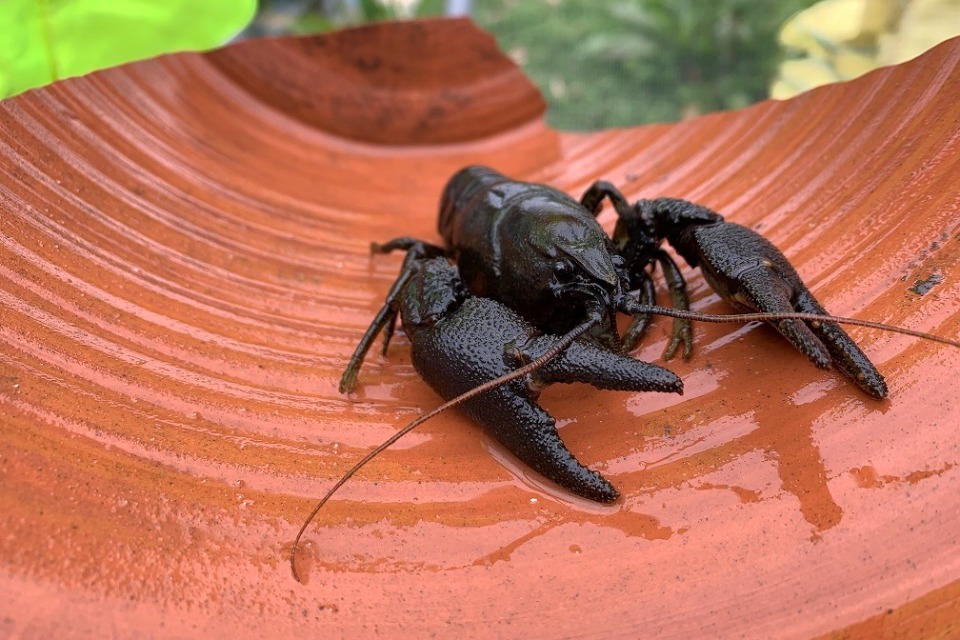
Crayfish plague, which is normally spread by invasive American signal crayfish, is deadly for the native species and can quickly wipe out populations.
It was first discovered in late 2020 upstream of Aysgarth Falls in the Yorkshire Dales, and the Environment Agency has since been monitoring the spread.
While the majority of the native species in the main river has been lost, so far, some populations of white-clawed crayfish in tributaries remain unaffected.
Obstructions such as weirs and waterfalls create barriers that break up the native crayfish populations, preventing the plague from spreading.
Crayfish plague spores can be easily moved from one part of a river to another or between river catchments via boots, clothes and equipment, so people are being urged to play their part by following ‘check, clean, dry’ advice to help stop the spread.
In this case, there is no evidence of the signal crayfish in the river above the waterfalls, which means it’s likely the disease spores were brought to the River Ure via another route.
Plague has been ‘moving through the catchment’
Tim Selway, Environment Agency biodiversity specialist and crayfish expert, said:
With so few populations of native crayfish remaining across the country, we must do everything we can to protect the future of the species.
We’ve been monitoring the spread of crayfish plague on the River Ure since it was first discovered, and it has been moving through the catchment. Thankfully, it hasn’t affected all populations of the native species.
We want to make sure it stays this way. People should follow advice to make sure the disease is not spread to currently unaffected tributaries.
If the plague does spread into the unaffected tributaries, the Environment Agency would look to create ‘ark’ sites, where unaffected crayfish could be moved to safety.
Check, clean, dry advice
People should follow ‘check, clean and dry’ advice to make sure they check their boots and equipment, clean them and give them time to dry before moving between different rivers or tributaries.
Tim added:
This situation shows just how easy it is to spread a fatal disease which can put at risk an endangered population.
I would urge people to think before they go into a watercourse – are their boots cleaned from previous walks or have they cleaned their water sports or fishing equipment, for example? All of this really matters.
The Environment Agency and Yorkshire Dales Rivers Trust is working with Yorkshire Wildlife Trust, which hosts the Yorkshire Crayfish Forum, and the Yorkshire Invasive Species Forum to tackle this threat.
Marie Taylor, chief executive of Yorkshire Dales Rivers Trust, added:
The spread of crayfish plague to an area of the Ure catchment where, to our knowledge, the invasive American signal crayfish isn’t present is a serious cause for concern.
This highlights the urgent need for strict biosecurity measures, as natural barriers alone are not sufficient to prevent the devastating impacts of this invasive species.
We strongly urge all river users, anglers, and outdoor activity organisers to take proactive steps in preventing further spread. If you require guidance on biosecurity best practices or need biosecurity equipment for organised water-based activities, we are here to help.
Please visit our website for guidance or contact us directly via email at [email protected] to discuss how we can support your event and help safeguard our rivers.
Native species has struggled to survive
Rare white-clawed crayfish are the UK’s only native, freshwater crayfish, and are most at risk from the American signal crayfish, which spread crayfish plague and out compete the native species.
They have struggled to survive after the more aggressive signal crayfish population has taken hold across the country, spreading crayfish plague as they go.
The endangered white-clawed crayfish plays a vital role in keeping waterways clean and as a source of food for other native species.
Anything that has contact with the water and riverbank needs to be cleaned thoroughly and dried until it has been dry for 48 hours.
If this is not possible, cleaning and the use of an environmentally-friendly aquatic disinfectant is recommended. This helps prevent the spread of aquatic diseases and invasive species.
More information about ‘check, clean, dry’ can be found on the invasive non-native species (INNS) website.
If you see any crayfish, alive or dead, leave it where it is and report it immediately to the Environment Agency on 0800 807060.
If possible, take close-up photos of the crayfish to help identify the species. It is illegal to handle or remove crayfish from the water without the correct licences.
Sightings of the invasive American signal crayfish can also be recorded via the INNS Mapper App, which can be downloaded for android and iPhone via the app store. More details can be found at the INNS Mapper website.
Find out more about the work to save Yorkshire’s native white clawed crayfish.