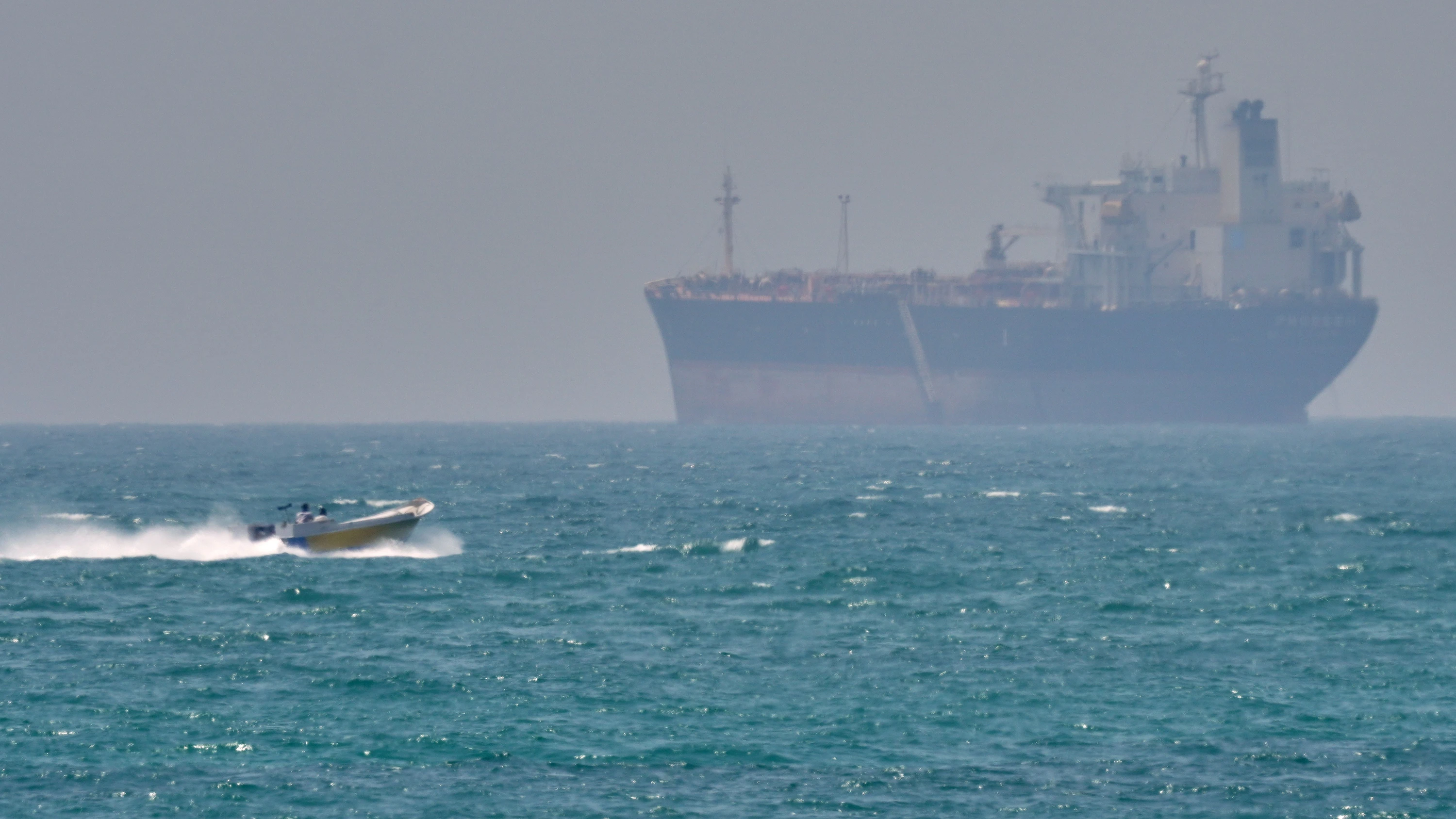


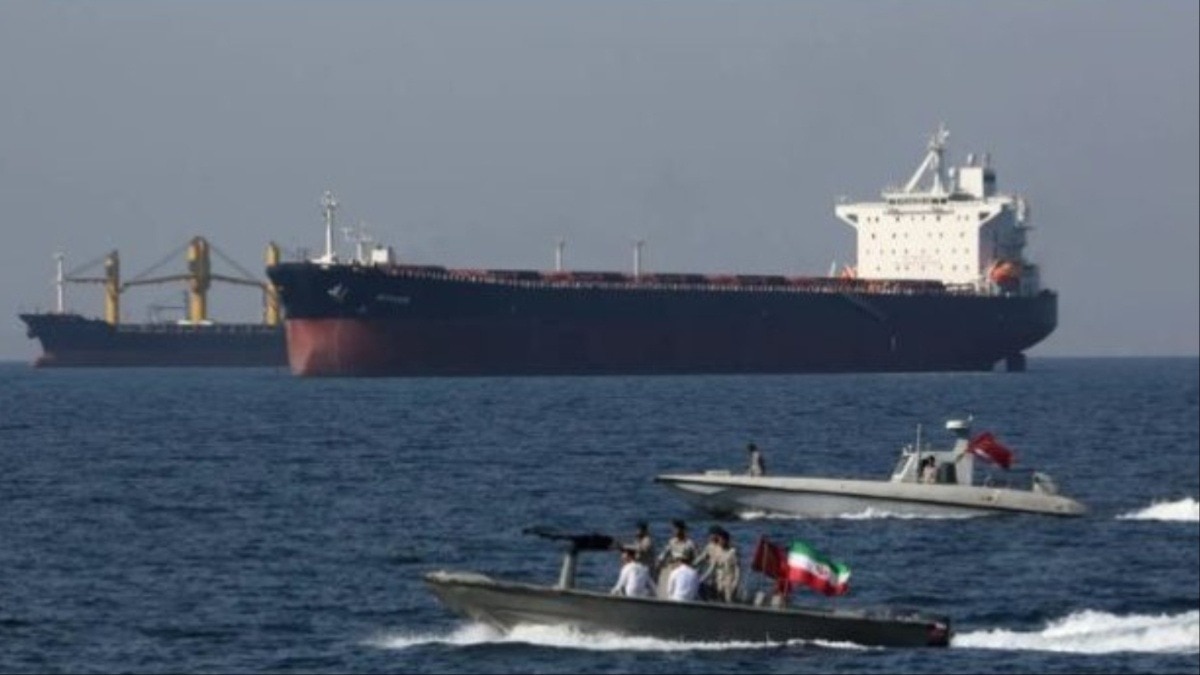




Iran’s firing on two Indian-flagged oil tankers in the Strait of Hormuz has raised new questions about whether Iran can protect the ships of friendly countries or not. This attack on Saturday has created an uncomfortable situation for Iran because India is not its adversary and in recent weeks, under the temporary relaxation in US sanctions, India had also resumed purchasing oil from Iran.
Analysts said the attack on the two Indian ships ‘Jag Arnav’ and ‘Sanmar Herald’ was probably a case of mistaken identity and not a deliberate move against India. However, he said that this incident shows that the recent situation arising in Hormuz can also affect ships that were not the target.
The incident occurred at a time when Iran indicated that Hormuz was again under strict military control. On Saturday, some merchant ships received radio warnings that no ships were allowed to pass through the strait, while on Friday there were indications that traffic could resume.
Both Indian-flagged tankers were carrying crude oil, one of which was bringing two million barrels of oil from Iraq. There were no reports of any injuries to the crew, although the Sanmar Herald suffered minor damage from the gunfire.
India’s concern increased due to attacks on ships
India summoned the Iranian ambassador in Delhi to register its ‘deep concern’ over the attack. According to a statement issued by the Ministry of External Affairs on Saturday, India’s top official asked Ambassador Mohammad Fathali to convey India’s concerns to Iranian authorities and to restore the passage of Indian-bound ships through the strait as soon as possible.
Earlier, Fathali had said that the Strait of Hormuz is open for Indian ships and they will not have to pay any fee for transit i.e. crossing Hormuz.
London-based South Asia writer Priyajit Debsarkar, speaking to the Hong Kong-based newspaper South China Morning Post, said, ‘I think this is a classic case of mistaken identity. As you can understand, the Strait of Hormuz is very busy and a lot is happening there.
He said, ‘Iranian Guards are under immense pressure, their enemies have overwhelming military power to face them. It is possible that they may have misjudged the situation by firing at the Indian ships.
For India, this incident has raised concerns about the security of Hormuz, as well as whether it will get any benefit from its relations with Iran amid rising tensions in the Strait.
This is extremely important for India, as it imports about 85 percent of its oil needs and could be badly affected by a prolonged blockage in the Gulf region.
Iran will take precautions after the incident of attack on ships
Iran-India relations are considered strong and enduring, built on long-standing ties, trade, energy cooperation and the development of the Chabahar port on Iran’s south-eastern coast.
Debsarkar said, ‘I think Iran will be more cautious in the future. Looking at the relations between the two countries, I do not think that this will cause any major upheaval. This incident has happened in a very rapidly changing situation amidst the Iran war and both countries understand this.
This incident happened at a time when the movement of ships in Hormuz has become very slow due to the war between America and Iran. Over the weekend, America attacked and captured an Iranian-flagged cargo ship. He said that the ship was trying to break the blockade of Iranian ports.
Iran vowed to respond. Foreign Minister Abbas Aragchi told his Pakistani counterpart that American threats are a clear indication of America’s dishonesty. Amidst this tension, Iran did not even agree to the second round of talks with America, after which Trump has extended the ceasefire for the time being. Amidst this confusion, the future of Hormuz is also not clear.
Debsarkar said, ‘The opening of the Strait of Hormuz is very important. A huge amount of oil, gas and goods are transported from here to many parts of the world including Europe, hence it is important for India to reopen it or ensure safe passage.
Lack of coordination between the Iranian regime and military leadership?
Foreign affairs expert Yashwant Deshmukh said, ‘There is definitely tension, but I believe that India and Iran are trying to maintain cordial relations.’
Deshmukh said the incident reflected either a lack of coordination between Iran’s civilian and military leadership or a failure to control the ground, and not any deliberate attempt to escalate tensions with India.
Former Indian diplomat Srikumar Menon said that the Hormuz tanker incident does not pose any direct threat to South Asia, although it shows increasing instability in the surrounding waters.
According to media reports, about 13 million barrels of oil and about 300 million cubic meters of liquefied natural gas (LNG) per day are trapped within the Gulf due to the Hormuz blockade, forcing producers to close oil fields, refineries and LNG plants. It is affecting economies from Asia to Europe.
Harsh Pant, professor of international relations at King’s College London, said, ‘India has been continuously emphasizing the need to stabilize the Strait of Hormuz. India has been warning about a similar situation that as the Strait gets militarized, the risk of miscalculations and accidents will increase.
—- End —-