





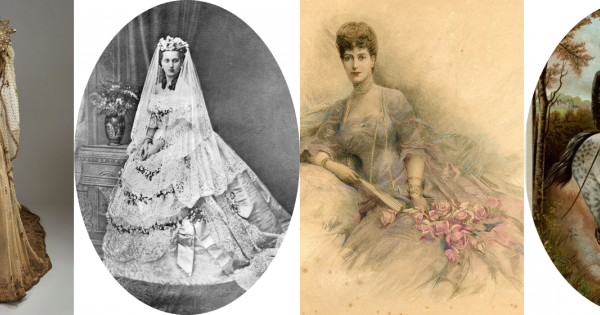
The press took an intense interest in what she wore, devoting column inches to describing the cut, fabric and embellishments of every ensemble, and the British public, starved of a royal pin-up until her arrival, lapped it up. She embraced fashions in a way her mother-in-law Queen Victoria, draped in widow’s weeds, refused to. She followed fashion but was never a slave to it, choosing what suited her – and the occasion. She set trends. Her penchant for the tailor-made, a smart, matching jacket and skirt with its roots in sporting, yachting and riding dress, popularised the look among the wider public and led to the success of tailors such as Henry Poole & Son and Redfern. John Redfern, originally a modest draper based at Cowes (close to Osborne House on the Isle of Wight), found that business boomed when The Prince and Princess of Wales led fashionable society in making Cowes the destination for yachting. The patronage of The Princess (and a Royal Warrant, granted in 1876) was to be the icing on the cake. Further branches in London, Manchester, Edinburgh, Paris and New York followed, establishing Redfern as the premier destination for ladies’ tailoring.