






Key facts
- site: Burrator Forest, Devon
- size: 353 hectares
- establishment method: planting and natural regeneration
- type: lowland broadleaved woodland; coniferous woodland; mixed (established) plantation; riparian woodland; natural regeneration; wood pasture; parkland or orchard
- grants and funding: South West Water’s Water Industry National Environment Programme and Countryside Stewardship (until 2023)
- key objectives: water quality; timber production; nature conservation; recreational access; rural skills development
Tree protection
- main mammals causing damage or risk to trees: domestic livestock (sheep, ponies and cattle), deer and grey squirrel
- main tree protection method: fencing (permanent, temporary and electric)
- duration of main tree protection methods: 10+ years
About Burrator Forest
Burrator Forest spans 353 hectares and is adjacent to Burrator Reservoir on the outskirts of Dartmoor National Park in Devon. The site contains a mix of woodland habitats that support a diverse range of both native and non-native species. Owned by South West Water and managed by South West Lakes Trust, Burrator Forest is part of a broader network of over 50 managed sites across south-west England, many of which include woodlands.
Challenges arising from livestock grazing
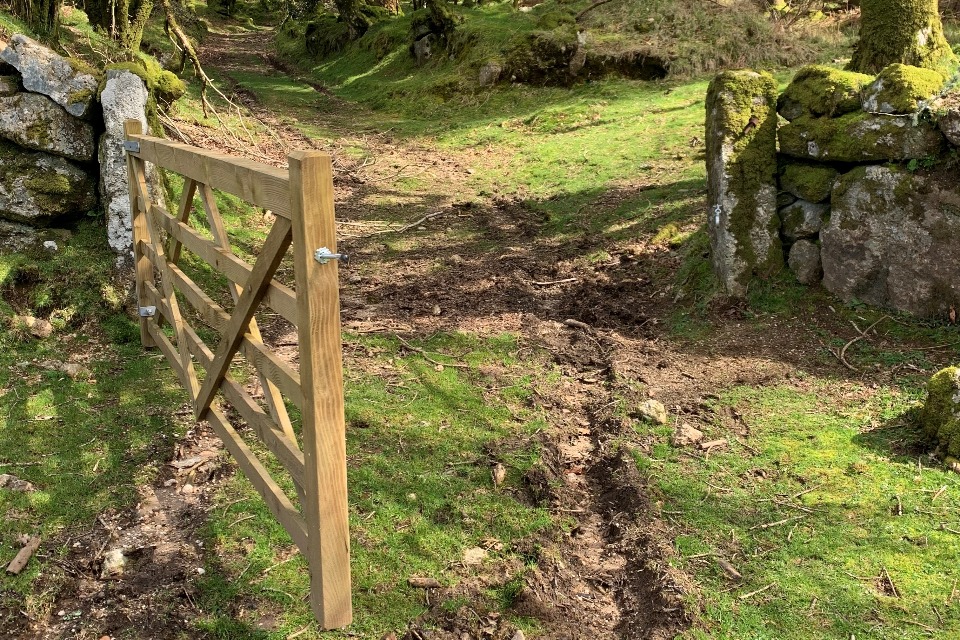
Local people have common land rights to graze their animals on the moor and there are no fences separating this land from areas managed by the South West Lakes Trust. Sometimes, these animals, along with livestock from nearby farms, wander into the forest.
This usually happens when visitors leave gates open or the fencing is vandalised. While there are accessible gates and stiles for people to get through, when they’re not where people are wanting access, it can lead to the fences being damaged or even cut.
A gate to Burrator Forest left open by a member of the public. Credit: Forest and Land Management
When livestock make their way into the forest, they can cause significant structural and economic damage to unprotected trees. Burrator Forest lost around £5,500 worth of conifer trees to livestock grazing in an 18-month period between 2024 and 2025.
Nicola Morris, Head of Environment at South West Lakes Trust said:
We planted those trees without guards. We didn’t think we’d need them – we don’t use tree guards unless we absolutely have to. I’ve spent many hours trying to get ponies out of the Burrator woodland area – it can be really difficult, especially if there’s a lot of vegetation inside the fence line.

A gate to Burrator Forest left open by a member of the public. Credit: Forest and Land Management
Replacing traditional livestock barriers with virtual fencing
In response to this ongoing problem, South West Lakes Trust has begun to install self-closing mechanisms on existing gates at the forest and plans to use this approach moving forward. Volunteers now patrol the fences and conduct regular audits to ensure the woodland area remains protected. Altogether, the annual cost of fencing maintenance across the Trust’s estate amounts to hundreds of thousands of pounds.
Through the Water Industry National Environment Programme, South West Water is working in collaboration with the tenant farmers to trial the use of Nofence collars to better manage cattle movement (virtual fencing replaces traditional barriers with GPS- enabled collars). In 2024, they fitted 50 collars to cattle without encountering any problems, leading them to purchase an additional 50 collars the following year.
The data collected from these collars is currently being analysed to understand cattle behaviour patterns, including their preferred grazing areas and the times of day when they’re most active. This information will enable the Trust to take a targeted approach to protection by creating small enclosures around trees and other environmentally sensitive areas. Rather than restricting the cattle’s movement across the landscape, this strategy focuses on protecting specific vulnerable spots by ‘fencing the trees in’ instead of fencing the cattle out.
A collaborative and blended approach to wildlife management
South West Lakes Trust partners with Artemis Land Management Services to conduct surveys and implement control measures for deer and grey squirrels. Artemis currently maintains an on-the-ground presence to deter browsing animals and has installed additional fencing and conducts selective culling where necessary.
Grey squirrel management strategies are still under development in collaboration with Artemis, British Red Squirrel and other local conservation organisations. These efforts aim to reduce the damage grey squirrels cause to tree bark through bark stripping, which reduces the economic value of the site’s commercial stock.
Partnering with these organisations provides an opportunity to train personnel who can work alongside South West Lakes Trust in ongoing woodland management activities. This approach aligns with the Trust’s goal to expand their forestry operations and include rural skills development, ensuring that essential forestry expertise and knowledge is passed on to support the long-term sustainability of woodland management.
Favouring management that is integrated, innovative and evidence-based, the Trust will also trial sheep’s fleece mulch mats around the base of individual trees to deter deer and other problem mammals, such as voles. Drawing from her experience on sheep farms, Nicola has found that placing handfuls of raw fleece around trees can provide effective protection. However, using fleece or other animal by-products at sites beyond the farm requires that it be treated and licensed.
The Trust has also noticed that having more footfall in certain areas naturally keeps deer away, and sheep grazing in nearby fields helps reduce the amount of damage deer cause to trees in the surrounding woodlands.
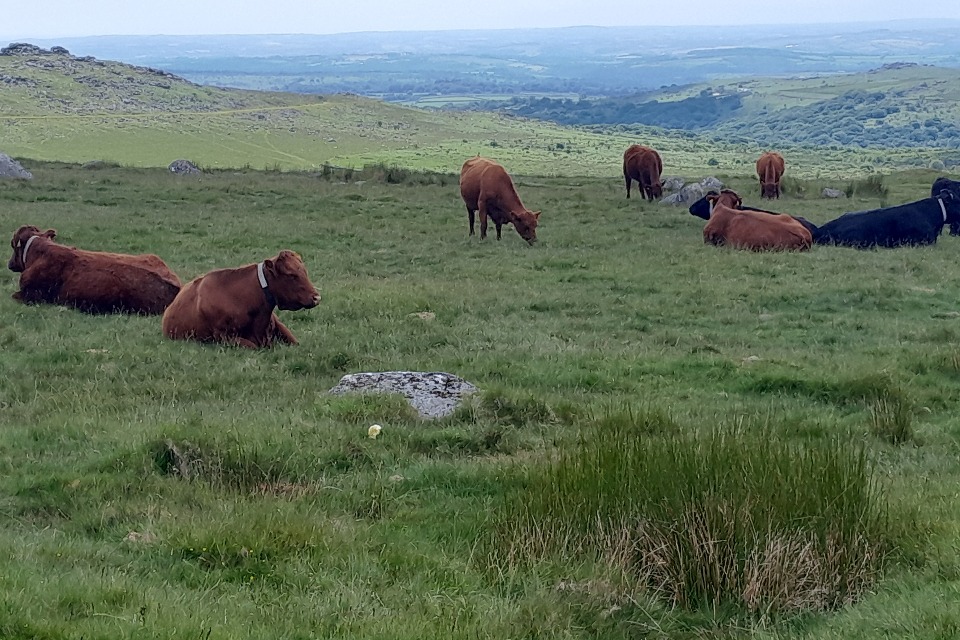
Cattle wearing Nofence GPS collars. Credit: South West Lakes Trust
The benefits of Eurasian beavers in woodland management
Unlike the other mammalian wildlife that pose management challenges, Eurasian beavers have so far proven to be valuable allies at other sites managed by South West Lakes Trust. Through their browsing activities, beavers are effectively controlling the growth of willow in the woodland, reducing the need for costly thinning interventions.
Additionally, their influence on vegetation along the site’s reservoirs is improving conditions for recreational activities such as angling by preventing excessive overgrowth, which could otherwise interfere with anglers when casting their lines.
Whilst concerns are sometimes raised about the potential negative impacts of beavers, their presence at South West Lakes Trust sites has been overwhelmingly positive.
Nicola Morris, Head of Environment, South West Lakes Trust:
At the moment, I can’t see any downside of having the beavers there in terms of our woodland management. They’re just doing a really good job for us. I think you need to go into forestry management with your eyes very much open and expect anything to happen. Livestock, wildlife: they will behave in very different ways from that which you’re expecting. The main thing is to act on evidence that you have gathered from work on the ground. Otherwise, you could just be spending a whole load of money.
Useful links
For additional information, consider the following resources: