






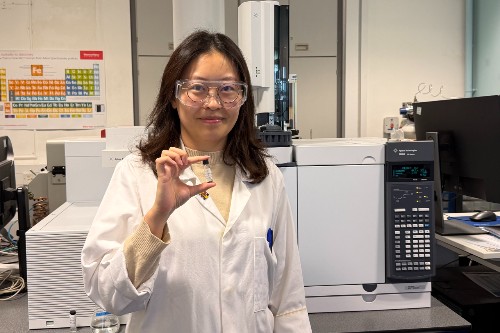
The art of mummification has long been shrouded in mystery, but new research shows the musty smell of mummified remains helps unlock important information about the ancient practice.
The study, led by chemists at the University of Bristol, reveals the elusive aroma is far more than just matter of decay through age; it captures a potent mix of embalming materials and preserved bandages, which uncover how the careful processes have evolved over many centuries.
Lead author Dr Wanyue Zhao, Research Associate in Organic Geochemistry at the University of Bristol, said: “The findings mark a significant step forward in improving our understanding of Egyptian history and the fascinating ritual of mummification. Our analysis of the associated scents has uncovered new insights into how the practice developed through the ages and became increasingly sophisticated.”
The research team used pioneering techniques to analyse the air surrounding small mummy specimens the size of a peppercorn. Traditional methods often require solvent dissolving material, which is more damaging to fragile artefacts.
By combining solid phase microextraction with gas chromatography and high-resolution mass spectrometry, they were able to trap the gases present in small vials so the various scents – known as Volatile Organic Compounds (VOCs) – could be separated and analysed in minute detail.
The study, published in the Journal of Archaeological Scienceexamined 35 samples of balms and bandages taken from 19 mummies spanning more than 2,000 years of Egyptian history between 3200 BC to 395 AD. Across the samples, 81 distinctive VOCs were identified – all providing vital clues about how and when the mummification was carried out.
These compounds, even if only present in tiny amounts, were grouped into four main categories linked to the embalming substances used: fats and oils produced aromatic compounds and short-chain fatty acids; beeswax contributed mono-carboxylic fatty acids and cinnamic compounds; plant resins released aromatic compounds and sesquiterpenoids, and bitumen produced naphthenic compounds.
Dr Zhao said: “Our findings showed the chemical patterns varied across historical periods. Earlier mummies had simpler profiles dominated by fats and oils, while later mummies displayed more complex mixtures incorporating imported resins and bitumen. Such materials were more costly and required more specialised preparation, as the practice became more advanced.”
The chemical profiles also indicated changes depending on what body region of the mummy they were taken.
“For instance, samples from heads often contained different patterns than those from torsos, suggesting embalmers applied distinct recipes to separate parts of the body to possibly aid preservation. This is an area which needs further analysis and research to better understand what techniques were used and why,” Dr Zhao added.
The results provide a more detailed analysis of known balm compositions, deepening existing understanding of the intricate processes involved and their evolution.
Study co-author Richard Evershed, Professor of Chemistry at the University of Bristol, said: “Our volatile analysis proved sensitive enough to detect residues at extremely low concentrations. For example, bitumen biomarkers were previously difficult to detect with earlier soluble residue methods.
“This approach expands the study of ancient Egyptian funerary practices, presenting a clearer, fuller picture of mummification recipes, material choices, and preservation strategies.”
Museums and historical collections also stand to benefit. Air sampling offers a rapid, non-destructive screening tool for fragile mummies, allowing curators to gather chemical information while preserving physical integrity.
Study co-author Ian Bull, Professor of Analytical Chemistry at the University of Bristol, added: “Physical sampling still plays a role for detailed work, yet volatile analysis provides an effective and enlightening first step for studying embalmed remains across collections and time periods.”
Paper
‘Volatile compounds reveal the composition of embalming materials used in Egyptian mummification’ by W. Zhao et al. in Journal of Archaeological Science