





image source, Vuk Valcic/SOPA Images/LightRocket via Getty Images
-
- Author, monitoring
-
Reading Time: 4 minutes
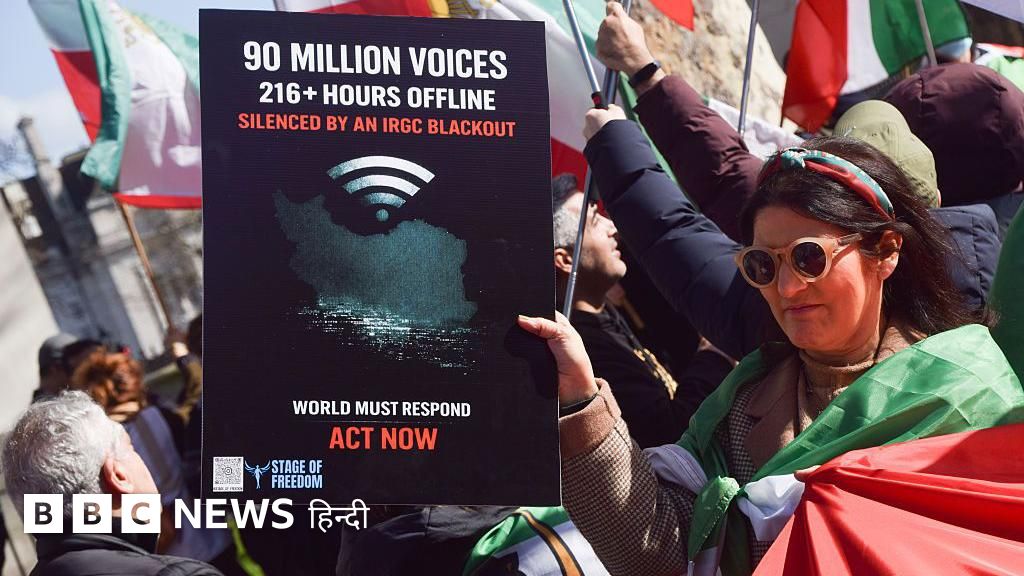
Apart from the other effects of the ongoing war with America and Israel, millions of people have been affected by the internet ban in Iran.
Nearly 10 million people in Iran depend on stable internet connectivity for their work.
According to initial estimates, more than 10 lakh jobs have been lost so far due to the ongoing restrictions on the Internet. Some independent estimates suggest that its impact may be even greater.
There have also been estimates of huge losses to the digital economy. Along with this, there has also been extensive damage to structures and industries.
Here, contradictions are also visible within the Iranian government regarding internet restrictions in the country.
Click here to join BBC Hindi’s WhatsApp channel
Senior ministers of Iran have warned about the loss of jobs of citizens due to internet ban and its social and economic impact.
Serious objections have also been raised about the discriminatory nature of internet access, but at the same time, senior government officials are also claiming that the internet cannot be restored due to ‘special circumstances’.
People are also being asked to be patient because of this.
Warning against ‘discriminatory’ system
image source, TASNIM
According to Iranian officials and media reports, the economic impact of the war with America and Israel is deepening.
Its pressure on employment, digital economy and important industries is continuously increasing.
The latest concern is about the internet disruption across the country, which has now entered its 54th day. Senior officials have stressed the importance of equal and fair access.
He warned against any kind of discriminatory or multi-tiered system. Along with this, he said that stable communication is very important for governance and supply of services during war.
Various figures show that its impact is already visible in the labor market.
According to the Jamaran News website, Deputy Labor Minister Ghulam Hussain Mohammadi said that initial estimates show that more than 1 million jobs have been lost due to the war, while 2 million people are facing unemployment directly or indirectly.
40 lakh jobs lost or affected
image source, Jonathan Raa/NurPhoto via Getty Images
Some Iranian media estimates say that the scale of economic loss could be much higher than this.
The moderate news website Asr‑e Iran cited an unofficial estimate that up to 4 million jobs have been lost or affected due to the combined effects of the war and the internet shutdown.
The same report also mentions claims of large-scale damage to infrastructure and industries, although it does not specify the methodology on which this was based.
The estimated loss to Iran’s digital economy has reached 2,150 trillion rials ($1.69 billion).
Estimates of daily losses amount to 5 trillion riyals ($3.9 million) to the digital core and 50 trillion riyals ($39.2 million) to the entire economy. It was reported that domestic platforms could not handle the demand, which points to a serious capacity shortage.
Who is responsible for the situation?
Officials have tried to justify internet restrictions as a wartime necessity.
Elias Hazrati, head of the government’s Public Liaison Council, said Internet access would be fully restored only after the conflict ends. He appealed to the public to be patient due to the ‘special circumstances’.
On 21 April, Communications Minister Sattar Hashmi said that stable and high-quality Internet access is a ‘public right’.
According to Khabar online news website, he warned that these disruptions were not just technical, but a ‘systemic’ breakdown spanning multiple sectors.
Hashmi said that about 1 crore people, mostly from middle and lower income groups, are directly dependent on reliable digital connectivity for their work.
They warned that continued instability is a direct threat to their jobs and could have wider social and economic impacts.
He also pointed to the financial pressure on the telecom sector and said that the income of some operators is declining and they are facing difficulties in paying salaries to their employees.
Published by Collective Newsroom for the BBC.