





 Bloody, vicious and sensual, Salome is Regent’s Opera’s latest hit to challenge non-conventional staging and setting. While the appearance of Strauss’ dramatic piece punches in some strange places, what captivates audiences is the fear which seeps from this production.
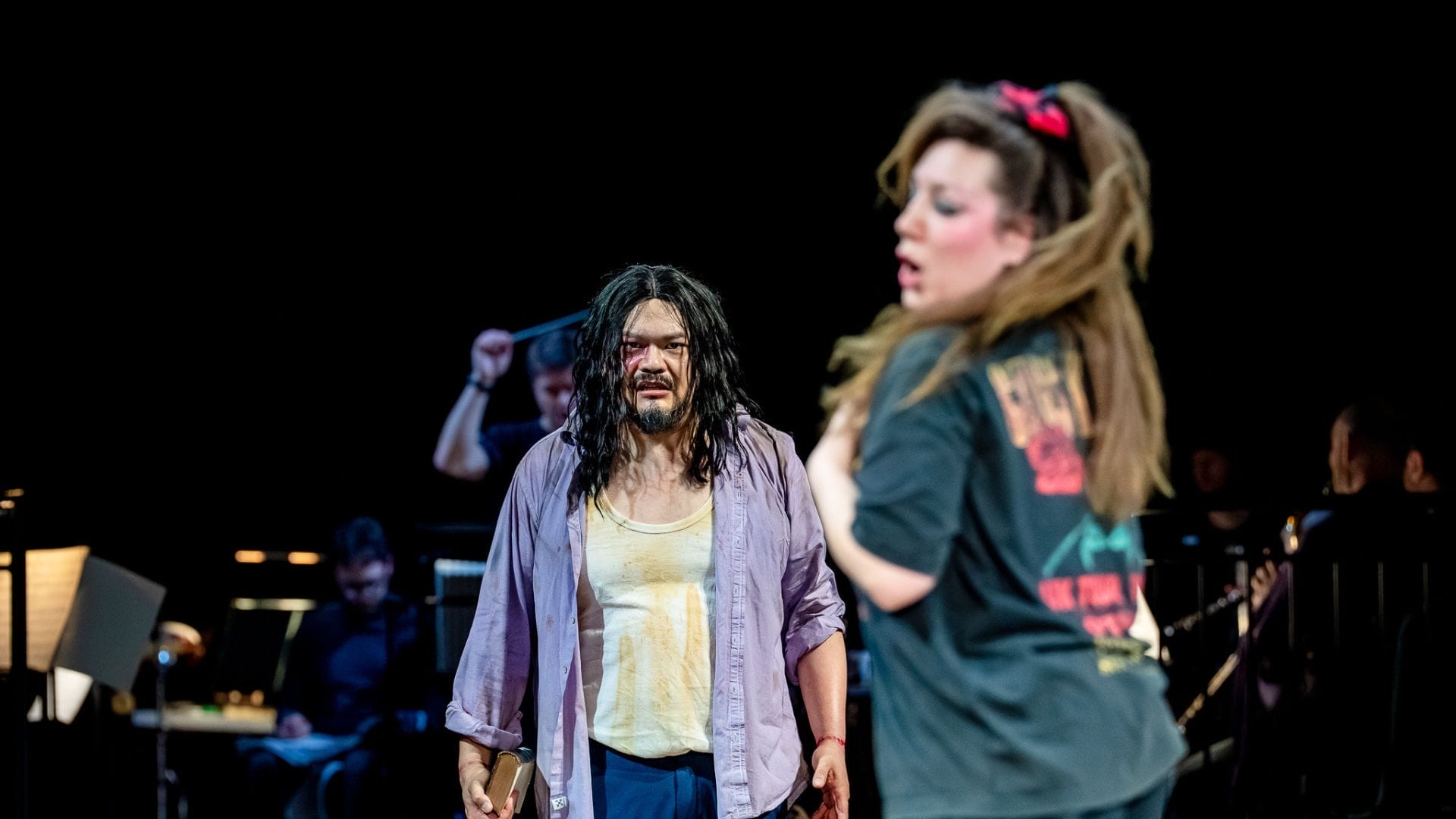
With the prophet, Jokanaan, captured in the centre of the stage, action revolves around his relationship with Salome, who is tied inextricably between Herodias, Narraboth and the prophet. The female position is tested, as Salome is proclaimed as monstrous and wild, yet she is also deeply fascinating for the audience as an object of desire.
The performance by Kirsty Taylor-Stokes conveys this with tantalising horror. She always, despite prancing around the stage when forced to dance by Herod, has a profound sense of vulnerability. Yet the ending, as she nestles with the prophet’s bloodied head, is an act of deference to the cruel authority which tries to pin her down and oppress her. It is staggering to see this female defiance depicted in opera form.


Directed by Mark Ravenhill, he places characters on a catwalk-cum-stage. Moments are forced into momentum through the constant movement around the stage, truly making the most of the expansive space offered by York Hall. More sectioning off of areas could be helpful to ground the audience in more specific moments. Often, focus is pulled to the highly visible orchestra, which steals the limelight, given Ben Woodward’s direction of this musically tense performance, with fast staccato string moments and double bass punctuating the action.
Where this opera perhaps misses a beat is in the odd aesthetic. The venue is scantily clad in scenic elements, some of which leave you questioning whether they are part of the design for this piece or left over from the last venue hire. A shopping trolley doubling as a stretcher for Jokanaan’s dead body seems an odd choice. Equally, the production fails to tie itself to a specific period in time, and the costuming lacks a coherent style.
More time needs to be taken to withdraw Salome from its traditional end-on style and transfer it convincingly to its present-day setting.
However, the figure of the slave who mops the floor is the greatest example of utilising the set well. She slides around the edge of the central platform, armed with a mop, and Annabel Bigland serves a choral function, highlighting the strangeness of the setting.
This tantalising and visceral wonder is something of a joy. It transports the traditional opera fluidly into a non-conventional space.
Listings and ticket information can be found here