






image source, Getty Images
There are two centers of current crisis in the world. The 24-mile-wide Strait of Hormuz located south of Iran and the White House located seven thousand miles away.
This week was a unique opportunity for the rest of the world. These countries had to present their economic arguments directly to the administration of US President Donald Trump. All this happened at the spring meeting of the International Monetary Fund (IMF) and the World Bank, which is being held a short distance from the White House in Washington DC.
I spoke to most of the G7 finance ministers, some central bankers and the world’s top finance experts and found that there was unhappiness among them because the rest of the world was bearing the brunt of the estimated costs of America’s decision to go to war.
Chancellor Rachel Reeves was especially vocal. He described this war as ‘stupidity’ and ‘mistake’. He also said that ‘this war was not ours.’
Meetings of finance ministers, like the G20 breakfast, took place in a solemn atmosphere. According to the participants, America was the only voice in the room that was expressing short-term confidence.

According to people present at the meeting, Asian finance experts expressed clear concern in particular about the ‘real energy shortage’.
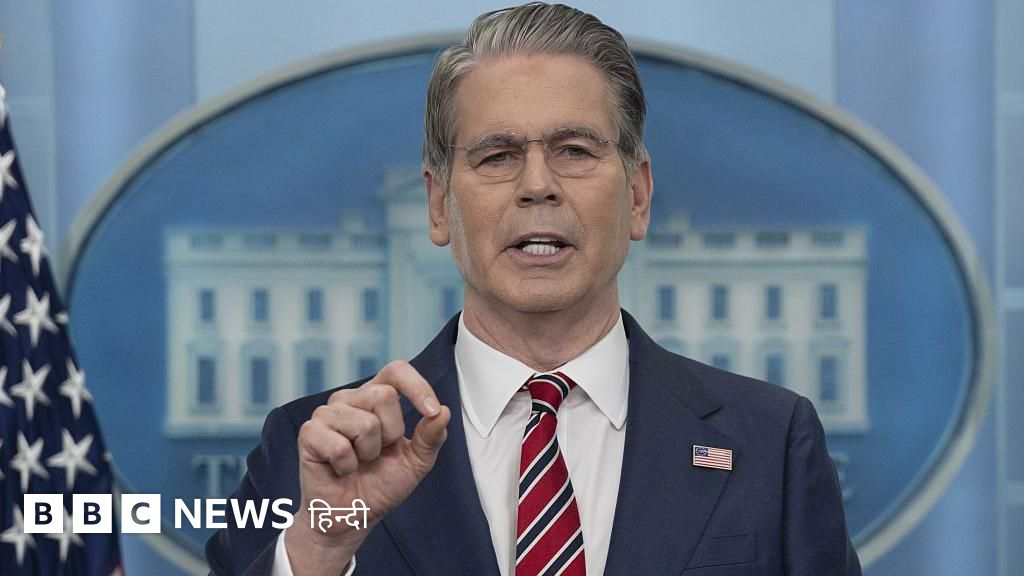
Shortly after many of the concerns were raised at the breakfast table, US Treasury Secretary Scott Besant appeared on American Financial TV and said there was nothing to worry about. He said that the market and the economy will recover quickly.
Canada’s Finance Minister François-Philippe Champagne was present in almost all the important meetings. He has also directly faced Trump’s tariff war. He took a different view.
“Geography doesn’t change. People don’t change that much either. So this will remain a risk in terms of world energy that we will have to manage for years to come, unless the conflict ends,” he said.
‘slow blow’
image source, Photo by Majid Saeedi/Getty Images
IMF Managing Director Kristalina Georgieva told me the world is experiencing a “slow shock.” World Bank President Ajay Banga told about its impact on economically poor countries.
Iraq is not exporting or producing oil, which normally generates 85 percent of its revenues. There is a huge demand for cooking gas for domestic needs in Bangladesh. He is cut off from suppliers in the Middle East.
And Pacific island countries have very little energy storage. They are waiting for tankers and container ships at the end of long shipping routes. These are just some real-life examples of the critical supply chain disruption caused by the blockage in the strait.
Due to these circumstances, the World Bank has prepared an assistance amount of up to 100 billion dollars to help economically weak countries deal with the rising prices of energy and food items. This is more than the amount given during the Covid lockdown.
“March was a difficult month, but April will probably be even more difficult,” Georgieva warned.
“Why? Because the tankers that left till February 28 have reached their destinations. And no new consignment is coming. One tanker reaches slowly. It will take 40 days to reach Fiji.”
Despite some promising developments on Friday, the crisis is fast approaching for world food prices. The price of important fertilizer urea has doubled. Although crops are being sown in the northern countries now, the problem of global food availability may start in June-July.
Banga said, “The real problem will be when fertilizers will not be available after three months. Apart from the northern countries, the sowing season will start in other countries also. Then we will be stuck in a difficult cycle of food availability.”
Hope for talks with Iran
image source, Getty Images
The Trump administration’s response to all this was twofold: The war would end soon and the hardship was worth the effort for the benefits it would bring.
The Willard Hotel, located right across the street from the US Treasury Building, is where the word ‘lobbying’ was born. And the rest of the world came here to exert some diplomatic pressure to avoid economic disaster.
Besant was talking to some journalists, in which I was also included. What was his opinion on the IMF’s forecast of the possibility of a global recession due to the Iran war?
He told me, “I wonder what the impact would be on global GDP if there were a nuclear attack on London.”
“I’m not as concerned about short-term forecasts as I am about future security. It’s better to endure a little economic pain for a few weeks than to avoid major risks.”
I asked him to clarify what he meant. He pointed to the Iranian launch in Diego Garcia. Besant was also confident about the American blockade on Iran. About which he said that Iranian ships ‘will not be able to proceed further.’
At the same time, he was confident about negotiations with Iranians who could credibly represent all aspects of the Iranian leadership.
When I met Besant, the French Finance Minister Roland Lescure had met her personally.
He told me, “I won’t tell you everything I’m telling them. But the Strait is at the root of this crisis and it needs to be addressed. It’s hurting all of us.”
He clearly said that America is also facing economic crisis due to rising prices of petrol. He said that the Iranians are using this economic loss to create pressure. He further said, “This is their weapon of deterrence.”
On the contrary, he believes that domestic energy prices in France will not increase much.
He said, “When there was an oil crisis in the 70s, 90 percent of France’s energy came from hydrocarbons. Now it is 60 percent. We are taking advantage of this crisis to invest more in nuclear and renewable energy.”
There has also been a change in the energy policy of Britain’s Chancellor Rachel Reeves. Now it is considering increasing production from existing fields in the North Sea through ‘tie back’. Also trying to deal with the rising electricity and gas prices. New proposals are expected in the coming days.
Despite the problems facing Britain, Bank of England Governor Andrew Bailey told me bluntly that the Bank should not rush to raise interest rates to deal with war-induced inflation. He said that the way to deal with inflation is to reduce stress.
more challenges
image source, NurPhoto via Getty Images
Canadian Finance Minister François-Philippe Champagne said, “The Strait of Hormuz, we know where it is and how big it is. The problem (mythos) is we don’t know.”
When I met Barclays Chief Executive Officer C.S. Venkatakrishnan, the Gulf crisis was only third in his list of concerns. His first concern was, “Has technology and AI developed too much?”
“The second issue is private debt and liquidity issues. And the third, of course, are the ongoing events in the Middle East.”
However, there is still a lot of uncertainty from the Gulf countries. But now the situation is a little better, due to which some people are able to focus on other concerns.
Growth data has shown that Britain is moving towards a growth rate of 0.5 percent to 0.6 percent in the first quarter. This has also given Reeves hope. Energy prices fell on Friday following news of the Strait’s reopening. Additionally, borrowing costs, petrol prices and mortgage rates also decreased.
Everyone in Washington DC is daring to believe that the crisis has reached its peak. If this has not happened, its consequences will be very serious.
Published by Collective Newsroom for the BBC.