





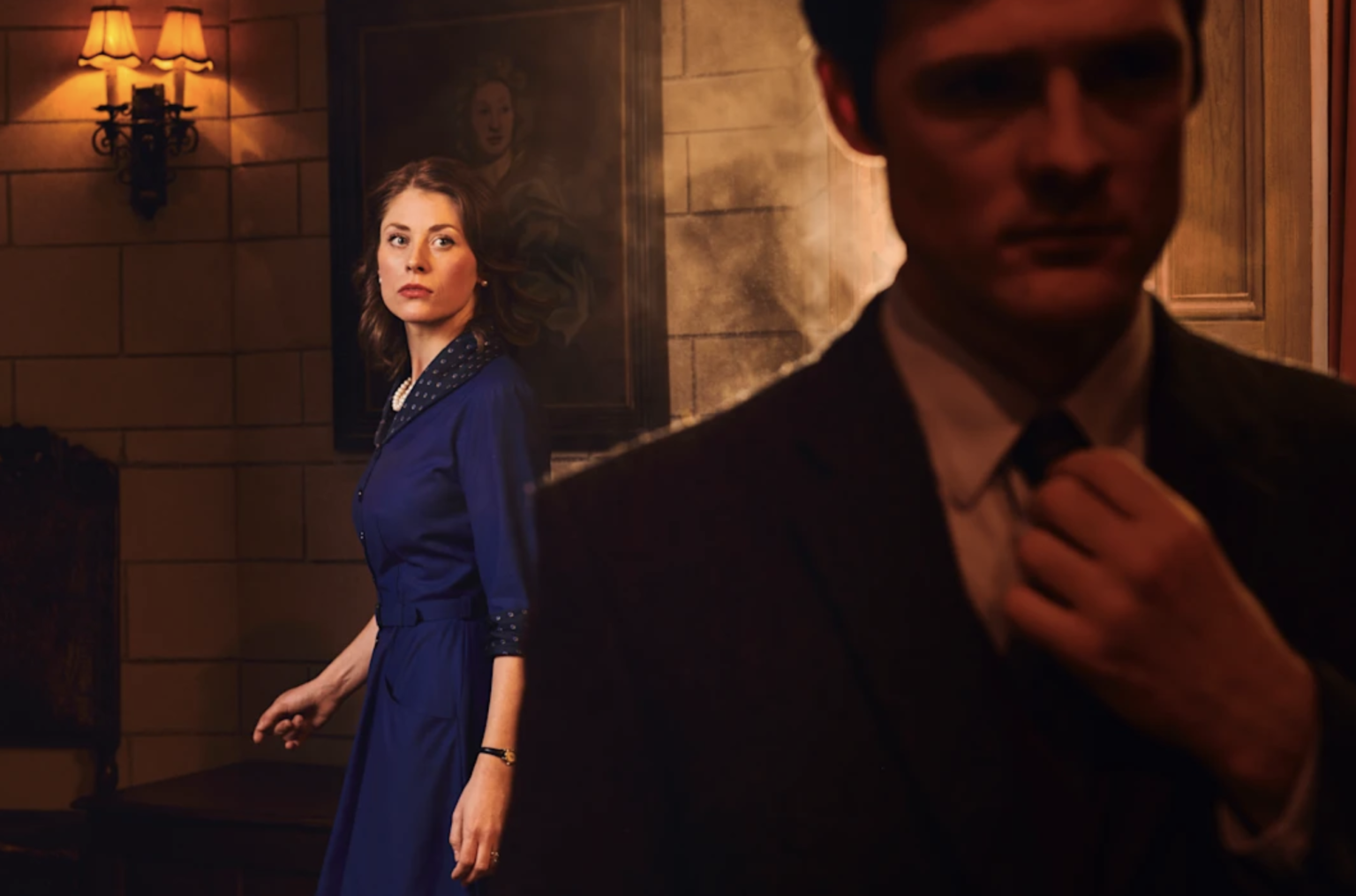
This The Mousetrap Review by London Reviews is the most thorough independent audience guide available to the world’s longest-running play, now in its 75th year at St Martin’s Theatre off Cambridge Circus. We’ve cross-referenced critic ratings, thousands of TripAdvisor reviews, audience comments, and venue-specific seat reviews so you can decide — clear-eyed — whether to book, where to sit, and what you’ll actually get for your money in 2026.
Last updated: 30 April 2026 — Independently researched and written by the London Reviews editorial team. We do not accept payment from the venues or productions we review.
Looking for an honest The Mousetrap review? This is the most thorough independent assessment of The Mousetrap at St Martin’s Theatre — Agatha Christie’s record-breaking whodunnit, now in its 75th anniversary year and currently booking through to January 2027. Below we cover the new cast taking over from 11 May 2026 (Saranna Parlone, Ben Riddle, Dugald Bruce-Lockhart and company under Ola Ince’s direction), ticket prices from £22.50 day seats up to £99 premium, the venue’s strengths and notorious quirks, what audiences love (and what genuinely frustrates them), and our verdict on whether a 73-year-old play still earns its place on the West End.
- The Mousetrap Review: At a Glance
- Introduction: Why We’re Reviewing The Mousetrap Now
- St Martin’s Theatre: Your Full Venue Guide
- The Show: What to Expect (Spoiler-Free)
- The Cast & Performances in 2026
- Staging, Set & Production
- Tickets & Pricing
- What Audiences Actually Say: Review Analysis
- What Audiences Love Most
- Areas for Consideration
- Who Is The Mousetrap Best For?
- How The Mousetrap Compares to Similar Shows
- Insider Tips
- FAQs
- London Reviews Verdict on The Mousetrap
- Related London Reviews
- Summary: Our The Mousetrap Review Rating
The Mousetrap Review: At a Glance
- Show: The Mousetrap by Agatha Christie
- Genre: Murder mystery / whodunnit / classic play
- Venue: St Martin’s Theatre
- Address: West Street, London WC2H 9NZ
- Currently booking: Through to 3 January 2027
- London opening: 25 November 1952 at the Ambassadors Theatre; transferred to St Martin’s Theatre on 25 March 1974, where it has run continuously ever since
- Running time: Approximately 2 hours 20 minutes including a 15-minute interval (some sources list 2 hours)
- Age recommendation: 7+ (under-4s not admitted; under-16s must be accompanied by an adult)
- Director: Ola Ince (joined November 2025); artistic direction by Denise Silvey
- Current cast (until 9 May 2026): Georgina Fairbanks (Mollie Ralston), Cai Brigden (Giles Ralston), Joshua Riley (Christopher Wren), Nicky Goldie (Mrs Boyle), Christopher Wright (Major Metcalf), Kate Handford (Miss Casewell), Stephen Ventura (Mr Paravicini), Thomas Dennis (Detective Sergeant Trotter)
- New cast from 11 May 2026: Saranna Parlone (Mollie), Ben Riddle (Giles), Stefan Chanyaem (Christopher Wren), Joanne Henry (Mrs Boyle), James Staddon (Major Metcalf), Anna Rawlings (Miss Casewell), Dugald Bruce-Lockhart (Mr Paravicini), Ben Galvin (Detective Sgt. Trotter)
- Producer: Brian Fenty (since 2024); previously Adam Spiegel, Sir Stephen Waley-Cohen, and originally Sir Peter Saunders
- Author: Agatha Christie (based on her radio play Three Blind Mice, written for Queen Mary in 1947)
- Ticket prices: From £22.50 (day seats) and £25 (TodayTix rush) up to £99 (premium Stalls/Dress Circle)
- Where to book: Official site, londontheatre.co.uk, Official London Theatre, TodayTix
- Nearest tube: Leicester Square (2-3 minutes); Covent Garden (5 minutes); Tottenham Court Road (8 minutes)
- Nearest rail: Charing Cross (10-15 minutes’ walk)
- Capacity: 550 seats across Stalls (265), Dress Circle (135) and Upper Circle (153) — one of the smallest West End auditoriums
- Selling out: 87% (per londontheatre.co.uk)
- Performance count: Over 30,000 performances (the 30,000th was celebrated in 2025)
- TripAdvisor (St Martin’s Theatre): 4.5 stars across thousands of reviews; the show typically rates higher than the venue
- Time Out review: Mixed — described as a “walking, talking piece of theatre history” with reservations about modernity
- Awards: Laurence Olivier Special Recognition Award (2022); three Guinness World Records — longest continuous run of any show, most durable actor (David Raven, 4,575 performances), longest-serving understudy (Nancy Seabrooke, 15 years)
- Global reach: Translated into 27 languages, performed in over 50 countries
- Accessibility: Wheelchair access via temporary ramp (3 shallow steps at entrance); wheelchair spaces in Box C and the Dress Circle; transfer seats in Dress Circle aisle; infrared hearing system; assistance dogs welcome; access line 020 7836 1443
- Matinées: Tuesday, Thursday and Saturday at 3pm (no Sunday performances)
- Group rates: Monday-Friday groups 10+ at £37.50 (Band A); Tuesday/Thursday matinée groups 10+ at £24.75 (Band B)
Introduction: Why We’re Reviewing The Mousetrap Now
There’s a fair argument that The Mousetrap is the most-reviewed play in the English-speaking world. There’s also a fair argument that almost none of those reviews matter much, because audiences keep turning up regardless. So why a fresh look in 2026?
Two reasons. First, the production has just had its biggest creative shake-up in decades. In November 2025, the award-winning director Ola Ince — fresh from work at the Royal Opera House, the Young Vic, the Donmar, the National Theatre and Broadway — took over as director, replacing Ian Talbot. A brand-new cast came in with her. And from 11 May 2026, that cast is being refreshed again, with two of the show’s existing understudies (Saranna Parlone as Mollie and Ben Riddle as Giles) graduating into lead roles alongside actors including Dugald Bruce-Lockhart and Ben Galvin. Second, the show has just passed its 30,000th performance, picked up a Guinness World Record, and won an Olivier Special Recognition Award in 2022. After 73 years, the question is whether new direction has changed anything material — or whether The Mousetrap remains, as Time Out memorably called it, “the most expensive museum exhibit in London”.
For the seven million tourists who pass through the West End each year, this is also a practical question. With Les Misérables, The Lion King, Wicked, Hamilton, Stranger Things and dozens of other shows competing for the same evening’s budget, is a 1950s drawing-room mystery still the smart pick? Our The Mousetrap review tries to answer that honestly. We’ve sat with the data, the seat-by-seat warnings, the Theatremonkey legroom complaints and the reverent five-star tributes from first-time visitors, and separated the play’s stubborn charms from its equally stubborn weaknesses.
If you’re new to London Reviews, our recent West End coverage includes our companion Les Misérables London Review, our guide to The Savoy for pre-theatre stays, and our Dishoom King’s Cross review for post-show dining ideas.
St Martin’s Theatre: Your Full Venue Guide
Location & Getting There
St Martin’s Theatre sits on West Street, just off Cambridge Circus in the Seven Dials corner of the West End. It is one of the smallest and most centrally placed theatres in London. Leicester Square tube (Northern, Piccadilly) is a brisk two-to-three-minute walk; Covent Garden (Piccadilly) is five minutes; Tottenham Court Road (Central, Northern, Elizabeth) is around eight. From Charing Cross rail station the walk is roughly 10-15 minutes through the heart of theatreland.
Buses 14, 19, 24, 38, 176 and 29 stop on Charing Cross Road or Shaftesbury Avenue, both within two minutes of the theatre. Night buses include the N5, N19, N20, N29, N38, N41 and N279. If you must drive, Q-Park Chinatown and Q-Park Covent Garden are both around five minutes on foot; the St Martin’s Lane Hotel car park is closer at around four minutes.
The Building
Designed by W.G.R. Sprague — the same architect responsible for the Wyndham’s, the Aldwych and several other West End theatres — St Martin’s opened in 1916 as a sister to the neighbouring Ambassadors Theatre. It was given a Grade II listing by English Heritage in 1973. The exterior was carefully restored in the late 1990s, including a faithful replica of the original 1916 canopy fitted in 1998.
Inside, the theatre is genuinely lovely: an English Georgian-style auditorium with deep red velvet, gilded woodwork and silk wallpaper that audiences regularly describe as feeling “like walking into an Agatha Christie novel”. The Willoughby de Broke coat of arms hangs over the proscenium — the family has owned the theatre since it opened. Capacity sits at just 550 seats across three levels, making it among the most intimate West End venues; you’re never more than around fifteen rows from the action.
Seating Guide — Where to Sit
St Martin’s is small enough that there are very few genuinely bad seats, but legroom is the running issue and worth thinking about before you book. The theatre was built for 1916 audiences, and the dimensions reflect that.
- Stalls (265 seats): The sweet spot is unanimously Row G — the row immediately behind the cross aisle. You get unobstructed legroom, perfect sightlines, and you’re close enough to catch every facial expression in this dialogue-heavy play. Rows B-H centrally are excellent. Anything from Row L backwards starts to lose the top of the stage to the Dress Circle overhang, but for The Mousetrap, Theatremonkey notes the action stays low enough that this barely matters.
- Dress Circle (135 seats): Excellent value. The intimate scale means even the back row feels close to the stage. Front rows A-D centrally are superb; Row F at the back is fair value at third price for almost the same view. Avoid Row A side-block seats 1-4 and 24-26 (and Row B seats 1, 2, 23, 24) which are flagged restricted view because of the side-stage cut-off.
- Upper Circle (153 seats): The cheapest seats in the house. Rows B and C centrally are workable; Row A has a safety-rail issue; Row H is the only row with decent legroom for taller audience members. The rake is steep and the climb is real (28 steps up from the foyer). Worth it on a budget; less so if you have any difficulty with stairs or vertigo.
- The Boxes: Two two-person boxes (Box A and Box B) at the front sides of the Dress Circle. Both have restricted side views but excellent intimacy — perfect for a date night if you don’t mind missing the odd corner of the stage. The Royal Box at the back of the Dress Circle holds four, has its own private entrance, bathroom and small reception area; contact the box office directly to enquire about pricing.
Accessibility
There are three shallow steps at the main entrance to street level. Wheelchair access to the Dress Circle is via a temporary ramp covering the five steps from the foyer; two wheelchair spaces are available — one in Box C, one in the Dress Circle — with transfer seats also available on the Dress Circle aisle. The full auditorium has an infrared hearing system with both loop and conventional headsets (book in advance, deposit required). Captioned and signed performances run periodically. Guide and hearing dogs are welcome in the auditorium, or staff will mind your dog in the manager’s office. To book accessible seats or arrange support, call 020 7836 1443 or email access@stmartinstheatre.co.uk. Discounted tickets are available for disabled patrons and one carer.
Bars & Interval
There’s a small Stalls bar and a charming Dress Circle bar, both with pleasingly old-fashioned atmosphere. Drinks are at standard West End prices — wine around £8-9 a glass, beer around £6 — with audience reviews repeatedly noting that the rosé is unusually good. A small criticism that comes up often: there’s no cloakroom, so bring only what fits under your seat. Stasher luggage storage points are available within a short walk if you’re carrying a suitcase. The 15-minute interval is enough; queues are manageable thanks to the small auditorium, though the gents’ loo gets the inevitable West End squeeze.
Air Conditioning
Worth flagging: the theatre has full air conditioning, with the Upper Circle and Grand Circle particularly noted by audiences for being a welcome respite from London’s summer heat. After the recent string of hot Junes, this is more of a selling point than it sounds.
The Show: What to Expect (Spoiler-Free)
A snowstorm cuts off Monkswell Manor, a remote English country guesthouse newly opened by young couple Mollie and Giles Ralston. Their first six guests arrive: a flamboyantly eccentric young man, a grumpy elderly woman, a quietly observant retired major, a guarded young woman, an unexpected foreign visitor, and finally a police sergeant who has skied through the snow to deliver an unwelcome warning. There has been a murder in London. The killer, the police believe, is on his or her way to Monkswell Manor. And one of the guests is connected to a buried scandal that may make them the next target — or the murderer.
If that sounds like every Cluedo board ever made — country house, suspicious strangers, locked-room mystery, body in the library — that’s because The Mousetrap is, in many ways, the show that codified the whodunnit on stage. Christie wrote it in 1947 as a radio play (Three Blind Mice) for Queen Mary’s 80th birthday, expanded it for the stage in 1952, and famously expected it to run eight months at most. She gave the rights to her nine-year-old grandson Matthew Prichard as a birthday present. Matthew has been quietly collecting the royalties for the better part of seven decades.
Tonally, this is a period piece played mostly straight. The dialogue is crisp 1950s RP; the costumes, set and production design are faithful to the era. There’s wit, mild sexual innuendo, several genuine laughs (Mr Paravicini and Christopher Wren get most of them), and a final act that, if it lands properly, still produces audible gasps from audience members who haven’t been spoiled. The runtime varies between two hours and two hours twenty depending on the source — count on a comfortable 2h 20m including the interval.
A word on the famous secret. At the end of every performance, the cast asks the audience to “keep the secret of whodunnit” — and astonishingly, after 73 years, that 1950s gentleman’s agreement still mostly holds. The Wikipedia article will tell you, of course, and a quick Google will spoil it in seconds. We’d urge you not to. Half the pleasure of The Mousetrap is being the person in your row who doesn’t know yet.
The Cast & Performances in 2026
2026 is unusually significant for casting. The arrival of director Ola Ince in November 2025 brought a complete cast refresh under her direction, and that cast is itself being refreshed on 11 May 2026 — so depending when you book, you’ll see one of two distinctly different companies.
Current Cast (Until 9 May 2026)
- Georgina Fairbanks as Mollie Ralston — Recently from Wilko: Love, Death & Rock ‘n’ Roll; brings a warmth and slight wariness to the newlywed running her first business.
- Cai Brigden as Giles Ralston — Another Country, Butley; plays Giles with the right level of well-meaning awkwardness.
- Joshua Riley as Christopher Wren — Previously in Richard III and Queen Charlotte: A Bridgerton Story; the role’s flamboyance lands well in his hands.
- Nicky Goldie as Mrs Boyle — A regular Christie veteran from Witness for the Prosecution and Romeo and Juliet; properly sniffy.
- Christopher Wright as Major Metcalf — Also from Witness for the Prosecution; gives the major a careful watchfulness that pays off.
- Kate Handford as Miss Casewell
- Stephen Ventura as Mr Paravicini — Steals scenes with the role’s deliberately exaggerated theatricality.
- Thomas Dennis as Detective Sergeant Trotter — From Noughts & Crosses; carries the central interrogation scenes.
New Cast (From Monday 11 May 2026)
- Saranna Parlone as Mollie Ralston — Promoted from understudy in the current company; a smart bit of casting that’s increasingly common in this production.
- Ben Riddle as Giles Ralston — Also promoted from understudy.
- Stefan Chanyaem as Christopher Wren
- Joanne Henry as Mrs Boyle
- James Staddon as Major Metcalf
- Anna Rawlings as Miss Casewell
- Dugald Bruce-Lockhart as Mr Paravicini — A long-form theatre actor with significant Shakespeare and Chekhov credits; his Paravicini is likely to lean more sinister than camp.
- Ben Galvin as Detective Sgt. Trotter — From Runaway.
- Understudies and ensemble: Nancy Doubledee, Bella Farr, Barnaby Jago, Richard Parnwell and Clive Marlowe.
Director’s Note
Ola Ince’s appointment is the most interesting creative news around The Mousetrap in years. She is a director of substance — Royal Court, Donmar, Young Vic, the National, the Royal Opera House, Broadway. Producer Brian Fenty’s stated brief was for someone who would honour the show’s history while challenging complacency. Audience reviews from her tenure so far suggest a slightly tighter pace, sharper character distinction, and more contemporary attention to the play’s gender dynamics, while leaving the period setting intact. Whether you’ll notice depends on how often you’ve seen the show before; first-timers will simply experience a well-directed Christie thriller.
Standout Performance Themes
Across audience reviews, four roles consistently dominate praise: Mr Paravicini (the playable, scene-stealing role with a built-in audience hook), Christopher Wren (the comic lifeline), Mrs Boyle (audiences love hating her), and Detective Sergeant Trotter (the interrogation scenes are the play’s spine). The Ralstons get less attention because they’re written more straight, but a good Mollie can lift the entire opening twenty minutes.
Staging, Set & Production
The set is one room: the great hall of Monkswell Manor, fully realised in 1950s English country-house detail — wood panelling, heavy curtains, a fireplace, a radio, a desk, a sofa, the requisite assortment of doors. There’s no scene change, no projection, no theatrical sleight-of-hand. The action takes place in real time over roughly 24 hours, with the interval sitting between the play’s two acts.
This is part of The Mousetrap‘s peculiar appeal and one of its honest weaknesses. Modern audiences accustomed to the technical wizardry of Stranger Things: The First Shadow or the rotating barricade of Les Mis may find a single drawing-room set with traditional entrances and exits genuinely quaint. Others will find it perfectly suited — a contained, intimate playing space that lets the writing and the performances do the work. Costumes by Janet Hudson Holt are the production’s other consistent strength, with period detail down to the right shade of brogue and the right cut of tweed.
Sound is naturalistic — radio broadcasts, a doorbell, snow-muffled silence — with no live music. Lighting is restrained, leaning on warm tungsten tones for the interior and cooler blues for the snow visible through the windows. Effects are minimal: a few brief moments of darkness, the offstage gunshots that punctuate key scenes, and one sustained moment of bright flashing light in the second act that’s worth mentioning if you’re sensitive.
Tickets & Pricing
Full Price Range
Tickets currently range from £25 to £99. Premium centre Stalls and the front centre Dress Circle hit the top of that range; mid-Stalls and rear Dress Circle sit around £55-£75; Upper Circle and restricted-view side seats start around £25-£35. Crucially, this is one of the cheapest “must-see” plays in the West End — a full-price stalls seat at The Mousetrap still costs less than a mid-range seat at most major musicals.
Day Seats and Rush Tickets
Two genuinely useful budget options. Day seats are released at 10am every Monday-Saturday at £22.50 each — buy online or in person at the box office, two tickets per person maximum. TodayTix rush tickets at £25 are released at 10am daily via the TodayTix app for that day’s performances. Both are limited; both go quickly on weekends; both are excellent value if you’re spontaneous.
Best Value Seats
In our view, three picks. Stalls Row G, anywhere along it — extra legroom from the cross-aisle, perfect sightlines, typically £55-£75. The single best price-to-experience ratio in the building. Dress Circle Row F is at third price and gives almost the same view as Row E directly in front at top price; a smart Theatremonkey-approved play. Stalls side blocks rows G-H on the aisle have unusually good legroom because there are no seats in front, and they’re cheaper than the central block.
Where to Book
- Direct from themousetrap.com — official site, no booking fee, full transparency on availability.
- The St Martin’s Theatre box office on 020 7836 1443 — the only place to access day seats and discounted access tickets.
- londontheatre.co.uk — strong for last-minute deals and side-by-side seat-availability comparison.
- Official London Theatre — the SOLT site, reliable and fee-transparent.
- TodayTix — the only place to access £25 rush tickets.
- TKTS Leicester Square — for day-of-performance discount tickets in person; arrive around 10am.
Group Discounts and Schools
Groups of 10+ on Monday-Friday performances pay £37.50 on Band A tickets — an excellent rate. Tuesday and Thursday matinées drop to £24.75 on Band B tickets for groups of 10+. Schools should phone the box office directly to discuss further reductions and free teacher places.
Comparison With Similar Shows
For context: Witness for the Prosecution at London County Hall runs around £30-£100. Stranger Things: The First Shadow at the Phoenix is £30-£200+. The Play That Goes Wrong at the Duchess is roughly £30-£90. Among the West End’s classic plays and thrillers, The Mousetrap is genuinely the cheapest first-class option, particularly with the £22.50 day-seat scheme.
What Audiences Actually Say: Review Analysis
TripAdvisor
St Martin’s Theatre averages 4.5 stars across thousands of TripAdvisor reviews, with The Mousetrap the dominant subject. Recurring themes: the theatre’s atmospheric charm (“walking into an Agatha Christie novel”), the genuine fun of being part of the “secret club” of audiences sworn to silence, the consistent quality of acting, and the value of seeing a piece of theatrical history. The phrase “bucket list” appears repeatedly in five-star reviews. The sharpest criticisms are venue-related rather than show-related — cramped seats, narrow aisles, tight gents’ loo, no cloakroom — though a minority of reviewers find the pacing dated and the plot too telegraphed.
Google Reviews
Google reviews of St Martin’s Theatre track closely with TripAdvisor: 4.5 stars, repeat compliments for the staff, the intimacy of the auditorium, and the consistent acting standard. Negative comments cluster on legroom and the inevitable “I guessed it early” minority view.
London Theatre Direct & Booking Platform Reviews
London Theatre Direct verified-booking reviews from April 2026 average 4.5 stars; recent comments include detailed praise for the suspense, the unexpected comedy, the “edge of seat” pacing, and the “really good play, definitely worth watching” verdicts that drive repeat tourist trade. Several recent five-star reviewers specifically called out being surprised by how comfortable the historic seats were despite their age.
Professional Critics
Professional critics have always been more split than audiences. Time Out’s long-standing review describes the show as “a walking, talking piece of theatre history” with reservations — calling it “the most expensive museum exhibit in London”. A 2024 ReviewsGate piece was scathing; a 2015 Official Theatre review described it as “painfully pleasant and stiflingly non-dynamic”. The London Theatre site (which publishes the show’s listing) gives the production four stars with affectionate praise. The pattern is consistent: critics judge the play as drama, audiences experience it as event. Ola Ince’s directorial arrival may shift some of that critical view; a fresh round of professional reviews under the new direction is likely later in 2026.
The Olivier Recognition
In 2022, on the show’s 70th anniversary, The Mousetrap received the Olivier Special Recognition Award — the most significant institutional acknowledgement the production has received from the British theatre establishment, and a meaningful counterbalance to the lukewarm critical record.
What Audiences Love Most
- The atmosphere of St Martin’s Theatre itself. The combination of red velvet, gilded woodwork and 1916 architecture genuinely transports audiences in a way modern, larger West End venues cannot. Several reviewers describe arriving and feeling they’d “stepped into a Christie novel” before the curtain even rose.
- Being in on the secret. The cast’s appeal at the end — to keep the murderer’s identity hidden — produces a low-key euphoria in audience members who realise they’ve been admitted to a 73-year-old gentlemen’s agreement.
- The intimacy of the auditorium. At 550 seats, this is a genuinely small house. Even the cheapest Upper Circle seats put you closer to the stage than mid-Stalls in many big-musical theatres.
- The unexpected comedy. First-time audiences are repeatedly surprised by how much of The Mousetrap is genuinely funny. Mr Paravicini’s mannerisms and Christopher Wren’s cheerful eccentricity carry most of the laughs.
- Genuine value for money. £22.50 day seats and £25 rush tickets put this in budget territory while remaining a complete West End theatre night. A meaningful saving compared to almost every musical alternative.
- The twist still works. For audience members who haven’t been spoiled, the reveal still produces audible reactions across the auditorium. That’s a remarkable achievement for a play this old.
- Suitability for first-time London theatregoers. Short, contained, accessible, with clearly-drawn characters and a satisfying resolution — an excellent introduction to West End theatre for tourists and infrequent attendees.
- The historic appeal. Watching the longest-running play in the world is its own draw. For many international visitors, this is the show they’ll remember as their definitive London theatre experience — partly because of, not despite, its longevity.
Areas for Consideration
- The seats are tight, particularly for tall audience members. Built in 1916, the auditorium reflects 1916 dimensions. Audience members over 5’10” repeatedly note pressed knees against the row in front — particularly in the Dress Circle and Upper Circle. Book Stalls Row G or aisle seats in the side blocks if this matters to you.
- It is very much a period piece. The pacing is 1950s pacing. The dialogue is 1950s dialogue. If you’re expecting Stranger Things-level dynamism, you will not get it. This is a play to watch on its own terms or to leave alone.
- The plot is recognisably “Cluedo-meets-Christie”. Some audience members — particularly those well-read in mystery fiction — will identify the murderer early. The show’s defenders will say spotting the killer is half the fun; its detractors say it makes the second act drag.
- No cloakroom. Bring only what fits under your seat. If you’re carrying a suitcase, use a Stasher point in advance — there are several within a five-minute walk.
- The Upper Circle climb is steep and the rake is sharp. Genuinely vertiginous for audience members with any difficulty with heights or stairs. The 28-step climb is unavoidable; there’s no lift.
- Some audience members find the show dated, occasionally jarringly so. A handful of plot elements and character beats reflect 1950s social attitudes. Ola Ince’s new direction has reportedly softened a few of these without changing the script substantially, but the period framing is intentional and unchanged.
Who Is The Mousetrap Best For?
✅ Strongly recommended for:
- First-time London visitors wanting a “classic West End” theatre experience without the musical price tag
- Agatha Christie readers and fans of golden-age detective fiction
- Families with children aged 10+ who can sit still for two-and-a-bit hours of dialogue
- Theatre buffs collecting “shows you have to see once” — this is one of them
- Date nights wanting an intimate, contained, slightly-quirky alternative to the big musicals
- Anyone working through a London bucket list that includes the Tower, Big Ben and a West End classic
- Budget-conscious visitors using £22.50 day seats or £25 TodayTix rush
- Groups of 10+ who can access the £37.50 group rate
⚠️ Approach with caution if:
- You’re under 12 or have limited attention for dialogue-heavy theatre — the runtime and slow build may not land
- You’re over 5’11” and unwilling to book Row G or an aisle seat — the legroom genuinely will be a problem
- You expect spectacle, technical effects or visual surprise — there is none
- You’ve been spoiled on the ending — much of the play’s charge depends on not knowing
- You strongly prefer modern playwriting — the dialogue and pacing are firmly mid-twentieth-century
- You have difficulty with steep stairs and limited mobility — the Upper Circle is a serious climb
How The Mousetrap Compares to Similar Shows
| Feature | The Mousetrap | Witness for the Prosecution | The Play That Goes Wrong | Stranger Things: The First Shadow |
|---|---|---|---|---|
| Genre | Classic murder mystery | Christie courtroom drama | Slapstick comedy | Supernatural horror-thriller |
| Venue | St Martin’s Theatre (550) | London County Hall | Duchess Theatre (494) | Phoenix Theatre (1,012) |
| Running Time | 2h 20m (incl. interval) | 2h 30m (incl. interval) | 2h (incl. interval) | 3h (incl. interval) |
| Price Range | £22.50 – £99 | £30 – £100 | £30 – £90 | £30 – £200+ |
| Age Recommendation | 7+ (we’d say 10+) | 12+ | 8+ | 14+ |
| TripAdvisor Rating | ★★★★½ (4.5 / 5) | ★★★★★ (4.7 / 5) | ★★★★★ (4.7 / 5) | ★★★★★ (4.8 / 5) |
| Audience Size (year) | ~170,000+ | ~180,000+ | ~150,000+ | ~310,000+ |
| Major Awards | Olivier Special Recognition (2022); 3 Guinness World Records | Olivier nominations | Olivier (Best New Comedy 2015) | 3 Olivier Awards (2024) |
| Best For | Classic theatre lovers, tourists | Courtroom drama and Christie fans | Pure comedy and family fun | Spectacle and effects fans |
| Period Setting | ⚠️ 1950s (intentional) | ⚠️ 1950s (intentional) | Contemporary | 1950s with modern staging |
Verdict on the comparison: If you want a piece of theatrical history, an intimate venue, the cheapest entry price, and a genuinely satisfying classic whodunnit, The Mousetrap is the unique choice — there is no equivalent. Witness for the Prosecution is its closest cousin and slightly more dramatic. The Play That Goes Wrong is funnier but less weighty. Stranger Things is the spectacle option for those who want technical wizardry. Each has its place; The Mousetrap‘s remains genuinely uncontested as the West End’s classic mystery experience.
Insider Tips
- The single best seat in the house is Stalls Row G. Cross-aisle in front means generous legroom, the rake is right, and you’re far enough back to take in the whole drawing-room set. If you’re tall, this is the row to ask for first.
- Use the £22.50 day seat scheme if you’re flexible. Released 10am Monday-Saturday, two per person, in person or online. Quieter weekday performances are easiest; weekends sell out quickly.
- £25 TodayTix rush is the second-best deal. Open the app at 10am sharp; tickets vary in seat location but are often surprisingly good.
- Don’t book Dress Circle Row A side seats 1-4 or 24-26. They’re flagged restricted view and they are.
- Avoid spoilers. Genuinely. The Wikipedia article will spoil the ending in two clicks. Half the experience depends on not knowing.
- Pre-show dining nearby: The Ivy is directly across the road if you want the full splash; Dishoom Covent Garden is five minutes away for excellent Indian; Rossopomodoro on Monmouth Street does proper Neapolitan pizza in fifteen minutes flat. For something quicker, Côte Brasserie on St Martin’s Lane is reliable theatre-fare.
- Stage door: The cast often appears briefly after the show on West Street. Less of a stage-door scene than at the bigger musical theatres, but cast members are generally generous if you wait.
- Bring layers. The auditorium is air-conditioned year-round, which is a relief in summer but can be chilly in winter.
- If you’re tall, book aisle seats in the Stalls side blocks. Some have no seat in front, giving you genuine stretching room — a lifesaver for the second act.
- Don’t bring a suitcase. No cloakroom; under-seat space is minimal. Use a Stasher point on St Martin’s Lane or near Leicester Square.
- Take the secret seriously. Don’t tweet the ending. Don’t tell your friends who haven’t seen it. It’s part of the deal.
FAQs
How long is The Mousetrap at St Martin’s Theatre in London, including the interval?
The Mousetrap at St Martin’s Theatre runs for approximately 2 hours and 20 minutes including a 15-minute interval. Some sources list 2 hours; the official site quotes “2hr including 1 interval” but Time Out and the box office cite 2h 20m. Plan for the longer figure.
Is The Mousetrap at St Martin’s Theatre in London suitable for children, and what is the age recommendation?
The official age recommendation is 7+. Children under 4 will not be admitted, and under-16s must be accompanied by an adult. All children must have their own ticket. Realistically, we’d suggest 10+ as a more comfortable threshold given the dialogue-heavy pacing and the patience required for a classic whodunnit.
Where are the best seats for The Mousetrap at St Martin’s Theatre in London?
Stalls Row G centrally is the best in the house — the cross-aisle in front gives extra legroom, the sightline is excellent, and the rake is comfortable. Stalls Rows B-H also offer top views. Dress Circle Rows A-D centrally are excellent. Best budget seats are Upper Circle Rows B-C, seats 3-24. Avoid Dress Circle Row A seats 1-4 and 24-26, which are restricted view.
How much do tickets to The Mousetrap at St Martin’s Theatre in London cost in 2026?
Tickets to The Mousetrap in London range from £22.50 (day seats) and £25 (TodayTix rush) up to £99 for premium centre Stalls and Dress Circle. Most seats sit between £35 and £70. Group rates start at £24.75 for groups of 10+ on Tuesday and Thursday matinées.
Who is in the current cast of The Mousetrap at St Martin’s Theatre in London?
As of late April 2026, the company is led by Georgina Fairbanks (Mollie Ralston), Cai Brigden (Giles Ralston), Joshua Riley (Christopher Wren), Nicky Goldie (Mrs Boyle), Christopher Wright (Major Metcalf), Kate Handford (Miss Casewell), Stephen Ventura (Mr Paravicini) and Thomas Dennis (Detective Sergeant Trotter). From 11 May 2026, a new cast led by Saranna Parlone, Ben Riddle and Dugald Bruce-Lockhart takes over. The director throughout 2026 is Ola Ince.
How do I get to St Martin’s Theatre in London for The Mousetrap?
St Martin’s Theatre is on West Street, London WC2H 9NZ, just off Cambridge Circus. Leicester Square tube (Northern, Piccadilly) is 2-3 minutes’ walk; Covent Garden (Piccadilly) is 5 minutes; Tottenham Court Road (Central, Northern, Elizabeth) is around 8 minutes. Charing Cross rail station is 10-15 minutes away. Buses 14, 19, 24, 29, 38 and 176 stop nearby.
Is The Mousetrap at St Martin’s Theatre in London wheelchair accessible?
Partially. There are three shallow steps at the entrance. The Dress Circle is wheelchair accessible via a temporary ramp covering the five steps from the foyer; two wheelchair spaces are available — one in Box C and one in the Dress Circle — with transfer seats also on the Dress Circle aisle. Infrared hearing systems, both loop and conventional, are available. To book or check details, call the access line on 020 7836 1443 or email access@stmartinstheatre.co.uk.
How long has The Mousetrap been running at St Martin’s Theatre in London?
The Mousetrap opened in the West End on 25 November 1952 at the Ambassadors Theatre, then transferred to St Martin’s Theatre in March 1974, where it has played continuously ever since. As of 2026, the production has played over 30,000 performances and holds the Guinness World Record for the longest continuous theatrical run.
Why are audiences sworn to secrecy at the end of The Mousetrap at St Martin’s Theatre in London?
At the curtain call, the cast asks audiences not to reveal the murderer’s identity to friends. This 1950s tradition has held — astonishingly — for 73 years and is part of the show’s mystique. While the ending is now technically available online, audiences overwhelmingly continue to keep the secret, making each fresh audience genuinely surprised. We strongly recommend not Googling it before you go.
Has The Mousetrap at St Martin’s Theatre in London won any awards?
Yes. The Mousetrap received the Laurence Olivier Special Recognition Award in 2022 to mark its 70th anniversary. It also holds three Guinness World Records: longest continuous run of any show in the world, most durable actor (David Raven, 4,575 performances as Major Metcalf), and longest-serving understudy (Nancy Seabrooke, 15 years).
London Reviews Verdict on The Mousetrap
The Mousetrap is the West End’s most peculiar institution. It is also genuinely one of its most rewarding nights out, provided you book the right seat and arrive without expectations of pyrotechnics. Critics have spent seventy-three years patiently explaining that the play is structurally creaky, the dialogue period-bound, the staging unchanged. Audiences have spent the same seventy-three years quietly disagreeing. By 2026, the audiences have a genuine point.
What’s changed is the production’s creative leadership. Ola Ince is a director of real substance, and her arrival has brought a tighter, more contemporary attention to character beats without dismantling the period setting that audiences come for. The new cast taking over on 11 May — built around two of the production’s existing understudies stepping up — is the kind of internal promotion that often produces unexpectedly fresh performances. Combined with the £22.50 day-seat scheme and £25 TodayTix rush, the show is now meaningfully cheaper than almost any major West End musical, and the experience genuinely complete: a small, beautiful auditorium, a contained whodunnit told well, and the mild euphoria of being admitted to a 73-year-old gentlemen’s agreement about not spoiling the ending.
Is it perfect? No. The seats are tight; the pacing demands patience; spoilers are everywhere; some of the play’s social attitudes are firmly mid-twentieth-century. The Time Out characterisation — “the most expensive museum exhibit in London” — is funny but somewhat unfair: it implies static when the production has, quietly and continuously, refreshed itself with new actors, new directors and new producers across seven decades. The current iteration under Ince is the most considered creative leadership in years.
Our The Mousetrap review recommends the show without hesitation for first-time London visitors, families with children aged 10+, Christie readers, theatre completists working through “shows you have to see once”, and anyone who enjoys golden-age detective fiction. Book Stalls Row G if your budget runs to it; chase £22.50 day seats if not. Don’t read the Wikipedia article. Sit back, watch carefully, and try to spot the murderer before the cast tells you. Seventy-three years on, that small, contained, intimate satisfaction is still unmistakably worth the price of a West End evening.
Related London Reviews
- Les Misérables London Review — The West End’s longest-running musical
- The Savoy London Review — A pre-theatre stay or post-show cocktail
- Dishoom King’s Cross Review — Iconic post-show dining
- Shoreditch Town Hall Review — A more avant-garde theatre night
- Mayfield Lavender Farm Review — A summer day-trip from London
- Bow Lane Dental Group Review — City dental care
- The Neem Tree Dental Practice Review — South London dentistry
- Brooks and Brooks Salon Review — Pre-show hair
- Third Space Clapham Junction Review — Premium gym
- More theatre and show reviews in London
- Other West End reviews
- Submit your own review
Summary: Our The Mousetrap Review Rating
| Category | Rating |
|---|---|
| Performances & Cast | ★★★★☆ (4 / 5) |
| Script & Writing | ★★★★☆ (4 / 5) |
| Staging & Production | ★★★½☆ (3.5 / 5) |
| Value for Money | ★★★★★ (5 / 5) |
| Venue & Accessibility | ★★★★☆ (4 / 5) |
| Audience Experience | ★★★★½ (4.5 / 5) |
| Suitability (Family / Date / Tourist) | ★★★★½ (4.5 / 5) |
| OVERALL | ★★★★☆ (4.2 / 5) |
Disclaimer
This independent review draws on cross-referenced public sources including TripAdvisor (St Martin’s Theatre venue page), Google Reviews, London Theatre Direct verified bookings, Time Out London, the official Mousetrap website, Theatremonkey, SeatPlan, and the West End Theatre cast announcements. Cast, pricing and booking dates were verified at the time of writing (30 April 2026) and are subject to change. London Reviews accepts no payment from venues or producers.
Have you seen The Mousetrap at St Martin’s Theatre? Share your experience in the comments below — which cast did you see, where did you sit, and (without spoilers, please) did you spot the murderer? We read every comment, and your insights help future readers decide whether to book. And don’t forget — keep the secret.