





The Wimbledon Championship is one of the most famous sporting events on the globe, but plenty of secrets are lurking around (and indeed beneath) the courts. Here, we serve up some of our favourites.
It might have been called the Sphairistike Championships
When Major Walter Clopton Wingfield pioneered lawn tennis in 1874 — as a game for the middle/upper classes that came in a boxset and could be easily set up to play in their ample gardens — it was also widely known as ‘sphairistike’ (the Greek for ‘skill in playing at ball’). The original courts were also hourglass shaped, as opposed to rectangular. Both of these quirks, however, were soon straightened out. Sphairistike itself was made possible by the concurrent invention of two things: vulcanised rubber (which the balls were made from) and the lawn mower.
Wimbledon only came about because of a broken roller

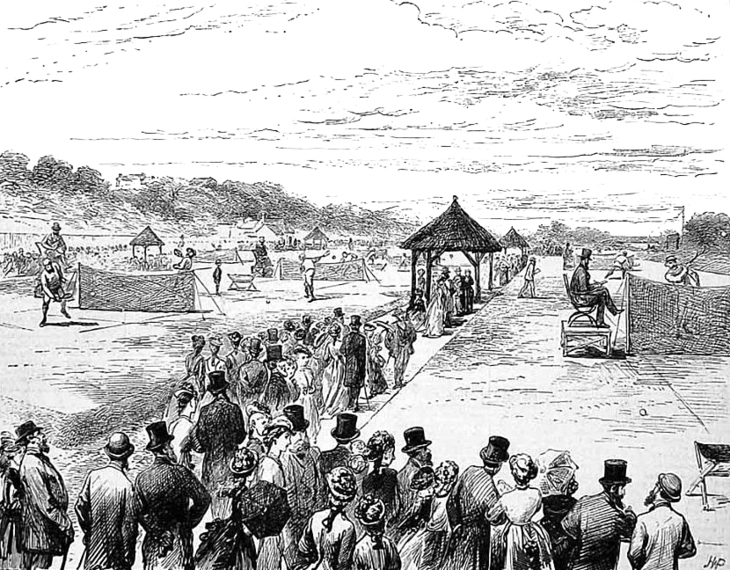
As many will know, the All England Lawn Tennis Club (AELTC) started out life as a croquet, not a tennis, club. What you might not be aware of is that the first match — played on 9 July 1877 — was a fundraiser to fix a broken roller for the croquet lawn. Spectators found the tennis a darn sight more dynamic than croquet, and Wimbledon never looked back.
The first Wimbledon winner returned his prize money
It was Spencer Gore who won that first Wimbledon tournament in 1877, but he refused the prize money. Not that he wasn’t grateful for it; he just wanted his £10 to be plowed back into Wimbledon — so keen was he to see the game take off. If Gore won the Championship today, you wonder if he’d hand back his £3m cash prize.
The world’s biggest tennis library

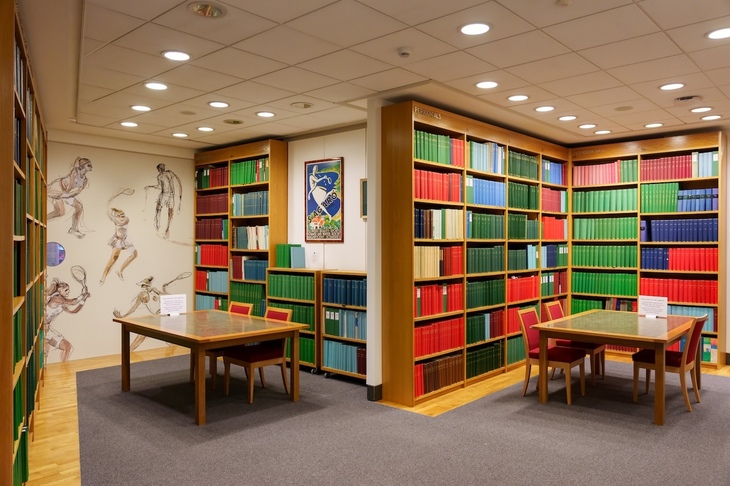
The AELTC is a private club, and though you can go on tours and visit the museum throughout the year, much of it remains off-limits. One very special, lesser-known place that isn’t private is the Kenneth Ritchie Wimbledon Library — a treasure trove of 15,000 tennis books, annuals, programmes, newspaper cuttings and what-not, used by everyone from tennis historians so filmmakers. It’s open to anyone wanting to research any element of the game, from stats to fashion. You can get in touch here.
The capacity of No. 1 Court is unforgettable
It’s 12,345 — a very deliberate number.
Centre Court is only used for two weeks a year
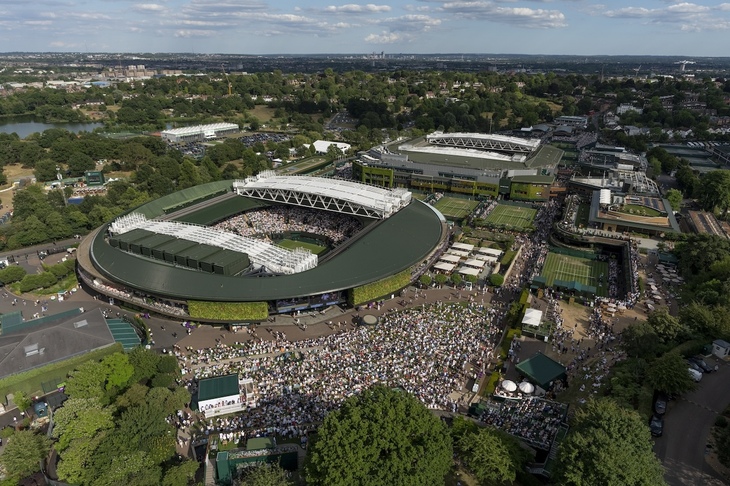
Wimbledon has 18 Championship courts, and a number of practice courts (a number that will surge when its ambitious extension is completed). While these courts can be used by members outside of the Championship, the hallowed turf of Centre Court is off-limits to everyone (even Wimbledon legends) unless they’re playing a match as part of the two-week summer tournament. Which seems a bit of a waste, tbh, because the seats are so comfortable.
The court-side ‘hairdryers’

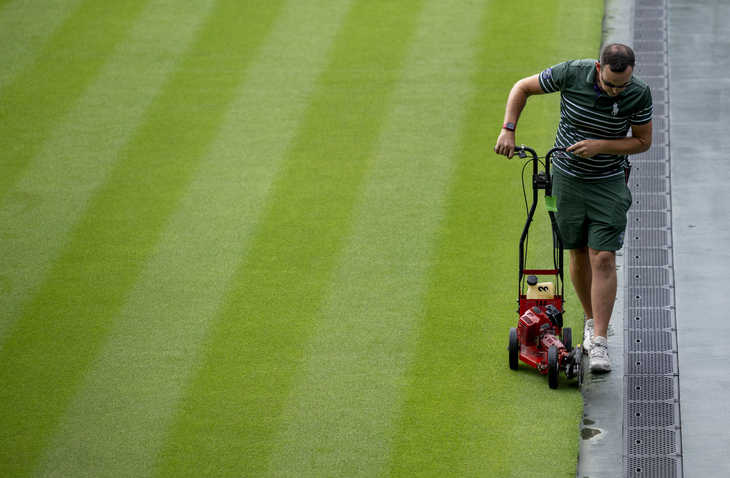
Ever noticed the grills flanking the sides of the Wimbledon show courts? They’re not, as you might expect, for draining rainwater, so much as blowing hot air. When it begins to rain during play, a tarpaulin is pulled over the grass within seconds (22 seconds is the record), before warm air is blown through the vents to keep the grass just so. Out of season, huge fans are angled at the grass to blow away any seed grass. In some years, electric fences are installed around the perimeter to keep foxes at bay.
The scoreboards stay frozen in time for 50 weeks of the year
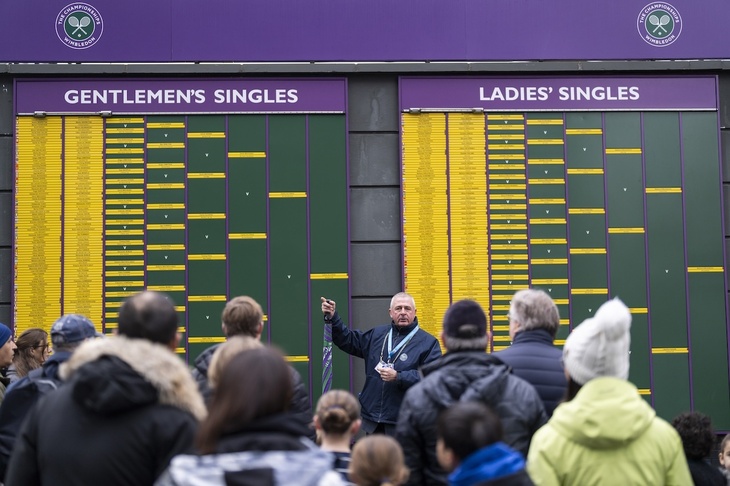
As each triumphant player strikes the winning ball at the business end of Wimbledon, the scores are frozen on the scoreboards until they’re reset some 50 weeks later, for the following Championship. And so on Centre Court, right now, the score is locked on Jannik Sinner’s four-set triumph over Carlos Alcaraz — and will be until 29 June 2026. The order of play at the entrance to the grounds is similarly frozen in time.
David Attenborough introduced yellow tennis balls

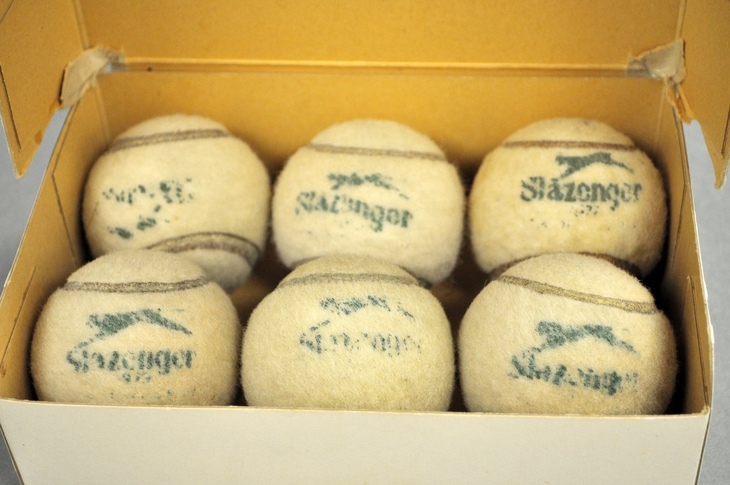
The first colour broadcast in the UK was BBC Two’s 1967 coverage of Wimbledon. But soon, a problem had been spotted, or rather, not spotted. The white balls that had traditionally been used up until then weren’t easily visible to the naked eye on the screen. It was David Attenborough, then Controller for BBC Two, who pushed for bright yellow balls — easier for viewers to make out. As a result, the International Tennis Federation introduced white balls to the game in 1972. Yet Wimbledon — obsessed, it would seem, with kits and balls being white — only caved in 1986.
Players used to drink from on-court Coke vending machines…

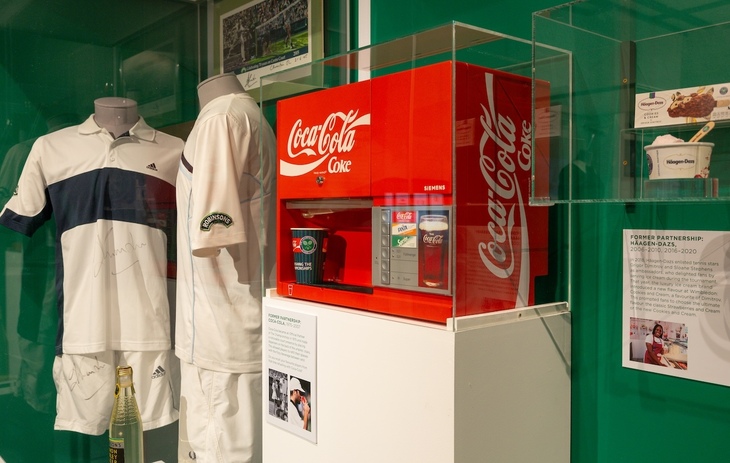
Until quite recently, too. The vending machines were built into the back of the umpires chairs, which appeared from 1975-2007. Top players, including Andre Agassi and Steffi Graf sipped from Coca-Cola branded mugs, though whether they were actually on the fizzy stuff, it’s hard to say. Anyway, Coke’s not the most shocking liquid refreshment taken at Wimbledon. During her Wimbledon matches in the 1920s, French player Suzanne Lenglen took refreshing swigs of champagne or cognac. Sante!
Bottomless brunch stops play

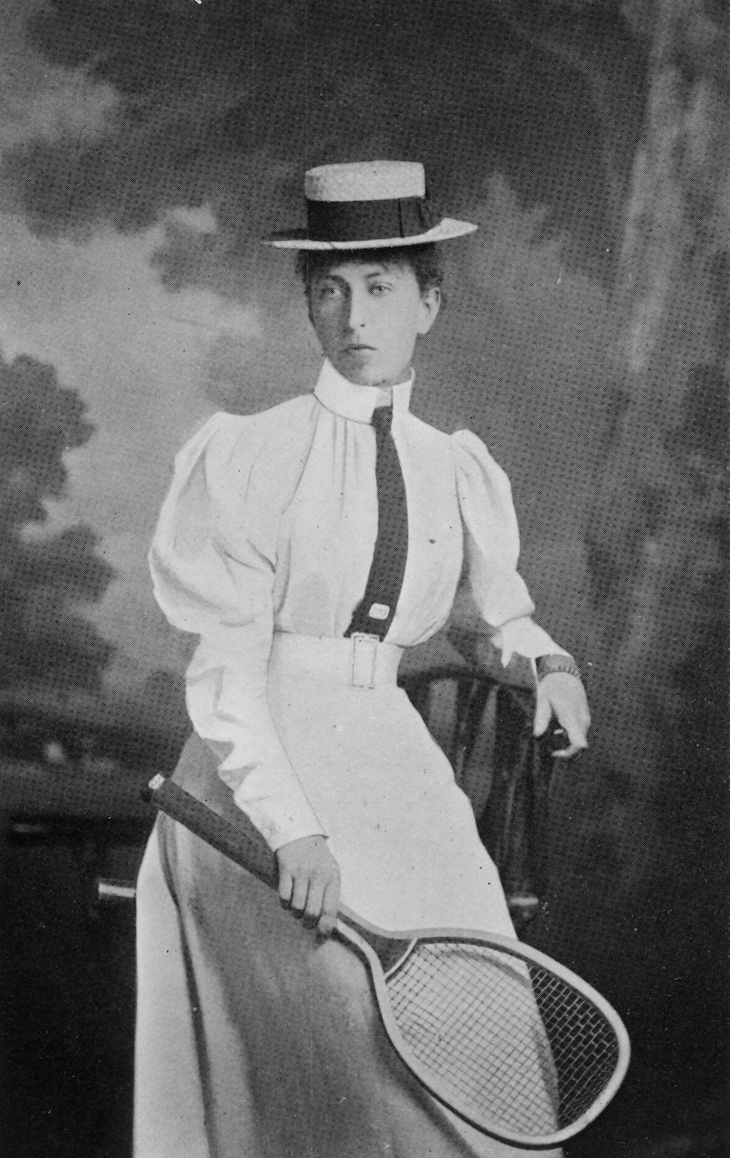
While Lenglen’s bouts of cognac sipping only seemed to work in her favour, a hearty brunch was once the downfall of six-times Wimbledon champ Blanche Bingley in 1907. Believing her scheduled match had been called off due to rain, Bingley did what any of us would, and got stuck into a spread of two bath buns, seven slices of bread, four cups of tea, seven biscuit cakes, three more slices of cake and three plates of strawberries — sensibly followed by a nap. As you’ve probably guessed, Bingley was then informed that her match was in fact NOT cancelled. She did well not to vom all over the court as she was served up a 6-3, 6-2 trouncing. After the match, she wryly suggested she’d been focussed on aiming her balls at the box of men who’d suggested her match was postponed.
10,000 rackets are stashed away underground
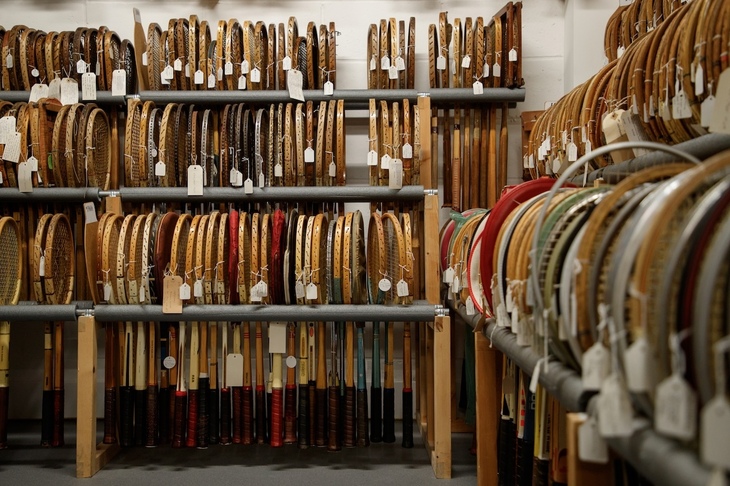
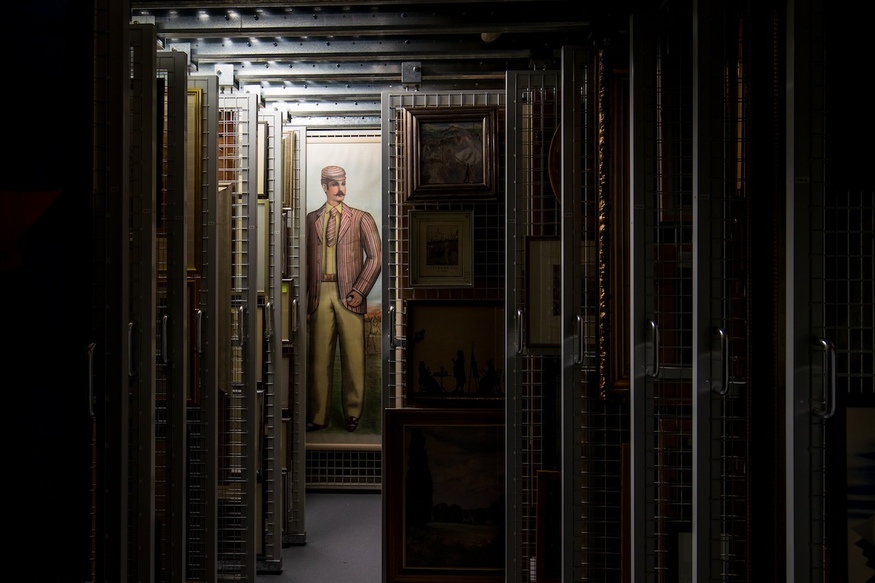
It’s well-known that a network of tunnels is cut out beneath Wimbledon, allowing staff and players to get about without having to deal with the crowds above. Underground is also where the club keeps its incredible stash of tennis-related paraphernalia and artworks. An array of 10,000(!) rackets, dating back to the advent of lawn tennis itself, is stored in the bowels of Wimbledon. Name a tennis great through the annals of history, and chances are at least one of their rackets is here. The collection is added to in real time, with new rackets from each Championship.
… and one bloody massive one
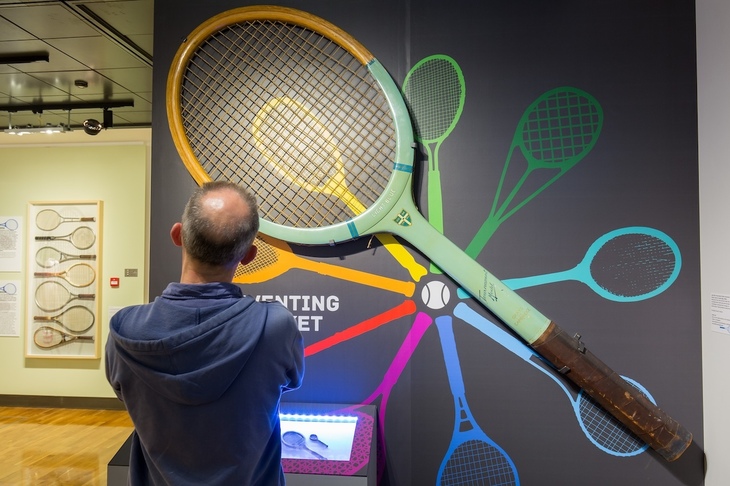
Sadly, the racket archive isn’t open to the public, but one racket you can see (indeed, which you can hardly miss) is on display in one of the on-site cafes. The metre-wide, almost three-metre-long racket (and it really is made as a racket would have been) was made by Grays of Cambridge, and would’ve originally been used by John Isner on show in a department store window. It’s the largest racket at Wimbledon, but not in the world: that honour goes to one five times bigger.
Cliff’s jacket

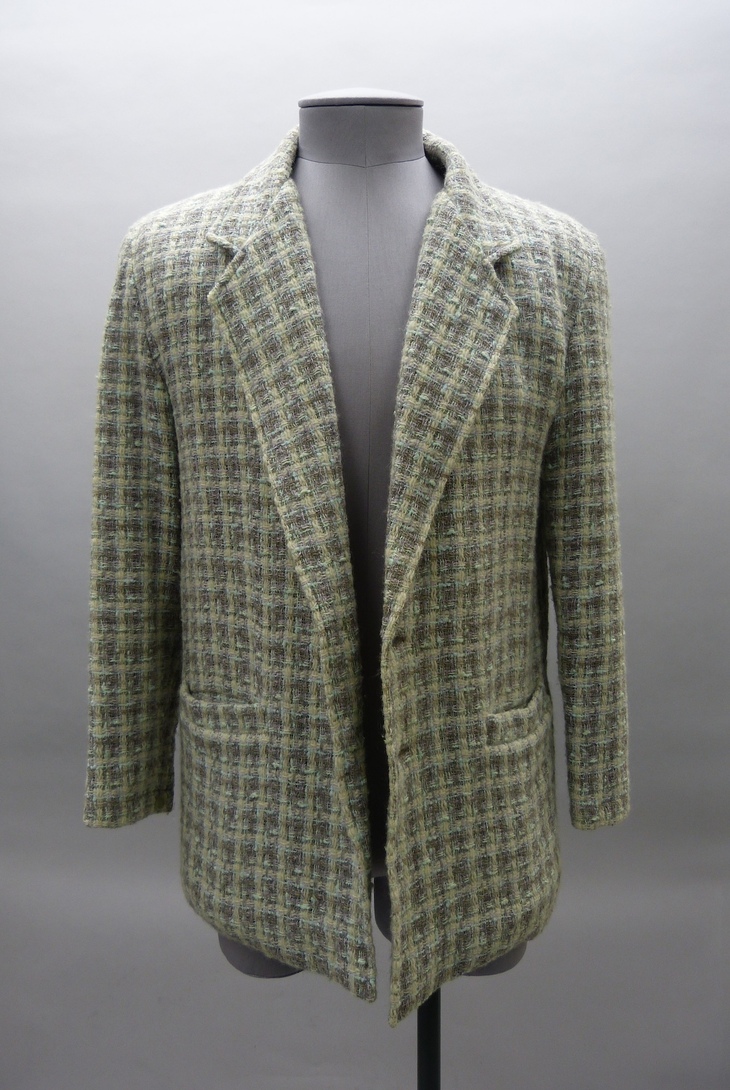
Clothing is another major part of the archives collections; from René Lacoste’s crocodile-emblazoned blazer (perhaps the first Lacoste logo in the world?), to the dress in which Serena Williams triumphed at Wimbledon in 2016.
One piece of clothing which doesn’t belong to a tennis player, but is no less iconic for it, is the jacket Cliff Richard wore during his impromptu rain-off singalong in 1996. Congratulations!
All images: AELTC. With thanks to Wimbledon for letting us into some of their off-limits archives.