






The London Local Elections take place on Thursday 7 May 2026. Here’s what’s happening, and why it matters.
What are we voting for in the 2026 local elections?
This is the one where we vote for our local councillors. London is divided into 32 Boroughs (plus the City of London, which does its own thing). All 32 London boroughs are taking part in the 2026 local elections, and 1,817 council seats are up for grabs.
These are the people who ultimately decide how much council tax you’ll pay, and how it will be spent, so it’s important to have your say.
Five directly elected Mayors will also be chosen: in Croydon, Hackney, Lewisham, Newham and Tower Hamlets.
Wait, Mayors? I thought there was only one elected Mayor, and that was Sadiq Khan?
Yes, it can be a little confusing. Sir Sadiq Khan is Mayor of London, as in… the whole of London. That one’s decided in a separate election, not due till 2028. You can forget about him for now.
London has additional species of mayor at the local level. Five of the London Boroughs (mentioned above) have their own directly elected mayors with executive powers. These will be determined this May.
Other boroughs, like Camden and Westminster, have ceremonial mayors, for whom you cannot vote, and who wield very little political power. The most famous is the Lord Mayor of London, who presides over the Square Mile.
Do I need photo ID to vote?
Yes. Yes you do. But that’s been the case for several elections now and we should all — even Boris Johnson — be quite used to the idea. Acceptable forms of ID can be viewed here.

When are the key deadlines to register or apply for postal/proxy votes?
If you voted in the General Election and haven’t moved home recently, you’re probably already on the electoral register and need do nothing in advance of polling day. If you think you might not be registered, or want to apply for postal or proxy vote, here are some deadlines:
20 April: The deadline to register to vote
21 April (5pm): The deadline to apply for a postal vote
28 April (5pm): The deadline to apply for a proxy vote (someone else votes for you)
28 April (5pm): The deadline to apply for a free voter ID if you lack other forms of photographic ID
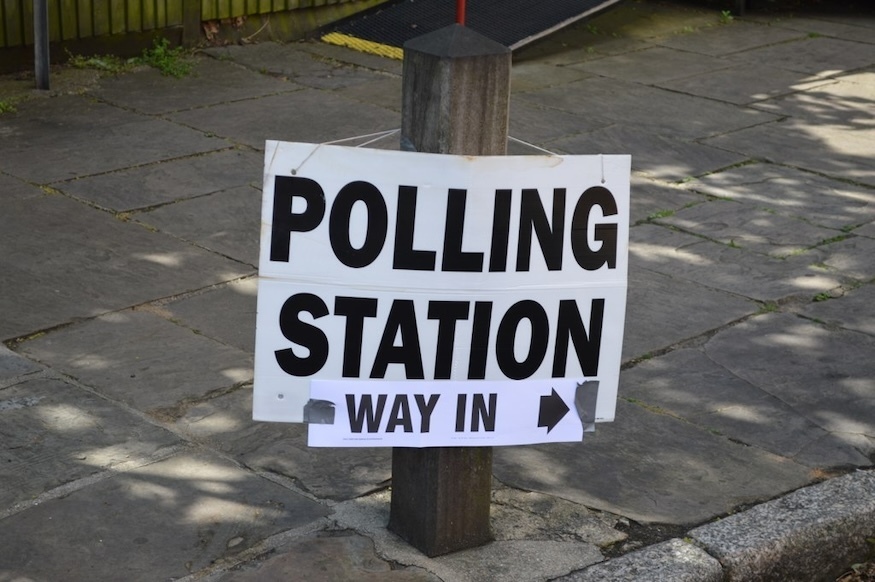
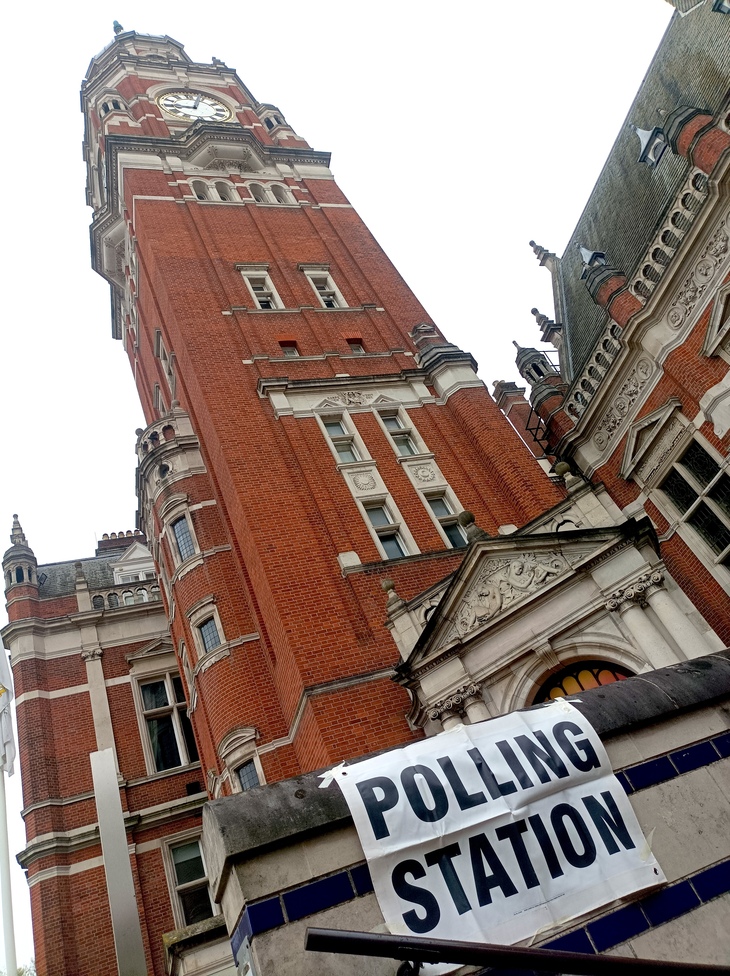
7 May: The big day when you can vote in person. Polling stations are open 7am-10pm.
Anyone wishing to stand as a councillor has until 9 April to put forward their nomination to the appropriate local authority.
Who can I vote for?
We don’t know, because nominees have not been formally announced yet, and nor will they be published until after the 9 April deadline for nominations. Check your local authority’s website after that date for full information (or just wait for the flyers to start falling through your letterbox).
How do things currently stand with London’s councils?
In short: it’s the Labour show. 21 of the 32 boroughs are dominated by Labour councillors, and they have almost two-thirds of the seats across London:

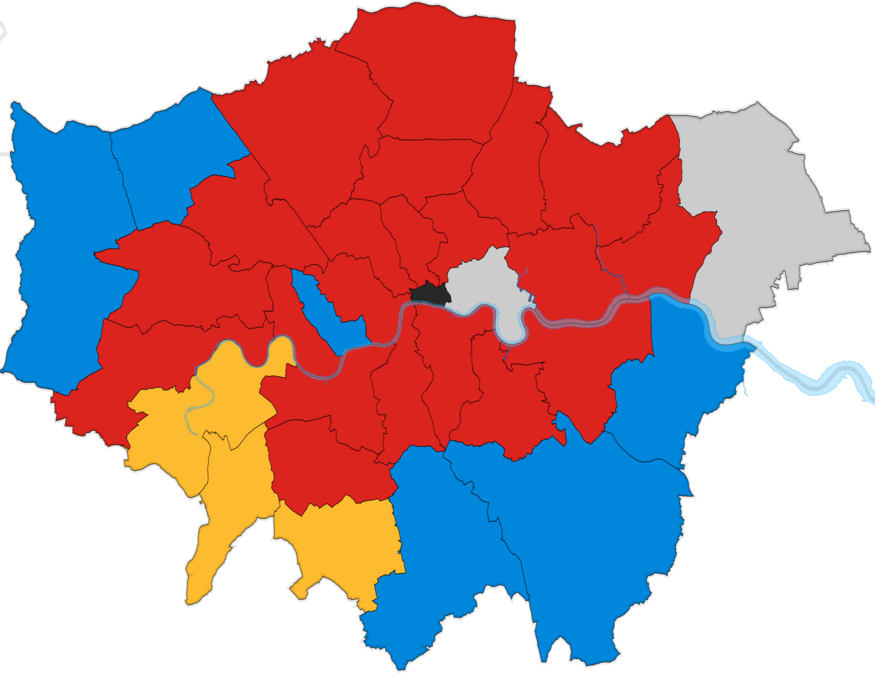
On the map above, the main parties are represented by their usual colours. Havering (top-right) is run by a Havering Residents Association minority administration; Tower Hamlets (central grey) is run by the left-leaning Aspire party, headed by the borough’s current Mayor Lutfur Rahman.
Labour made a few gains in 2022, while the Tories lost more, but the overall political makeup of London in 2018 and 2022 was fairly similar.
How could things change in 2026?
Quite a lot, possibly. Local elections are often used as a chance to pass judgement on the national government. For the first time in years, that’ll be Labour, who aren’t exactly uniting the country in joy and jubilee. A sizeable protest vote could see chunks of red disappear from the map.
At the same time, smaller parties and independents have been making gains at recent elections as voters become disillusioned with the main parties. The Greens, in particular, have been going from strength to strength under the leadership of Zack Polanski, and could woo a fair few left-leaning voters into their fold.
And then there’s Reform. Youthful Inner London is unlikely to see much of a dent from the party whose top five policies all involve some kind of anti-immigration dimension. Some of the Outer Boroughs, though, notably Havering, Bexley and Bromley, are seen as key targets for the Nigel Farage-led party.
That’s the orthodoxy, anyway. As we’ve seen time and again in recent politics, big surprises are almost to be expected.