








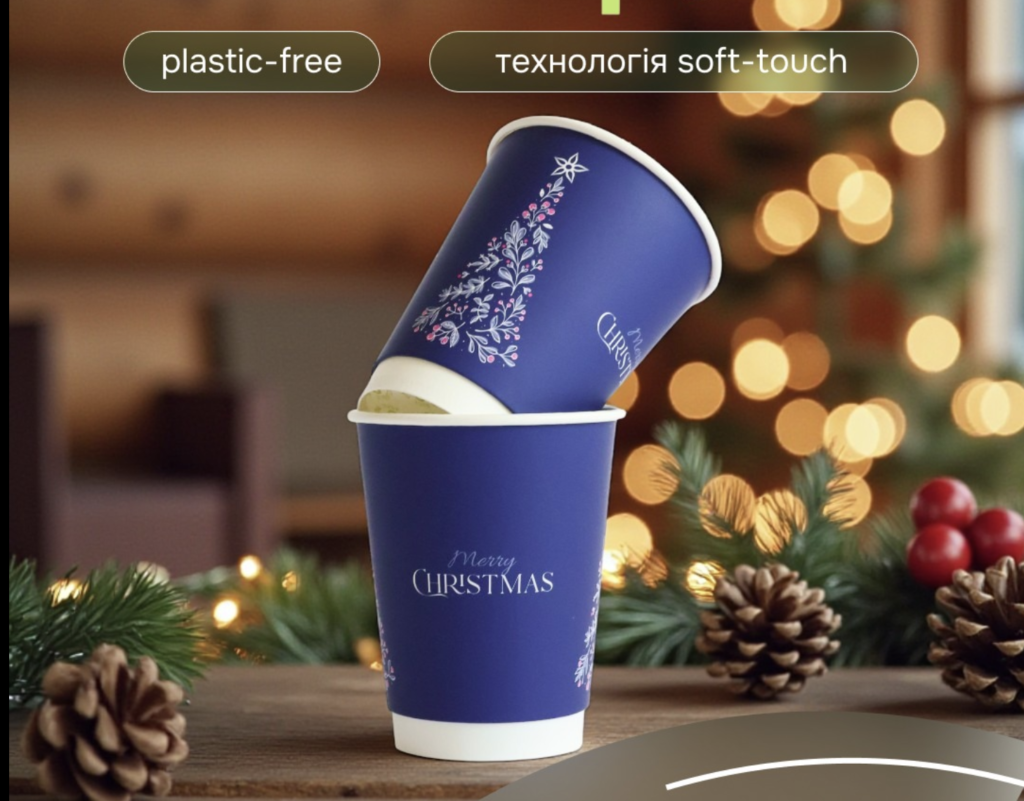
Paper coffee cups can be customised in a variety of ways to improve heat retention and user comfort, while also enhancing brand distinction. As takeaway beverages are closely associated with convenience and on-the-go consumption, the design of cups has become an important functional and visual component rather than them being seen as merely neutral containers. Customisation addresses aesthetic differentiation and thermal performance, enabling businesses to align their packaging with their operational and branding priorities.
- Visual customisation: Paper coffee cups can be printed with logos, colour schemes, typography and graphic elements that reflect a brand’s identity. High-quality flexographic or digital printing enables full-wrap designs, photographic imagery and reproduction of fine detail. Matte or gloss finishes can be applied to influence tactile perception and visual contrast. Embossing and debossing techniques introduce subtle texture to enhance grip and reinforce brand recognition through raised logos or patterns. These surface treatments help cups stand out in competitive retail environments, where visual recall plays a significant role. Black paper coffee cups are also a popular choice.
- Structural customisation: Double-wall paper cups are designed with two layers of paperboard separated by an air gap, which slows the transfer of heat from the beverage to the exterior surface. This construction eliminates the need for separate sleeves while maintaining a comfortable holding temperature. Ripple cups are a widely used variation within this category. Ripple cups feature a corrugated outer layer wrapped around a smooth inner cup. The ripple texture traps air more effectively to improve insulation, and also provides enhanced grip. This makes them particularly suitable for very hot drinks such as Americano or Long Black coffee.
- Sleeve integration: For single-wall cups, custom-designed sleeves made from corrugated cardboard can be printed, die-cut or embossed to match the branding. These sleeves can also incorporate functional features, such as reinforced finger zones or ventilation gaps, which reduce heat transfer even further. Although this adds an extra component, it allows for flexibility across cup sizes and beverage types.
- Material coatings: Advances in paperboard technology have introduced thicker substrates and improved barrier coatings that enhance insulation while maintaining recyclability. Some manufacturers offer water-based or plant-based coatings that support sustainability goals without compromising heat resistance. These coatings can be combined with heavier paper grades to improve rigidity and heat retention.
- Additional design elements: domed or insulated lids can help retain heat by reducing steam loss, while narrower cup openings can limit heat escape. Custom-fit lids can also enhance the overall drinking experience and reduce spillage.
Together, these customisation options transform paper coffee cups into both a branding tool and a performance-enhancing component, enabling distinct presentation while maintaining beverage temperature and handling comfort.