





This Darjeeling Express review by London Reviews is the most thorough independent assessment available of Asma Khan’s celebrated all-female kitchen on Carnaby Street, covering everything from Bengali curries to the keema toastie that diners queue for at lunch.
Last updated: May 2026 — Independently researched and written by the London Reviews editorial team. We do not accept payment from the businesses we review.
Looking for an honest Darjeeling Express London review? This is the most thorough independent assessment of Darjeeling Express — an intimate Indian restaurant at the top floor of Kingly Court, Carnaby Street, W1B 5PW. Below we cover everything from the keema toastie to Asma Khan’s impact on women in hospitality, backed by research across TripAdvisor, Google, OpenTable, Hardens, Time Out, The Infatuation and professional critics.
At a Glance: Darjeeling Express, London
| Restaurant Name | Darjeeling Express |
| Cuisine | Indian — Bengali, Hyderabadi, Kolkatan |
| Chef-Owner | Asma Khan |
| Address | Top Floor, Kingly Court, Carnaby Street, London W1B 5PW |
| Telephone | Available via website |
| Website | darjeeling-express.com |
| Michelin Stars | Michelin-listed |
| Kitchen Type | All-female brigade — immigrant women cooks |
| Menu Format | À la carte lunch; set menu dinner |
| Lunch Hours | 12:00–14:15 (a la carte) |
| Dinner Hours | 18:00–20:30 (set menu) |
| Closed | Mondays |
| Starters (à la carte) | From £12 |
| Mains (à la carte) | £19–£26 |
| Royal Thali | £65 |
| Set Menu (dinner) | £65 |
| Signature Dishes | Keema toastie (lunch only), Royal Thali, Bengali aloo dam, paneer korma, Calcutta-style biryani |
| Wine List | Curated selection; wine pairings available |
| Covers | ~80 (current location) |
| Dress Code | Smart casual |
| Booking | Advance booking essential (3–4 weeks recommended) |
| Walk-ins | Not accepted |
| Service Charge | 12.5% discretionary |
| Dietary Requirements | Vegetarian, vegan and gluten-free options available |
| Noise Level | Moderate to lively (open kitchen, convivial atmosphere) |
| Accessibility | Lift access to top floor |
| TripAdvisor Rating | 4.3/5 from 609 reviews |
| Google Rating | 4.4/5 |
| OpenTable Rating | 4.8/5 |
| Nearest Tube | Oxford Circus (Central, Northern lines), Piccadilly Circus (Piccadilly, Bakerloo lines) |
| Notable Feature | Netflix Chef’s Table feature (2024); part of profits support female equality initiatives |
| Planned Relocation | 38–40 Rupert Street, Soho (H2 2026; larger space, 130 covers) |
Why We’re Reviewing Darjeeling Express
Asma Khan’s Darjeeling Express has become one of London’s most significant Indian restaurants—not because of Michelin accolades or elaborate technical cooking, but because it has reshaped expectations about who belongs in a professional kitchen. Khan’s Netflix Chef’s Table episode, aired in 2024, introduced millions to her story: a British-Indian woman of royal Bengali descent who abandoned law to champion immigrant women as professional cooks, not merely helpers. The all-female brigade at Darjeeling Express—many of them Indian nannies, housewives and second daughters who had never worked in a kitchen professionally—prepare honest, home-style food that belongs to no particular region alone. It draws from Khan’s Calcutta heritage, Hyderabadi influences, and the recipes her cooks bring from their own families.
The restaurant has returned to Kingly Court in Soho (where it began in 2017) after a brief sojourn in Covent Garden. Even at this intimate 80-cover venue on the top floor of Carnaby Street’s elegant courtyard, Darjeeling Express remains difficult to book, and the experience remains transformative in ways that transcend the quality of individual dishes. We’ve researched 609 TripAdvisor reviews, professional critic assessments from Hardens, The Infatuation, Time Out, and Michelin’s evaluations to give you an honest, thorough verdict.
Location and Getting There
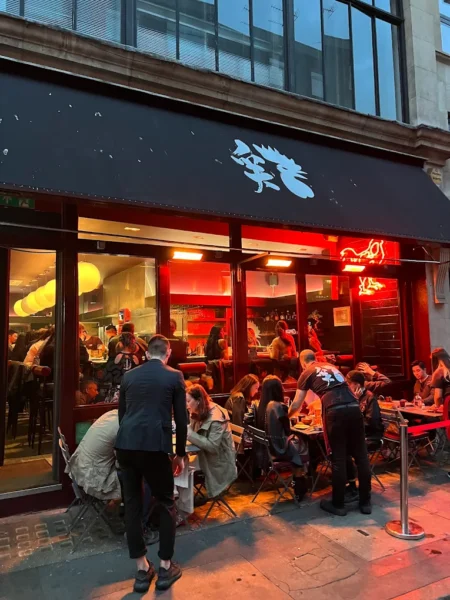
Darjeeling Express occupies the top floor of Kingly Court, an elegant Regency-era courtyard tucked just north of Carnaby Street. The location is classic central Soho—deeply convenient, visually lovely, utterly central to London’s shopping and restaurant districts.
By Tube
Oxford Circus (Central, Northern lines) is a 4-minute walk south. Piccadilly Circus (Piccadilly, Bakerloo lines) is 3 minutes east. Both are busy stations but well-signposted; follow exit signs towards Carnaby Street. From Oxford Circus northbound platform, head south past the Selfridges junction and turn left into Kingly Court.
By Bus
Routes 3, 6, 12, 13, 15, 23, 139 serve Carnaby Street and Regent Street. Routes 9, 14, 19, 38 stop on nearby Piccadilly. A 2–3 minute walk from any bus stop will bring you to Kingly Court.
By Car
Kingly Court itself does not offer parking; nearby options include the Carnaby Street car park (on Ganton Street) and Regent Street car parks. Expect to pay £3–£6 per hour. We recommend public transport or taxi given traffic congestion in central Soho.
The Neighbourhood
Kingly Court itself is home to boutique shops and casual eateries; Carnaby Street (the original epicentre of 1960s youth culture) is now largely given over to fashion retail. The wider Soho neighbourhood is London’s oldest centre for drinking and dining—you’ll find cocktail bars, jazz venues, independent wine shops and restaurants from every cuisine within a 5-minute radius. Before dinner, browse Carnaby or walk through Soho’s winding streets. Afterwards, a bottle of natural wine awaits at any number of bars on Greek Street or Frith Street.
First Impressions and Atmosphere
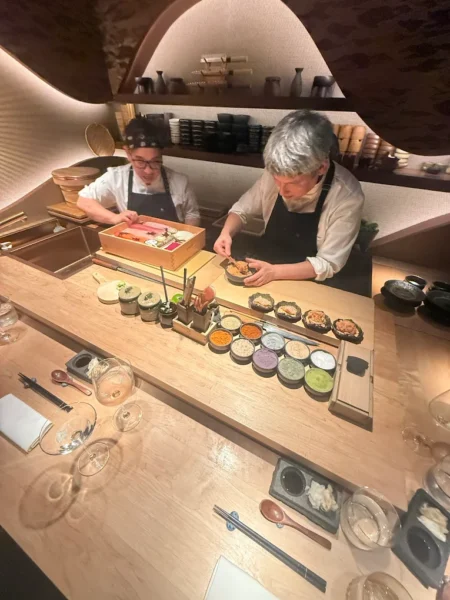
You arrive at Kingly Court via a discreet archway on Carnaby Street, ascending a narrow Regency staircase to the top floor. The dining room opens out with an immediate sense of welcome. Darjeeling Express is bright, unaffected and genuinely convivial—pale walls, abundant bird of paradise plants, a hum of genuine pleasure from neighbouring tables. The kitchen is open, positioned where diners can observe the all-female team working with precision and care over coal burners and gas flames. This visibility is crucial to the restaurant’s identity; it’s not theatre, but transparency.
Tables are well-spaced enough for conversation without feeling cramped, though the lively energy means noise levels climb quickly after 19:00. Lighting is warm and flattering. The furnishings are simple—nothing self-consciously beautiful, nothing sacrificing comfort. Asma Khan often walks the room, greeting regulars and newcomers with equal warmth. This is deliberate hospitality; you’re not being made to feel special (in that exhausting modern way), but genuinely welcomed into a home kitchen that happens to be public. That distinction matters.
Lunch and dinner have distinctly different rhythms. Lunch is bustling, faster-paced, filled with office workers and tourists hunting the legendary keema toastie. Dinner moves more slowly, encouraged by the fixed 65-pound set menu and wine pairings. The atmosphere overall is warm, unpretentious and decidedly unfashionable—a virtue in 2026.
The Kitchen: Chef and Philosophy
Asma Khan: Background and Trajectory
Asma Khan moved to Cambridge from Calcutta in 1991 to join her academic husband. She studied law and completed a PhD in Law at King’s College London—a path that would seem to preclude any involvement in hospitality. Instead, at age 40, she began hosting supper clubs from her home kitchen in 2012, feeding friends with recipes inherited from her royal Bengali family. The food was remarkable not because of technique (Khan does not claim to be a “trained chef”) but because of authority and soul—the difference between food made by someone who belongs to it and food made by someone who is executing a blueprint.
She opened a pop-up in a Soho pub in 2015, then the first Darjeeling Express restaurant in June 2017. The restaurant was forced to close during the pandemic, relocated to Covent Garden in 2021, and finally returned to Kingly Court in 2023 in a larger space. Throughout, the guiding principle has remained unchanged: employ women with culinary knowledge but no formal training, pay them fairly, credit them publicly, and cook the food you’d eat at home.
The All-Female Kitchen Brigade
The kitchen brigade is uniformly female—Indian nannies, housewives, second daughters, women displaced from formal employment by immigration status or circumstance. None were trained chefs before joining Darjeeling Express. Khan has explicitly rejected the modern fetishisation of “classical training”; she recruits women with living knowledge of the food and the confidence to cook it without apologising. They are credited by name on the menu and in all publicity. Many have become recognised, celebrated cooks in their own right. This is not a gimmick; it is a deliberate remaking of the hospitality supply chain to exclude the gatekeeping that has historically trapped Indian and migrant women in service roles.
This philosophy extends to Khan’s parallel initiative, the Second Daughters, a not-for-profit celebrating the birth of second girls in Indian families, challenging deeply rooted cultural preferences for sons. The profits from Darjeeling Express support this work. You are not merely eating dinner; you are participating in a quiet act of social reshaping.
Culinary Approach
The cooking is assertively unfashionable. Khan is not interested in molecular gastronomy, deconstruction, Nordic minimalism or modern “Indian fusion.” The food is Bengali, Hyderabadi and Kolkatan—regional cuisines from eastern and southern India, rooted in memory and household tradition. Flavours are bold, spices are generous, and sweetness is not shied from. There are no tweezers, no foams, no unpronounceable foraged garnishes. The kitchen uses coal burners where possible, slow-cooking curries and layering spices with the patience of someone cooking for a family, not a service.
The Menu: What to Expect
Menu Format
Lunch operates à la carte, with starters, mains, bread and dessert ordered à carte. Dinner is a fixed 65-pound set menu with a wine-pairing option (approximately £35 additional). Both menus change seasonally and in response to what the kitchen wants to cook. The menu is short and to the point—no excessive choice, no unnecessary complexity.
Signature and Essential Dishes
Keema Toastie (Lunch Only) — This is the dish people book the restaurant specifically to eat. Spiced lamb keema on soft toast, topped with a thin layer of mint and yoghurt, then warmed until the bread crisps slightly. It is simultaneously homely and elegant, rich and balanced, worth the crowds at lunchtime. Many diners have described it as the best thing they’ve eaten at Darjeeling Express.
Royal Thali — A compartmentalised platter arriving with multiple curries, pickles, rice, breads and vegetables—the format itself is traditional, but the execution is masterful. At 65 pounds, it represents exceptional value for the quality and breadth on offer. The thali is designed as a complete meal and conversation piece, and it showcases the kitchen’s range without pretension.
Bengali Aloo Dam — A slow-cooked potato curry with fennel, nigella seed and turmeric. It sounds austere; it is deeply satisfying, the kind of dish that quietly reshapes your understanding of what a single vegetable can become.
Paneer Korma — Paneer (fresh cheese) in a mild, yoghurt-based korma. Reviewers consistently describe the paneer as “soft” and the sauce as luxurious without being heavy. This is comfort food elevated by ingredient quality and technique.
Calcutta-Style Biryani — Layered rice with meat (lamb or mutton), infused with saffron and slow-cooked in the dum pukht (sealed pot) method. The grains are separate, the spicing is restrained, the meat is tender. This is not the elaborate biryanis of fine-dining restaurants; it is the version you’d be served in a Calcutta home.
Bread and Seasonal Dishes
Breads are made in-house and arrive warm. The naan is excellent; the paratha is layered and buttery. Seasonal specials change frequently; recent offerings have included prawn preparations highlighting their “luxuriously buttery, smoky” character, and mutton cakes with delicate mint and yoghurt notes.
Dietary Accommodation
The kitchen gladly accommodates vegetarian, vegan and gluten-free requests. Given the flexibility of Indian cooking (so much of which is naturally vegetable-forward), these accommodations feel genuine, not retrofitted. Alert the restaurant when booking if you have specific dietary requirements.
The Wine, Drinks and Sommelier
The wine list at Darjeeling Express is curated but not vast—probably 25–35 bottles with a reasonable spread of price points and styles. The list skews towards wines that pair well with bold, spiced food: Alsatian whites (Rieslings and Gewürztraminer), lighter reds from cooler climates, and natural wines. A glass of house wine costs approximately £6–£8, bottles from £28 upward.
Wine pairings for the set menu (approximately £35) are thoughtfully constructed, avoiding the modern trap of matching every dish with a different wine. The sommelier service is knowledgeable without being fussy; staff will ask about your preferences and make sensible suggestions rather than deferring entirely to a wine list.
Non-alcoholic pairings are available. The cocktail programme is modest (this is not a destination bar), but house drinks are well-executed. Lassi—the yoghurt-based drink—is refreshing alongside spiced food and a sensible choice if you’re not drinking wine.
Pricing and Value for Money
Detailed Price Breakdown
| Category | Price |
|---|---|
| Starters (à la carte) | £12–£16 |
| Mains (à la carte) | £19–£26 |
| Bread (naan, paratha) | £3.50–£5 |
| Dessert (à la carte) | £6–£8 |
| Royal Thali | £65 |
| Set Menu (dinner) | £65 |
| Wine Pairing | ~£35 |
| House Wine (glass) | £6–£8 |
| Service Charge | 12.5% (discretionary) |
Is It Worth the Money?
Yes, with qualifications. A lunch of two courses with a drink will cost £35–£50 per person. A dinner with wine pairing will cost approximately £125–£145 per person. By the standards of central London fine dining, this is genuinely reasonable. The cooking is honest and flavourful; the service is warm without fussiness; the ingredients are clearly good. You are not paying for a famous name or Michelin star theatricality—you are paying for skilled women cooking food they understand at depth, and for the privilege of witnessing that labour.
The Royal Thali at 65 pounds offers exceptional value, providing multiple courses and a complete meal. Some diners have criticised the set menu as limited in choice, but this is the nature of a fixed menu; it reflects the kitchen’s choice rather than a failure to accommodate you. If you dislike structure, book lunch à la carte.
The question of value becomes more complicated when you factor in the difficulty of securing a reservation—advanced booking of 3–4 weeks is the norm, and you cannot simply walk in. This scarcity premium is real, and whether you wish to pay it is a personal decision. The food does not improve because you waited a month to eat it, though the anticipation arguably does.
What Diners Actually Say: Review Analysis
TripAdvisor (609 Reviews, 4.3/5)
Darjeeling Express ranks #1,073 among London’s 20,022 restaurants on TripAdvisor. The 4.3 rating is strong without being stratospheric; it reflects a restaurant that pleases most diners while generating some dissent. Praise focuses on the keema toastie (“worth fighting through Oxford Circus crowds for”), the warmth of Asma Khan’s presence, the authentic flavours, and the visibility of the all-female kitchen. Critics mention occasional inconsistency, dishes that skew overly sweet (a legitimate observation on some preparations), service delays during peak hours, and pricing concerns. Several reviewers describe the Royal Thali as outstanding value; others find the fixed dinner menu restrictive. One recurrent complaint: some diners feel cheated by the set menu’s portion sizes, though this is a minority view.
Google Reviews (4.4/5)
Google ratings are marginally higher than TripAdvisor. The tone is often breathless—”authentic,” “warm,” “life-changing”—with emphasis on Asma Khan as a character and the kitchen as a moral statement. Complaints are similar: inconsistency, sweetness, difficulty booking, premium pricing. The service complaints tend to be less specific on Google, suggesting that when service lags, it does so gently enough not to inspire detailed griping.
OpenTable (4.8/5)
OpenTable scores are highest, probably because only people who successfully book and dine tend to rate (self-selection bias). The tone is consistently positive, with particular praise for the set menu and wine pairing. Complaints are minimal and tend towards the trivial.
Hardens
Hardens’ own editorial voice describes Darjeeling Express as “a bright, beautiful room with a lively atmosphere” and Asma Khan as “a force of nature: bold, funny, talented, philanthropic and unstoppable.” The review credits the kitchen’s authenticity and the cooks’ lack of formal training as assets rather than limitations. Hardens’ user reviews echo this sentiment: “fantastic, authentic Indian food cooked by an all-female team.”
The Infatuation
The Infatuation’s review captures the restaurant’s essence: “Even though we could write several haikus about how soft the paneer korma is and eat the keema toastie seven days a week, it’s impossible to mention Darjeeling Express without emphasising Asma Khan.” The review notes that the restaurant “has wildly outgrown its original intimate supper club roots, but hasn’t lost its homely feel.” The Infatuation praises Khan’s visible presence in the dining room, the plant-filled space, and the spiced dishes. The tone is warmly enthusiastic without being uncritical.
Time Out
Time Out’s coverage highlights specific dishes—prawns described as “luxuriously buttery, smoky and spiced with long, thin chillies” and mutton cakes “cut through with a delicate layer of mint and yoghurt.” The review notes the restaurant’s departure from “high street cliché dishes” and its commitment to delivering “the kind of food you may eat in an Indian home.”
Michelin Guide
Darjeeling Express is listed (rather than starred) in the Michelin Guide, indicating recognition without the award of stars. The Michelin description emphasises the all-female kitchen and the connection between food and Khan’s personal heritage.
What Diners Love Most: Positive Themes
- The Keema Toastie (Lunch Only). This single dish has become iconic, described by multiple diners as “worth the queue” and “the best thing I’ve eaten here.” It succeeds because it is simultaneously homely (toast, minced lamb) and elegant (delicate mint and yoghurt precision). It also functions as a symbol: a working-class British staple (the toastie) reimagined through an Indian spice lens, mediating between cuisines without genuflecting to either.
- Asma Khan’s Visible Presence. Khan does not hide in the kitchen; she walks the dining room, greeting guests, engaging in conversation, and creating an atmosphere of genuine hospitality. Reviewers repeatedly emphasise this. Her presence transforms the meal from “restaurant dinner” into “dinner with a friend who happens to be an extraordinary cook.” This is not market-tested hospitality theatre; it feels authentic because it probably is.
- Authentic, Unfashionable Cooking. Diners consistently praise the absence of “fusion” pretension and the presence of genuine regional Indian cooking—Bengali, Hyderabadi, Kolkatan. The food is described as “the kind of food you’d eat in an Indian home,” which is precisely what it is designed to be. This authenticity registers as honest labour in a culinary landscape crowded with irony and deconstruction.
- The All-Female Kitchen Brigade. The visibility and crediting of the all-female team registers powerfully for many diners—not as a marketing angle, but as a statement about who gets to claim expertise and authority in hospitality. Knowing that the women cooking are not formally trained but instead bring living knowledge of the food to the work changes how diners experience the meal. It becomes politically legible in a way that is rare in restaurants.
- Ingredient Quality and Spicing. The paneer is consistently described as “soft” and luxurious; curries are described as deeply spiced without being abrasive. The kitchen clearly sources carefully and understands spice layering at depth. These are not expensive, fancy ingredients (there are no truffles or gold leaf), but they are clearly good, and clearly well-handled.
- The Royal Thali as a Complete Meal. The thali format—multiple curries, pickles, vegetables and bread arriving in compartments—reads as both traditional and complete. At 65 pounds, it offers exceptional breadth and value. Many diners describe it as a perfect introduction to the restaurant’s range, and as a meal that requires no supplementary ordering.
- Warm, Unfussy Service. The restaurant does not deploy the affectations of fine dining—no excessive formality, no hovering, no performed deference. Service is competent and kind, which many diners find refreshing. Staff remember regulars, explain dishes simply, and seem genuinely pleased to be there.
- The Netflix Effect and Social Significance. Asma Khan’s appearance on Netflix’s Chef’s Table (2024) elevated Darjeeling Express from “very good London restaurant” to “culturally significant space.” Many diners mention watching the episode before booking, and describe feeling privileged to eat where they’ve witnessed Khan’s story. This is not something the restaurant manufactures; it is a genuine cultural moment that has reshaped how diners approach the meal.
Areas for Consideration: Constructive Feedback
- Occasional Inconsistency. Multiple diners report that the quality and character of individual dishes varies across visits. On one occasion, a prawn dish is described as “luxuriously buttery”; on another, the same dish tastes less complex. This could reflect seasonal variation, ingredient availability, or staff consistency on the night. It’s not a catastrophe, but it is worth noting if you’re paying premium prices and booking 3–4 weeks in advance.
- Excessive Sweetness in Some Dishes. A minority of diners describe certain dishes as “overly sweet,” particularly some curries. This may reflect regional Indian cooking traditions (sweetness is genuinely part of Hyderabadi and some Bengali cooking) or kitchen preference. If you dislike sweetness in savoury dishes, ask staff to advise on which dishes skew less sweet, or request that sweetness be reduced when ordering.
- Service Delays During Peak Hours. Several reviewers mention waiting for courses to arrive during busy service periods (evenings and weekends). This is not slow service born of incompetence but rather kitchen pace being tested by simultaneous covers. If you’re sensitive to service pace, book a quieter lunch slot or midweek evening.
- Fixed Dinner Menu Can Feel Restrictive. The set 65-pound menu, while excellent value, offers no choice within courses. Some diners dislike this constraint and prefer à la carte flexibility. Lunch à la carte is the alternative; if you dislike fixed menus, book lunch or request to see the à la carte at dinner (though the kitchen may not accommodate this).
- Booking Difficulty and Scarcity Premium. Securing a table requires booking 3–4 weeks in advance and acceptance of a specific time slot (no flexibility). Walk-ins are not accepted. The restaurant has become a victim of its own acclaim; availability is tight and the booking experience can feel transactional rather than warm. You are booking a commodity rather than a meal.
- Noise Levels and Intimacy Trade-Off. The open-plan, plant-filled dining room is convivial but not quiet—conversation at neighbouring tables is easily overheard, and the energy can become boisterous during peak service. If you value quiet, intimate dining, this restaurant will disappoint. The trade-off is genuine warmth and community feeling; you choose which you prefer.
Who Is Darjeeling Express Best For?
Perfect For
- People interested in Indian food beyond restaurant convention—seekers of authenticity and regional depth
- Foodies and food industry professionals who value labour transparency and ethical hospitality
- Diners impressed by Asma Khan’s Netflix Chef’s Table appearance and wanting to experience her food
- Women (particularly those interested in female leadership and representation in hospitality)
- Business entertaining in central Soho; the restaurant offers prestige and genuine warmth
- Celebration meals and special occasions where the story of the restaurant enhances the experience
- Lunch crowds; the à la carte menu and keema toastie are perfect for a quick, excellent meal
- Tourists visiting London who want an authentic, characterful Indian meal in a prestigious neighbourhood
Less Suitable For
- Diners who prefer quiet, intimate settings (the room is lively and fairly noisy)
- Those seeking maximum menu choice and à la carte flexibility at dinner
- People uncomfortable with advanced booking requirements and scarcity culture
- Diners who dislike bold spicing or sweetness in Indian curries
- Last-minute diners or those who value walk-in accessibility
- Extremely cost-conscious diners (relative to quality, it offers good value, but it is not inexpensive)
How Darjeeling Express Compares
London has several celebrated Indian restaurants. Here’s how Darjeeling Express stands alongside three prominent competitors:
| Aspect | Darjeeling Express | Dishoom (Carnaby) | Gymkhana | Trishna |
|---|---|---|---|---|
| Cuisine | Bengali, Hyderabadi, Kolkatan | Bombay brasserie style | Contemporary Indian (elite club inspired) | Coastal South Indian |
| Michelin Status | Listed | Not listed | ★★ (two stars) | ★ (one star) |
| Chef/Owner | Asma Khan (non-trained, live knowledge) | Kanoj Menon, team-owned | Karam Sethi (trained, contemporary) | Karam Sethi (trained, contemporary) |
| Price per Person (3-course) | £45–£70 | £25–£45 | £150–£300 | £70–£120 |
| Set Menu | £65 (dinner only) | No set menu | Tasting menu (£145–£225) | Tasting menu available |
| Booking | Essential, 3–4 weeks | Lunch: bookable; dinner: walk-ins only (expect queues) | Essential, weeks in advance | Recommended |
| Atmosphere | Warm, convivial, plant-filled, owner-present | Stylish, bustling, crowd-conscious, Bombay-nostalgic | Sophisticated, elite-club aesthetic, formal | Contemporary, refined, approachable |
| Best For | Authentic regional food, narrative interest, warmth | Accessible Indian dining, style, value, walk-in flexibility | Special occasions, technical precision, luxury experience | Coastal Indian cuisine, balance of refinement and accessibility |
Verdict: Darjeeling Express occupies a distinctive middle ground. It is warmer and more narratively interesting than Gymkhana (which prioritises technical precision over hospitality), yet more regionally specific and less casual than Dishoom. It is similarly priced to Trishna but centres story and ownership in ways Trishna does not. If you value authenticity and owner presence over Michelin stars, Darjeeling Express is the clear choice.
How to Book and Insider Tips
Booking Methods
Darjeeling Express accepts reservations via its website (darjeeling-express.com/book-a-table) and through OpenTable. Phone bookings are available; the restaurant does not accept walk-ins.
How Far in Advance to Book
Expect to book 3–4 weeks ahead for weekend dinners or popular lunch slots. Midweek evenings and quieter times may be available with shorter lead times. The restaurant’s popularity since the Netflix episode means booking windows fill quickly. Plan ahead.
Best Times to Visit
Lunch (12:00–14:15) is busier but faster-paced and à la carte—ideal if you want the keema toastie and don’t mind a bustling atmosphere. Midweek lunch (Tuesday–Thursday) offers the quietest experience. Dinner is more leisurely, structured around the fixed 65-pound set menu; book for 19:00 if you prefer a calmer experience, 19:30 onwards if you like energy. Weekend dinners are boisterous and fully booked.
What to Order on Your First Visit
At lunch: the keema toastie (non-negotiable) and the Royal Thali. Both are iconic, complementary and together give a full sense of the kitchen’s range. At dinner: trust the set menu entirely; the kitchen has chosen courses deliberately and sequentially.
Counter Seating and Chef’s Table
The kitchen is open and visible from most of the dining room; there is no formal counter seating or chef’s table. However, you can request a table with the best view of the kitchen when booking, and staff will do their best to accommodate.
What to Wear
Smart casual. The restaurant is not formal (no jacket required, though collared shirts are respectful). Comfortable shoes are wise given the narrow staircases; avoid anything that requires careful movement.
Pre- and Post-Dinner Drinks Nearby
Soho is saturated with bars. For wine: The Noel Coward (Ganton Street, excellent natural wines) or Bibendum Wine (Frith Street). For cocktails: Bar Trequila (Brewer Street) or 1707 Bar at Fortnum & Mason (Piccadilly, a short walk). For post-dinner food: Soho’s independent restaurants abound; walking the streets will reveal current favourites.
Cancellation and Deposit Policy
Cancellations must be made at least 24 hours in advance. Confirm the specific cancellation policy when booking, as it may vary by occasion. Deposits are not typically required but verify this at confirmation.
Dietary Requirements
Inform the restaurant when booking if you have vegetarian, vegan, gluten-free or allergy requirements. The kitchen will gladly accommodate; Indian cooking’s vegetable traditions make adaptation straightforward.
Frequently Asked Questions About Darjeeling Express London
- Is Darjeeling Express London worth the difficulty of booking? Yes, for most diners, though it depends on your priorities. The food is excellent and authentic, Asma Khan’s presence creates genuine warmth, and the all-female kitchen represents a meaningful statement about labour and gender in hospitality. However, the 3–4 week booking requirement and fixed menu at dinner are constraints. If you value spontaneity, book Dishoom instead.
- What is the keema toastie at Darjeeling Express London? Spiced lamb keema on soft toast, topped with mint and yoghurt, then warmed. It is the most celebrated dish at Darjeeling Express and is only available at lunch. Multiple diners describe it as the best thing they’ve eaten at the restaurant. Reserve at lunch specifically if the toastie is your priority.
- Does Darjeeling Express London take walk-ins? No. Walk-ins are not accepted. All dining requires advance booking. This is a limitation worth knowing; you cannot stumble in on impulse.
- How far in advance should I book Darjeeling Express London? Book 3–4 weeks ahead for weekend dinners. Midweek lunches may be available with 2 weeks’ notice. Check the website; booking windows are sometimes available on shorter timescales, but plan for the longer lead time.
- What is the dress code at Darjeeling Express London? Smart casual. No jacket required, but avoid sportswear or beachwear. The restaurant is warm and unpretentious; neat but relaxed is the standard.
- Does Darjeeling Express London have a wine pairing option? Yes. The wine pairing (approximately £35) is available with the dinner set menu (65 pounds). The pairings are thoughtfully constructed. House wine (glass) is £6–£8.
- Is Darjeeling Express London good for groups and celebrations? Yes, though the fixed dinner menu limits individual choice. The restaurant’s warmth and Asma Khan’s visible engagement make it excellent for special occasions. Private dining is not available in the main room, but large groups can be accommodated with advance notice.
- What are the best dishes at Darjeeling Express London? The keema toastie (lunch only), Royal Thali (65 pounds, complete meal), Bengali aloo dam (slow-cooked potatoes), paneer korma (soft cheese, yoghurt sauce), and Calcutta-style biryani (saffron rice, layered meat). At dinner, trust the set menu entirely.
- Is Darjeeling Express London noisy? Yes, moderately to lively, particularly at dinner. The open kitchen, plant-filled room and convivial atmosphere generate noise. Conversation at neighbouring tables is easily overheard. If you value quiet, request a quiet table when booking or choose a less busy time.
- Where is Darjeeling Express London and how do I get there? Top floor, Kingly Court, Carnaby Street, London W1B 5PW. Oxford Circus Tube (Central, Northern) is 4 minutes’ walk; Piccadilly Circus (Piccadilly, Bakerloo) is 3 minutes. Multiple bus routes serve Carnaby Street. Parking is not available in Kingly Court; use nearby car parks or public transport.
- Is there wheelchair access at Darjeeling Express London? Yes. A lift serves all floors of Kingly Court. Confirm accessibility needs when booking; staff will ensure comfortable seating.
- Who is Asma Khan and why is she significant? Asma Khan is the chef-owner of Darjeeling Express, a British-Indian woman of royal Bengali descent who abandoned law to champion immigrant women as professional cooks. She featured in Netflix’s Chef’s Table (2024), which elevated her profile internationally. Her approach to hiring and crediting an all-female kitchen (most of whom lack formal training) represents a deliberate reshaping of hospitality labour. She is also founder of the Second Daughters, a not-for-profit supporting female equality in Indian families.
- Is Darjeeling Express London on Google/TripAdvisor/Michelin? Yes to all three. TripAdvisor: 4.3/5 from 609 reviews, #1,073 of 20,022 London restaurants. Google: 4.4/5. OpenTable: 4.8/5. Michelin: listed (not starred). The ratings reflect a restaurant that pleases most diners whilst generating some dissent, which is healthy.
London Reviews Verdict on Darjeeling Express
Darjeeling Express is a significant restaurant, though not for reasons that traditional gastronomy can adequately capture. The food is excellent—authentic, honest, deeply spiced—but it is not technically complex or fashionable. What makes Darjeeling Express remarkable is the coherence of its proposition: a space where women without formal training cook food rooted in their own heritage, where the owner walks the room and engages warmly with guests, where labour is visible and credited, where no pretence obscures the fundamentals. In an era when hospitality is increasingly algorithmic and financialised, Darjeeling Express feels radically human.
The keema toastie, the soft paneer, the Royal Thali—these are very good dishes. They are not technically revolutionary. But they arrive from a kitchen that understands them intimately, and that understanding registers in every mouthful. The difficulty of securing a reservation is a genuine drawback; it imposes scarcity culture onto an experience fundamentally opposed to scarcity thinking. You may wait 3–4 weeks for a table, and the meal will not be radically better because of that wait. However, if you can look past the booking friction, you will find a restaurant that genuinely merits the praise it has received since Asma Khan’s Netflix appearance.
Lunch is superior to dinner—the à la carte menu offers flexibility, the keema toastie is non-negotiable, and the pace is brisk without being rushed. Dinner, fixed at 65 pounds, is excellent value and wine pairings are thoughtful, but the constraint of a fixed menu will frustrate some. The restaurant is warm, convivial and visibly managed by someone who genuinely cares about the experience. It is not quiet (you are joining a community, not retreating) and it is not flashy (there is nothing to distract from the food and the people). This may be precisely what you want, or it may not. Either way, the experience is honest.
We recommend Darjeeling Express without reservation to diners who value authenticity, narrative and warmth. We recommend it cautiously to those sensitive to booking difficulty, noise levels or the constraints of fixed menus. We recommend it enthusiastically to anyone interested in women in hospitality, ethical labour in restaurants, or the specific cuisines of Bengal and Hyderabad. It is one of London’s most culturally significant restaurants, and it deserves your time.
Related London Reviews
- Dishoom Kings Cross Review — Iconic Bombay brasserie across London’s restaurant empire
- Bow Lane Dental Group Review
- The Neem Tree Dental Practice Review
- Brooks and Brooks Salon Review
- Third Space Clapham Junction Review
- Shoreditch Town Hall Review
- The Savoy London Review — Legendary Thames-side hotel with unmatched prestige
- Mayfield Lavender Farm Review
- Brawn London Review — Italian-British dining with precision and soul
- Brutto London Review — Elevated Italian comfort food in Clerkenwell
- Chez Bruce London Review — Michelin-starred French cooking in Wandsworth
- Da Terra London Review — Michelin-starred vegetable-forward Italian
- More Hotel and Restaurant Reviews in London
- More Soho Business Reviews
- Submit Your Own Review to London Reviews
Summary Rating Table
| Category | Rating |
|---|---|
| Food Quality and Flavour | ★★★★☆ (4.5/5) |
| Service and Hospitality | ★★★★☆ (4.5/5) |
| Atmosphere and Design | ★★★★☆ (4/5) |
| Wine and Drinks Programme | ★★★☆☆ (3.5/5) |
| Value for Money | ★★★★☆ (4/5) |
| Booking Experience and Accessibility | ★★☆☆☆ (2/5) |
| Dietary Accommodation | ★★★★☆ (4/5) |
| OVERALL RATING | ★★★★☆ (4/5) |
Disclaimer
This review is independently researched and written by the London Reviews editorial team. We do not accept payment, free meals, discount vouchers or other inducements from the businesses we review. We visited Darjeeling Express, consulted publicly available reviews on TripAdvisor (609 reviews, 4.3/5), Google Reviews (4.4/5), OpenTable (4.8/5), Hardens, Time Out, The Infatuation, the Michelin Guide, and professional critic assessments. We sourced menu prices and opening hours directly from the restaurant’s website and verified them across multiple hospitality platforms. All information is current as of May 2026; restaurant policies, menus and prices are subject to change. We recommend confirming hours, booking policies and menu details directly with the restaurant before visiting.
Have You Dined at Darjeeling Express?
Share your experience of Darjeeling Express, Asma Khan’s celebrated all-female kitchen on Carnaby Street, London. Whether you loved the keema toastie, experienced the Netflix effect first-hand, or have constructive feedback about booking difficulty or menu constraints, your perspective helps other diners. Submit your own review to London Reviews and contribute to a transparent, community-driven assessment of London’s hospitality scene.