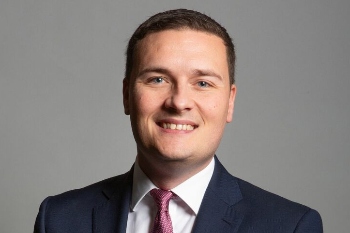






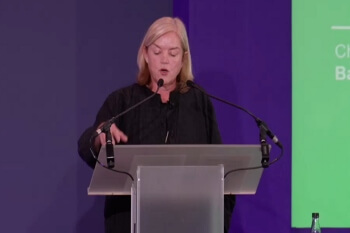
Baroness Louise Casey has revealed she has written to health and social care secretary Wes Streeting with five ‘simple asks’ ahead of her commission’s first report on social care.
Speaking this afternoon at the Nuffield Trust Summit, Baroness Casey called for: a new national safeguarding board for social care on a statutory legal footing; immediate backing to the scale up of dementia trials; a new full time Dementia Czar; faster progress on the modern service framework for frailty and dementia; and a new fast track passport for people with MND.
She said: ‘These are small, straightforward, simple asks and I will look carefully to see whether they are agreed to and whether they are delivered.’
Baroness Casey said this was a ‘moment of reckoning and renewal’ for social care.
She said action on social care workforce reform did not have wait for her report, noting there was a ‘total reliance on the underpayment of care workers’.
Noting the system divide between health and social care, Baroness Casey said there was an ‘extraordinary power differential between the councils and the NHS, which I’m sorry to say the NHS wins every time’.
She said she found it ‘rather astonishing’ that ICBs were paying private sector companies to find ways to cut continuing healthcare (CHC) budgets, adding: ‘I know exactly how much is spent on CHC and I will watch when it’s under review whether it’s sucked up into the world of acute hospitals or whether it stays central to its purpose. I’ll be watching and I’ll be saying if I’m unhappy with it.’
Baroness Casey added: ‘We need an honest conversation with the public directly about what they want a National Health Service and a National Care Service to look like.’
Reaction
Cllr Louise Gittins, chair of the Local Government Association, said: ‘A focus on safeguarding people who draw on care and support is vital to creating a prevention-focused and person-centred system. There is a strong role for local government in ensuring that people’s rights under the Care Act 2014 continue to improve. We look forward to seeing the proposals in more detail.’
Tanya Curry, chief executive of the Motor Neurone Disease Association, said: ‘We’re heartened to see Baroness Casey has listened and highlighted within her recommendations the need for a fast-track passport enabling people with MND to secure the care and support they need.’
Hilary Evans-Newton, chief executive of Alzheimer’s Research UK, said: ‘The Government must deliver on its manifesto commitment to invest in trials and put Britain at the forefront of transforming treatment for dementia. We cannot keep asking families to wait while the science moves ahead.’
Nuffield Trust deputy director of policy Natasha Curry, said: ‘This refreshingly honest speech shows that Baroness Casey is thinking boldly about social care reform and is committed to building a system that works for everyone.’
Sarah Woolnough, chief executive of The King’s Fund, said: ‘The planned national conversation is an essential step towards putting people and families who need care – now and in the future – at the heart of a reformed system.
‘We also clearly recognise some of the key problems identified by Baroness Casey today, particularly the power imbalance between social care and the NHS and the fragility of the provider markets and the social care workforce.’
With the final report due to be delivered by the Commission not until 2028, Woolnough added: ‘There remains a real risk that, even if the Casey Commission delivers robust proposals, they cannot be delivered until the 2030s. That is too long for the people who rely on care and support to wait.’
Lee Peart is editor of Hemming Group’s Healthcare Management magazine.
.png)