





London Zoo was the country’s first scientific zoo, established in Regent’s Park in 1828 (though ZSL, the charity which manages it, was founded two years earlier). Still on the same (albeit expanded) site today, it now functions as a conservation charity, welcoming millions of visitors every year. Here are some things you probably didn’t know about it.
1. There’s a secret basement

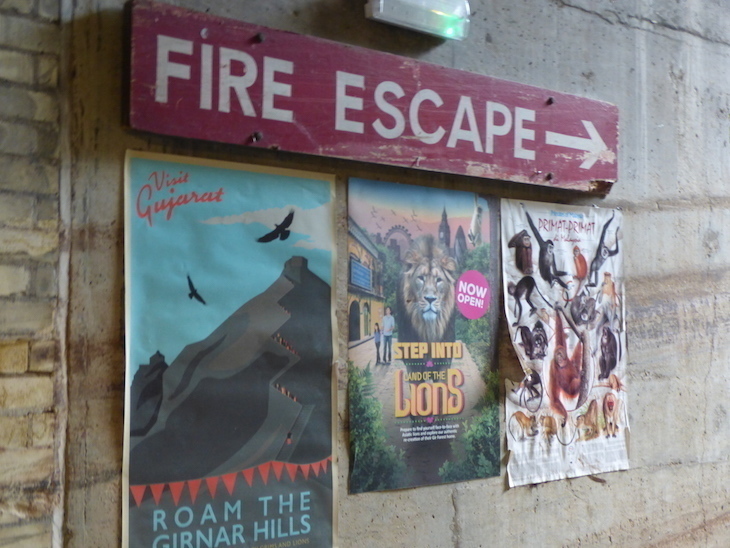
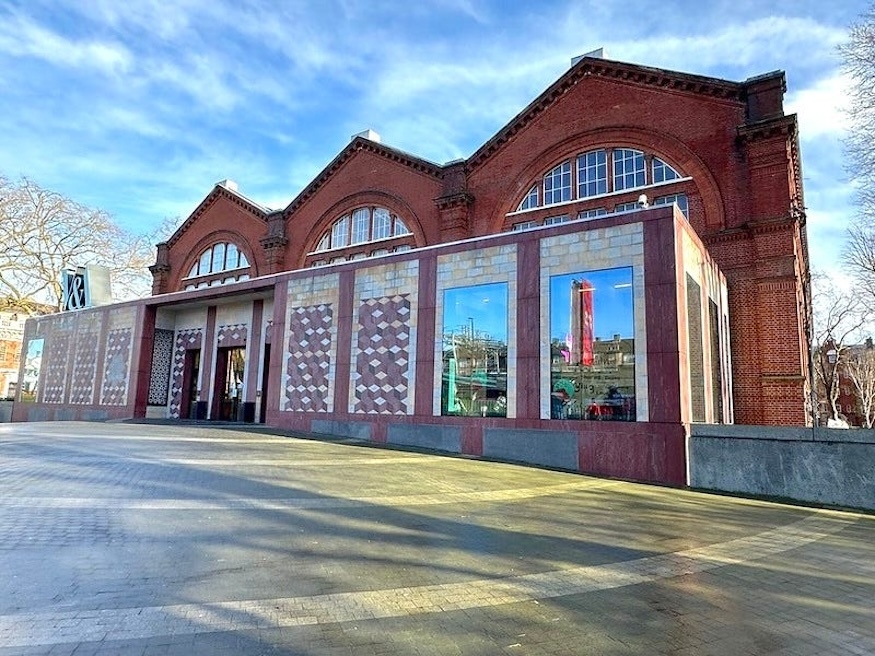
While you’re busy gazing at the Casson Pavilion (better known as the old elephant house — most Londoners seem to have childhood memories of it), you’re probably oblivious to what’s going on underneath it. The public used to be able to enter the building at ground level, but there’s also an off-limits basement, which is mainly used by keepers to prepare food for the animals. We went inside once and were fascinated to find the walls lined with vintage zoo adverts and publicity posters — a subterranean zoological time capsule.
2. Literary birds

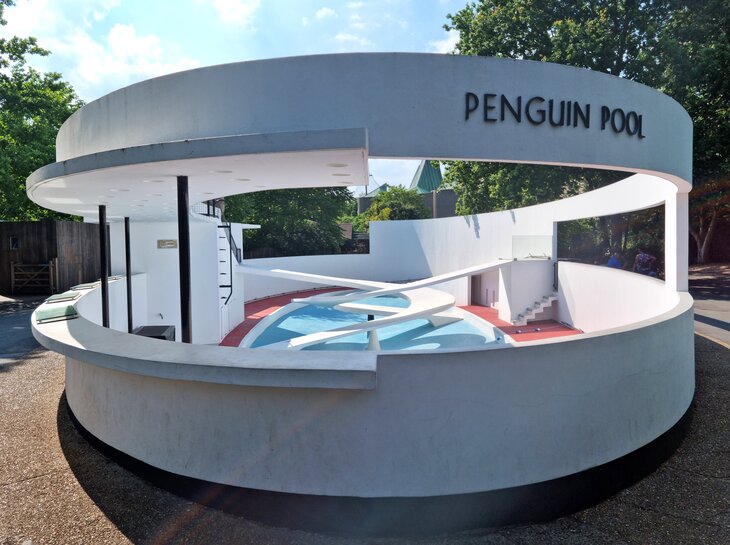
London Zoo’s penguins were the inspiration behind the logo of Penguin Books. The company name had already been chosen when an employee was dispatched to the Regent’s Park zoo to produce some sketches for the logo, a logo which remains today, albeit slightly redesigned in 2003. The art deco pool in which Edward Young would have seen the penguins frolic (it was designed by Berthold Lubetkin, the man behind London’s Highpoint buildings) is no longer in use, but still there — it’s a listed structure, like many of the zoo’s buildings.
3. London Zoo and the war effort

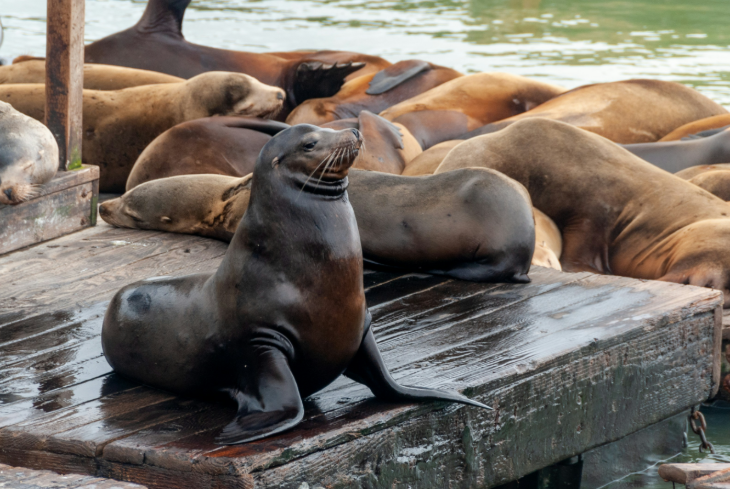
London Zoo — along with other zoos around the country — surrendered its sea lions to detect submarines during the First World War. They underwent lengthy training in a London swimming pool and Lake Bala in Wales. By the time they were fully trained and finally deployed on service in the English Channel and the North Sea, however, hydrophone technology had been perfected and the sea lions were no longer required. They were returned to their zoos, and London’s sea lions went on to star in a famous London Underground poster.
4. The tunnel used as a bomb shelter

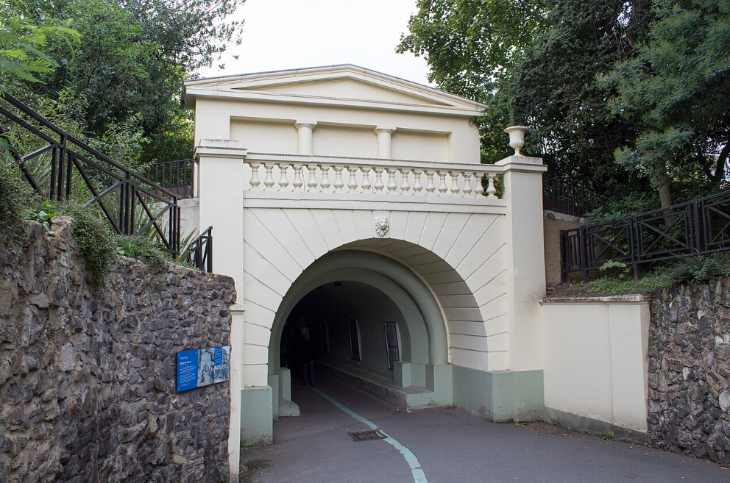
These days, the public part of the zoo straddles Regent’s Park’s Outer Circle, with visitors and staff (and occasionally alpacas, out for their morning walk, led by their keepers) crossing the road via two underground tunnels. During the Second World War, the East Tunnel (the one now between the gift shop and restaurant) was used as a bomb shelter for zoo staff and local residents. It now displays posters informing visitors about the zoo’s history.
5. Adding words to the language

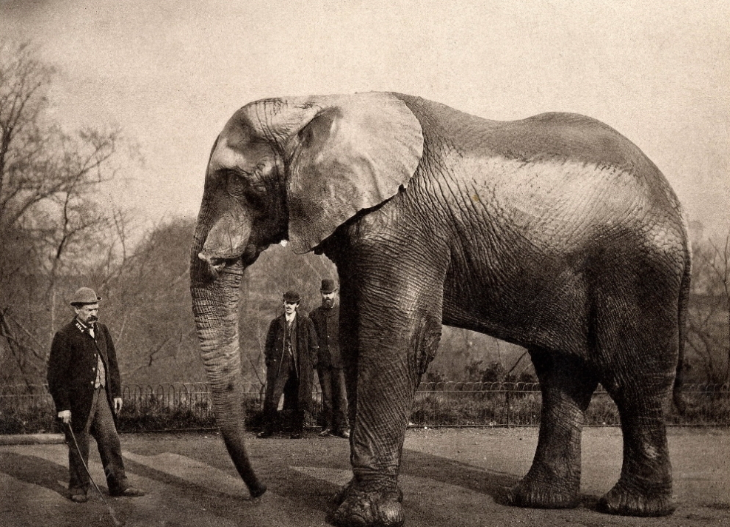
You’ve probably heard of former London Zoo resident Jumbo the elephant, but did you know that Jumbo wasn’t actually a word until he arrived on the scene?
The name Jumbo is thought to originate from either the Swahili for ‘hello’, which is ‘jambo’, or the Swahili for ‘chief’, which is ‘jumbe’. It’s no surprise the origins have been lost, given that the gargantuan creature travelled through Sudan, Italy, Germany and Paris before arriving in London. Either way, the Anglicised version of his name is now synonymous with anything on the large side.
We’re written more about Jumbo, and other famous animals from the zoo’s history, here.
The zoo also built the world’s first ‘aquatic vivarium’ — later shortened to aquarium, the first usage of this word.
6. Water delivered by water

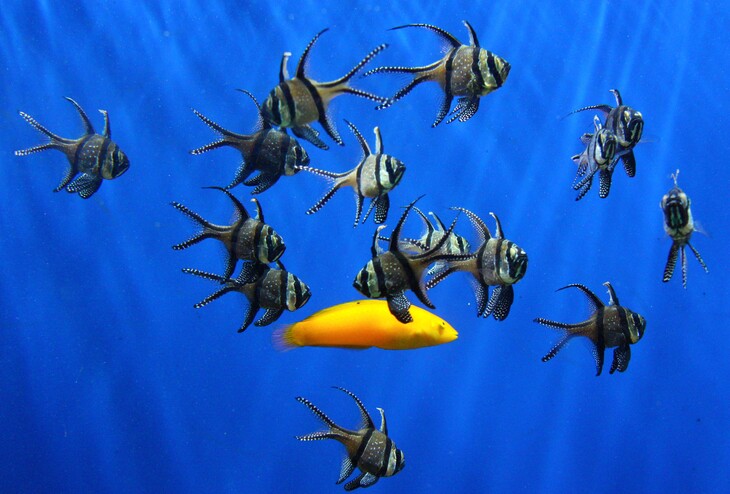
The zoo’s most recent aquarium was built in 1921, under the Mappin Terraces, a mountain-like structure previously home to the zoo’s bears and goats, but now inhabited by emus and wallabies. The mountain structure acts as a complex water filtering system. When this aquarium was built there was an understanding that different types of fish (tropical, saltwater, freshwater) needed different habitats. Initially the liquid for the saltwater section came from the Bay of Biscay, delivered to the zoo by barges arriving along Regent’s Canal next to the zoo — water delivered by water. Later, road tankers were used to bring water from the North Sea instead.
The London Zoo aquarium came to the end of its working life in 2019 and is now closed, the aquatic animals rehoused to Whipsnade Zoo.
7. Dog days

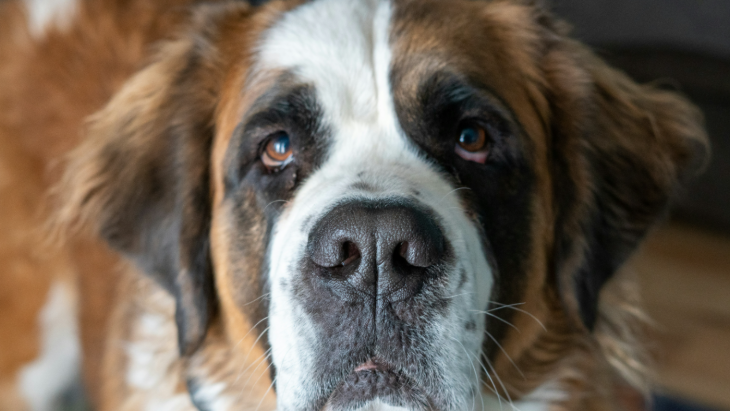
London Zoo hosted the world’s first dog show in the 1840s, long before Crufts existed. The exact year is not known, but it is claimed in this excellent biography of the zoo that:
The zoo had started it all by putting on display, near Three Island Pond, some of the larger breeds of domestic dog from around the world — Tibetan watchdogs, Grecian greyhounds, Persian sheepdogs, Spanish bloodhounds, Newfoundlands, Chinese dogs (probably chows) and, the sensation of the day, St Bernards from Switzerland.
This canine gathering was followed up by the world’s first poultry show, also held at the zoo. Fido’ll have to wait outside today though — dogs aren’t allowed in the zoo in case they distress the animals. Even assistance dogs are only admitted under certain criteria.
8. Darwin’s inspiration

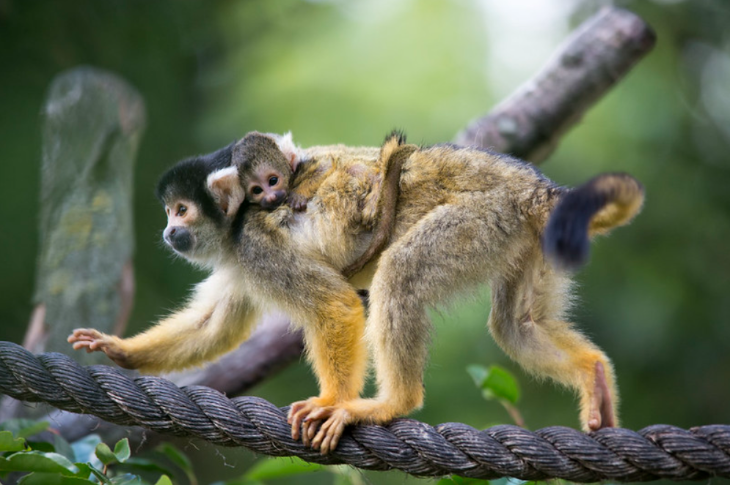
A certain Charles Darwin paid a visit to the zoo in 1838, where he encountered his first orangutan. So fascinated was he by Jenny that he returned to see her twice more. It’s thought that his observations of her, including the way she recognised her own reflection, contributed to Darwin’s Theory of Evolution.
Another of the zoo’s residents inspired a certain children’s author.
For more information on the history of London Zoo, we thoroughly recommend the excellent book The Zoo: The Story Of London Zoo by J. Barrington-Johnson.